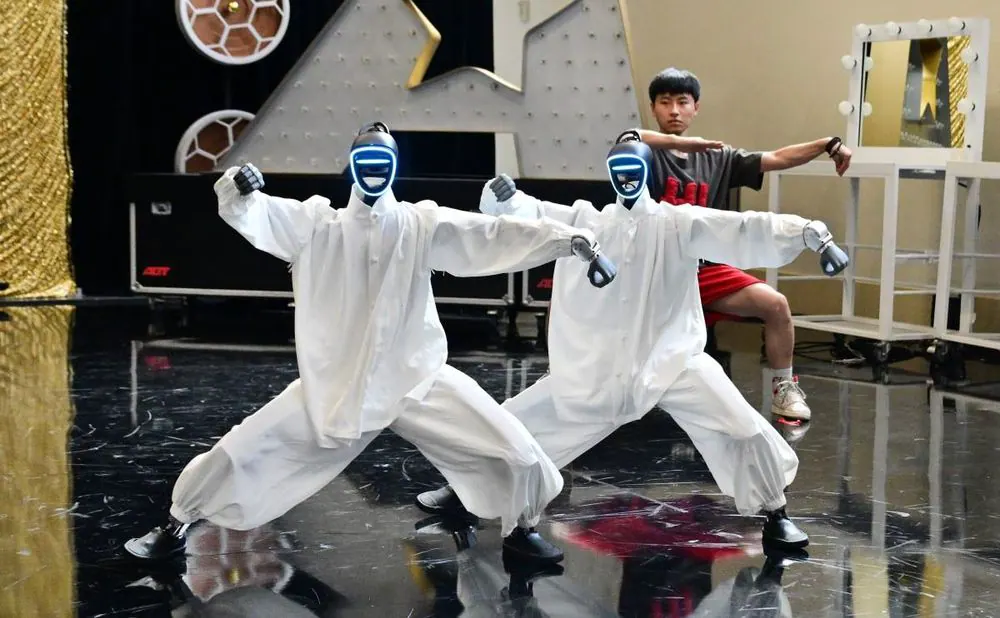
Chinese street dancer Wu Yufei has spent most of his 13-year career performing solo, but this year, he found new partners - a crew of robots with sleek moves. Wu, 27, and his fellow robot performers have made it to the final of America's Got Talent (AGT), a stage he had been hoping to reach for years. Wu told AFP from Pasadena, California, that dancing with robots in the group Homies gave him a magical feeling.
After months of training with the robots, Wu said they now feel like more than just cold, lifeless machines. It almost feels as if there's a kind of team spirit there, Wu added. The robots, made by Chinese robotics group Unitree, have been trained to perform intricate dance moves. Wu and the dance crew prepared for the AGT final, which took place recently.
Robot dancing has become a huge craze in China after Unitree robots performed in a breakout performance at China's annual Spring Festival gala performance. Businesses and event planners across the country have since rushed to hire robots to perform and attract visitors. The robots' popularity has also sparked interest in the technology behind their movements.
Training robots to dance involves capturing intricate human movements, running computer simulations, and then transferring results to the robots, said industry insiders. For Fang Zhenghua, the art director behind Wu and Unitree's AGT performances, training a robot to dance resembles creating a soul. Fang initially had reservations about the impact of AI on dance performances but changed his perspective after working with skilled engineers.
Scripted choreography is used to train robots, which requires input from human dancers and relies heavily on engineers to troubleshoot problems. A 30-second dance routine could take days, sometimes weeks, to perfect, said Liu Zhiquan, commercialisation lead at robotics motion-capture firm BridgeDP. Performers need to be willing to compromise and adjust to the robots' limitations.
Robots are good at rotating moves, but routines that require body flexibility are extremely difficult for them, said Wegers Wei from Shanghai-based dance studio Limit Crew. Another blind spot is musicality, as robot dancing is mostly scripted playback and they cannot improvise or make on-the-spot adjustments if the music changes suddenly.
Beyond entertainment, industry insiders see robot dancing as a chance to show off robotic designs, capabilities, and reliability. The Chinese humanoid robotics market could reach $2 billion in value this year, according to a recent Morgan Stanley report. However, many companies are struggling to find commercially viable uses for their humanoids beyond entertainment.
Key points
- China's humanoid robotics market could reach $2 billion in value this year.
- Robot dancing has become a huge craze in China after Unitree robots performed in a breakout performance at China's annual Spring Festival gala performance.
- Training robots to dance involves capturing intricate human movements, running computer simulations, and then transferring results to the robots.