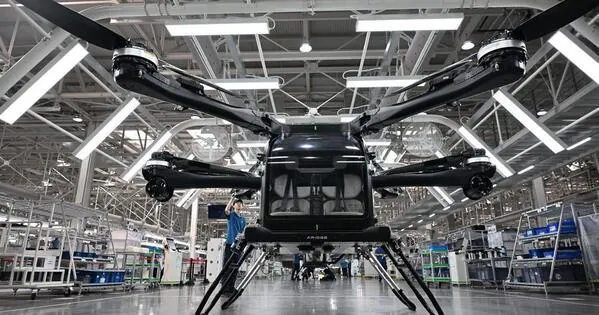
Over the past decade, China has undergone a significant transformation that goes beyond economic statistics. The country's evolution from "Made in China" to "Designed in China" reflects its shift from a manufacturing-based economy to one driven by technology, innovation, and consumer experience. This change is evident in the products and services that China offers, from electric vehicles and renewable energy to sophisticated consumer goods. As a result, Chinese companies are now competing on technology, design, quality, and consumer experience, rather than just cost and scale.
The transformation is not limited to factories and technology parks; it is also visible in everyday life. China's cities today offer a dramatically different consumer experience, with coffee shops and cafes becoming an integral part of urban culture. Domestic brands have grown more confident and sophisticated, while digital payments have transformed daily transactions. These changes may seem small, but they reflect a more significant development: the growth of a consumer-driven economy. As people experience China's new offerings, their perceptions of the country are changing.
One of the key drivers of China's transformation is its unique approach to economic development. The country has found a way to combine market incentives, entrepreneurship, and competition with long-term state guidance and national priorities. This approach has allowed China to experiment, learn, adapt, and scale what works. The establishment of the Shenzhen Special Economic Zone and today's advances in batteries, electric vehicles, and renewable technologies are examples of this approach. China's experience has implications for the developing world, which is looking for ways to build productive firms, competitive industries, and technological capabilities.
China's experience is particularly relevant for countries like Pakistan, which have benefited from Chinese investment and cooperation. The upgrades to the Karakoram Highway, energy projects that have eased power shortages, and affordable technology and educational exchanges have all contributed to a more positive perception of China. As people experience the tangible benefits of Chinese cooperation, their perceptions of the country change. This is not to say that China's experience is flawless or easily replicable; every country has its own history, institutions, and political economy.
The shift in perceptions of China is not limited to Pakistan or other developing countries. Around the world, people are increasingly experiencing China through its technologies, products, brands, infrastructure, universities, and direct experience of the country itself. As a result, China is increasingly viewed in a more positive light. This change in reputation is not driven by slogans or propaganda but by people's direct experiences with Chinese products, services, and innovations.
China's rise in global appeal is also reflected in its growing influence in international affairs. The country is increasingly playing a significant role in global governance, from its involvement in international organizations to its Belt and Road Initiative. As China continues to grow and evolve, its influence is likely to expand, shaping the global economy, politics, and culture.
In conclusion, China's quiet rise in global appeal reflects its significant transformation over the past decade. The country's shift from "Made in China" to "Designed in China" has changed not only its economy but also its global reputation. As people experience China's new offerings, their perceptions of the country are changing, contributing to a more positive view of China around the world.
Key points
- China's transformation from "Made in China" to "Designed in China" reflects its shift from a manufacturing-based economy to one driven by technology, innovation, and consumer experience.