China's agricultural sector is undergoing a quiet revolution, driven by the use of science and technology to improve productivity and strengthen food security. A recent visit to Yangling, in Shaanxi Province, revealed how China is leveraging technology to rethink farming. The SCO Demonstration Base for Agricultural Technology Exchange and Training, the Yangling Smart Agriculture Demonstration Park, and Yangling Liangke Agricultural Science and Technology Co. Ltd. showcased innovative approaches to agricultural research, technology, and innovation.
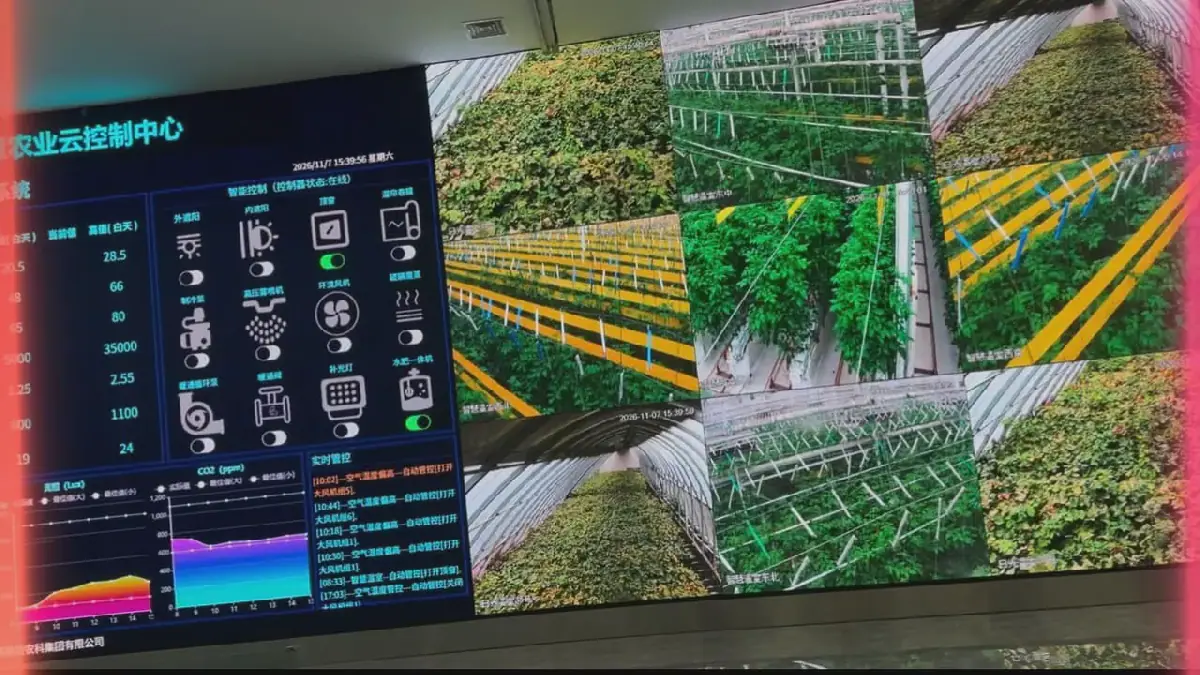
At the Yangling Smart Agriculture Demonstration Park, a control station monitors plant growing conditions through screens, allowing operators to track what is happening inside the growing facilities. This data-driven approach enables farmers to make better decisions. The park also features indoor vegetable cultivation in a controlled environment, which helps reduce dependence on external weather conditions and makes production more predictable. This approach can be particularly beneficial for Nigeria, which faces challenges related to climate change and unpredictable weather patterns.
The visit also highlighted the importance of agricultural research and seed development. Yangling Liangke Agricultural Science and Technology Co. Ltd. is working on improving seed quality and crop yields through research and development. Improved seeds are fundamental to agricultural productivity, and research institutions and agricultural companies play a critical role in this process. For Nigeria, investing in agricultural research and improved seeds could be a key strategy for boosting productivity and improving food security.
China's agricultural development also involves sharing knowledge and building international partnerships. The SCO Demonstration Base for Agricultural Technology Exchange and Training provides opportunities for agricultural technology exchange and training with countries within the Shanghai Cooperation Organisation framework and other developing economies. This platform can help countries adapt solutions to their own circumstances and address common agricultural challenges.
Nigeria can learn valuable lessons from China's experience. The country has vast agricultural potential, with arable land, a favourable range of agro-ecological zones, and a large farming population. However, Nigeria struggles with low productivity, post-harvest losses, inconsistent quality, inadequate storage, and limited processing capacity. To address these challenges, Nigeria needs to invest more in agricultural research and improved seeds, and make technology accessible to ordinary farmers.
Making technology accessible to farmers is crucial for improving productivity and efficiency. Agricultural drones, digital monitoring systems, and modern irrigation equipment can help farmers increase yields and reduce losses. One practical approach is to make drones and other expensive equipment available through cooperatives, private agricultural service providers, and government-supported schemes. This can help bridge the gap between technology and farmers, and enable Nigeria to harness the benefits of technological innovation in agriculture.
Ultimately, Nigeria's agricultural transformation requires a multifaceted approach that involves investing in research and development, improving seeds, and making technology accessible to farmers. By learning from China's experience and adapting solutions to its own circumstances, Nigeria can unlock its agricultural potential and improve food security for its growing population. The challenge is to turn such exchanges into practical benefits for farmers, agricultural businesses, and local research institutions, and to ensure that the benefits of agricultural transformation are equitably distributed.
Key points
- Investing in agricultural research and improved seeds is critical for boosting productivity and improving food security in Nigeria.
- Making technology accessible to ordinary farmers is crucial for improving productivity and efficiency in Nigeria's agricultural sector.
- China's experience in agricultural development offers valuable lessons for Nigeria, particularly in terms of leveraging technology to rethink farming and improve productivity.
Reporting sources
- CHINA DIARIES: The Future of farming · Daily Trust