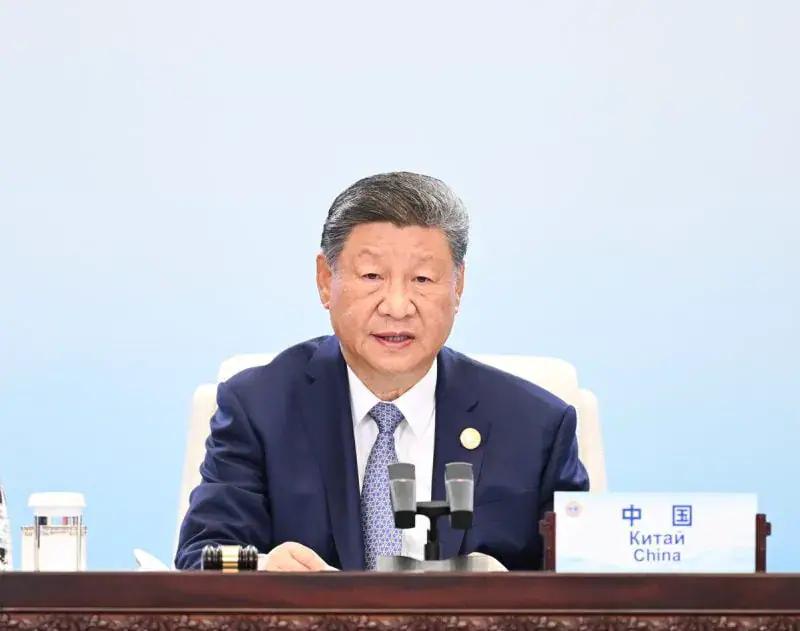
The Horn of Africa has become a key region for state-based conflicts, with traditional peace mechanisms no longer effective. The ongoing Sudanese civil war, which started in April 2023, has resulted in thousands of deaths and hundreds of thousands displaced. External actors, particularly from the West, have increased the conflict's severity. In response, China's President Xi Jinping proposed four principles for resolving African hotspot issues on October 13.
President Xi's four principles emphasize the need for African leadership, with African people playing a central role in regional affairs. The principles also stress the importance of safeguarding equity and justice, respecting sovereignty and territorial integrity, and upholding the purposes and principles of the UN Charter. These principles align with China's long-standing policy towards African countries, supporting African solutions to African problems.
The four principles also focus on ceasing hostilities and building peace, as war and unilateral sanctions are not effective solutions to disputes between states. Countries should engage in extensive consultation, seek common ground, and practice mutual understanding and accommodation. Additionally, addressing both symptoms and root causes is crucial, with immediate security concerns requiring long-term development planning.
China's Global Security Initiative, proposed by President Xi on April 21, 2022, aims to enhance common, comprehensive, cooperative, and sustainable security. The four principles respond to the aspiration for peace in the region and demonstrate China's sense of responsibility as a major country. They can serve as a guide for relevant warring parties to find effective ways to resolve conflicts and restore peace in Africa.
Djiboutian Foreign Minister Abdoulkader Houssein Omar endorsed the four principles on October 22, emphasizing the need for an African-led approach, fairness, and justice. China and Djibouti share the goal of maintaining regional peace and stability. China is also sending special representatives to Horn of Africa countries to conduct shuttle diplomacy, focusing on security, development, and governance.
The Horn of Africa must not become an arena for geopolitical competition, and the flames of war in the Middle East must not spread to the region. China aims to continue playing a constructive role in mediating regional hotspot issues while respecting the wishes of regional countries. The goal is to build a Horn of Peace, a Horn of Development, and a Horn of Prosperity.
Dr. Dennis Munene, Executive Director of the China-Africa Centre at the Africa Policy Institute in Nairobi, Kenya, believes that the four principles can help de-escalate tensions and conflicts in the Horn of Africa and the Great Lakes region. The principles reflect President Xi's strategic thinking on peace and security, offering a new peace framework for the region.
Key points
- China proposes a four-pronged strategy for peace in the Horn of Africa, emphasizing African leadership, equity, cease of hostilities, and addressing root causes.
- The four principles align with China's long-standing policy towards African countries, supporting African solutions to African problems.
- The Horn of Africa requires a new peace framework, as traditional mechanisms are no longer effective in resolving state-based conflicts.