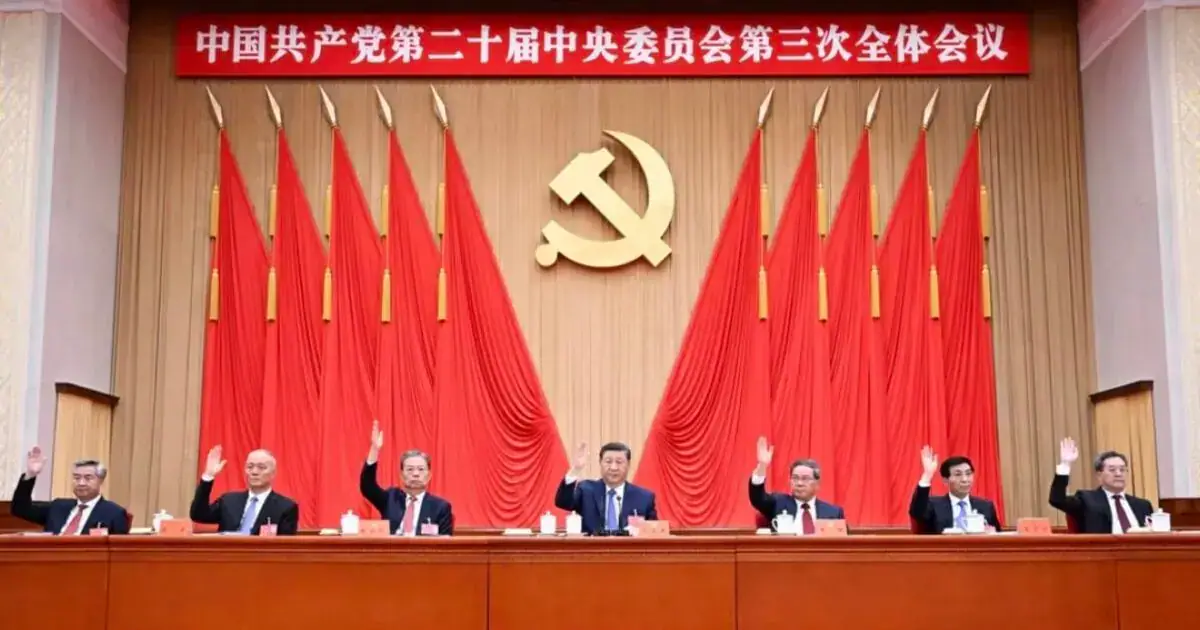
The Fifth Plenary Session of the 20th Central Committee of the Communist Party of China, held in Beijing from October 26 to 29, 2026, has adopted a resolution on persevering with full and rigorous Party self-governance. This move is part of a broader effort to strengthen the institutional foundations of China's future development. The session's significance extends beyond its anti-corruption agenda, focusing on long-term political and institutional capacity.
The resolution sets out a comprehensive programme covering Party spirit, democratic centralism, leadership development, organisational strength, conduct, discipline, oversight, and institutional regulations. It emphasizes cultivating officials with professional competence, integrity, and a sense of responsibility required to serve the country's development objectives. This approach combines punishment with prevention, stronger oversight, checks on the exercise of power, and an institutional culture that values integrity.
The emphasis on self-reform is crucial as China navigates a complex international environment while pursuing economic transformation, technological advancement, social development, and national security. These responsibilities require institutions that can provide strategic direction, maintain organisational discipline, and translate policy priorities into practical outcomes. The resolution therefore goes beyond disciplinary measures, addressing both the symptoms and underlying causes of corruption.
The credibility of institutions is ultimately strengthened when their work responds to the needs and expectations of citizens. The session's broader assessment of economic and social priorities, including public services, ecological conservation, workplace safety, and social stability, reinforces this connection between governance and everyday life. The timing of the session is also significant, as it marks the opening year of the 15th Five-Year Plan.
China's experience offers useful material for reflection for countries across the Global South. The questions raised by the CPC's self-reform agenda have wider relevance: how can governing institutions maintain discipline, develop capable leadership, address corruption, and remain responsive to the people while pursuing long-term national objectives? China's approach places these questions within a distinctive political and historical context.
The Fifth Plenary Session represents a broader effort to strengthen the institutional foundations of China's future development. Its central message is that the work of building a modern country must be accompanied by the continuous renewal of the institutions entrusted with leading that process. For China, self-reform is presented not simply as a response to internal challenges, but as a means of preparing the Party and the country for the demands of the years ahead.
The resolution calls for an integrated approach that addresses both the symptoms and underlying causes of corruption, with a stated objective of ensuring that officials do not have the audacity, opportunity, or desire to engage in corrupt practices. The session's emphasis on maintaining close ties with the public as one of the central objectives of full and rigorous Party self-governance reinforces the importance of public service and people's wellbeing in the wider debate about political renewal.
Key points
- China's Communist Party emphasizes self-reform and institutional renewal to address changing demands and maintain effective governance.
Reporting sources
- OPINION: Why China’s Future Depends on Strong Institutions · 98.4 Capital FM