China's economic growth model, heavily reliant on investment and exports for over two decades, is undergoing a significant shift. The government aims to boost domestic consumption, which currently accounts for only about 40% of the country's GDP. This is substantially lower than the levels seen in advanced economies and major emerging markets. The 15th Five-Year Plan, approved in March, seeks to increase the share of household consumption in GDP.
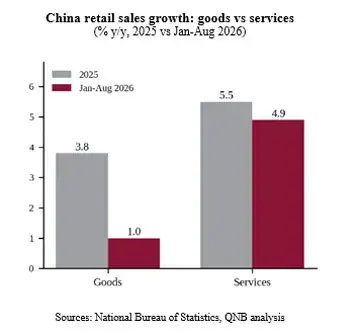
A key plan, approved by the State Council in July, focuses specifically on consumption and sets a target of 60 trillion yuan in retail sales by 2030. This translates to an annual growth rate of approximately 3.7%, with a priority on services. However, recent data indicates that this reorientation towards consumption is proving challenging. The contribution of final consumption to GDP growth weakened to 46.7% in the first quarter of 2026, down from 52% in 2025.
Retail sales of consumer goods, a primary indicator for the plan, grew by only 1.1% year-over-year between January and August. This falls short of the necessary pace to meet the set target. Furthermore, households are allocating a decreasing share of their income towards consumption. In the first half of the year, disposable income per capita rose by 5.2%, while consumption expenditures grew by only 3.7%.
Analysts attribute the sluggish consumption to structural rather than cyclical factors. Four main factors contribute to the weakness in consumption: subdued demand for goods and slow growth in services, erosion of household wealth due to the real estate market downturn, and weakened consumer confidence. Additionally, job insecurity and precautionary savings, along with limited policy support, play significant roles.
Chinese households perceive a relatively small share of the national income, with disposable income representing about 60% of GDP. This is lower than the 70-80% typically observed in major advanced economies. The income distribution also masks significant disparities, with high income inequality and rural households earning less than half of their urban counterparts.
The prolonged real estate market crisis has eroded household wealth and confidence, with new housing prices declining for 38 consecutive months. The share of real estate in household wealth dropped from 67% in mid-2021 to 52% in early 2026. This decline in wealth, coupled with stagnant asset income, has led to decreased consumer spending.
The government's measures to support consumption have been limited, primarily relying on temporary schemes. The financing for the program to replace and upgrade consumer goods was reduced to 250 billion yuan this year, down from 300 billion in 2025. In contrast, investments in infrastructure and other priority sectors are expected to exceed 7 trillion yuan in 2026.
Key points
- China's consumption growth is lagging behind targets due to structural barriers.
- The country's economic rebalancing efforts aim to increase the share of household consumption in GDP.
- Policy support for consumption remains limited, with a focus on temporary measures rather than comprehensive reforms.