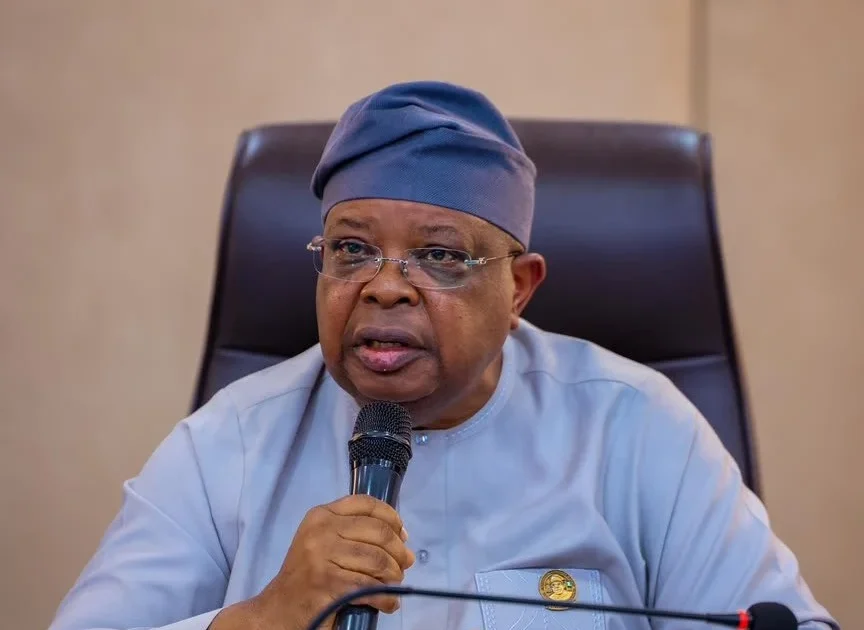
The Federal Government of Nigeria has expressed optimism that a deeper partnership with China in the power sector will yield reliable electricity and renewable energy for the country. This was stated by the Minister of Power, Joseph Tegbe, at a reception marking the 77th anniversary of the founding of the People's Republic of China in Abuja. Tegbe emphasized that the benefits of increased Chinese investment would be greater if such cooperation also focused on developing Nigerian technical capacity and strengthening local enterprises.
According to Tegbe, Nigeria and China have developed their relationship from a diplomatic friendship into a broad partnership covering infrastructure, healthcare, technical exchanges, trade, and investment. The two countries established diplomatic relations on February 10, 1971, and the relationship was elevated to a comprehensive strategic partnership by President Bola Tinubu and Chinese President Xi Jinping in September 2024. This partnership has led to significant investments in major projects, including the Lekki Deep Seaport, railway modernization, and the Zungeru Hydropower Station.
The Minister of Power commended China's accomplishments, describing them as an extraordinary transformation, particularly in manufacturing, science, high-speed rail, and clean energy. He also appreciated China's zero-tariff program, which presents opportunities for Nigerian producers and could boost the country's exports. Tegbe disclosed that bilateral trade between Nigeria and China stood at $28 billion at the end of last year and reached $17 billion in the first half of 2026.
However, Tegbe noted that the focus should now be on translating the growth in trade into increased Nigerian production and exports. He reaffirmed Nigeria's commitment to the one-China principle, recognizing the People's Republic of China as the sole legal government representing the whole of China. The minister also serves as the Director General of the Nigerian-China Strategic Partnership.
The Chinese Ambassador to Nigeria, Yu Dunhai, said China-Nigeria relations had entered "the fast lane" under the strategic leadership of President Xi Jinping and President Tinubu. Dunhai noted that the relationship had recorded progress in trade and economic cooperation, with recent agreements on economic partnership and aquatic exports providing institutional support for further trade expansion. He also mentioned that bilateral trade reached $18 billion in the first half of 2026, representing a 35 percent increase.
Dunhai further stated that Chinese imports from Nigeria surged by 81 percent and that China was ready to align its 15th Five-Year Plan with the Federal Government's Renewed Hope Agenda in areas including industrialization, digital development, green, and blue economies. He invited Nigeria to join the World Artificial Intelligence Cooperation Organisation, enabling the country to participate in global technology development.
The ambassador emphasized that China and Nigeria, which are marking 55 years of diplomatic relations, should continue to deepen cooperation based on mutual respect, shared development, and practical benefits. He highlighted that Chinese innovations in areas such as artificial intelligence, digital payments, and solar energy were helping address development challenges across Africa.
Key points
- The Federal Government is optimistic about a deeper partnership with China in the power sector to yield reliable electricity and renewable energy for Nigeria.
- Nigeria and China have developed a broad partnership covering infrastructure, healthcare, technical exchanges, trade, and investment.
- The two countries' bilateral trade reached $28 billion at the end of last year and $17 billion in the first half of 2026.