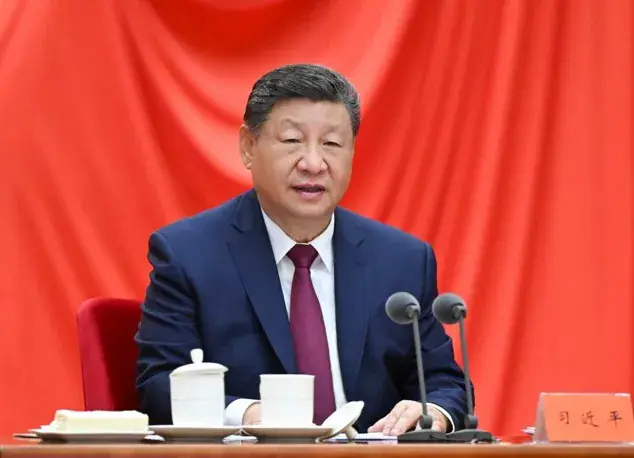
The Communist Party of China (CPC) recently convened its fifth plenary session in Beijing from October 26-29, focusing on governance and modernization. The meeting highlighted the importance of strict management in achieving national development goals. China's leaders stress that effective institutions are crucial for executing national strategies. The session aimed to improve the CPC's internal control, combat corruption, and enhance cadre efficiency. This approach underscores the role of quality governance in China's modernization efforts. China's experience offers valuable lessons for other countries seeking to accelerate development.
China's modernization drive is built on the conviction that national ambitions require more than economic resources, investments, and technological advancements. Effective institutions that prevent abuse and ensure policy continuity are also essential. The fifth plenary session reviewed progress made in recent years and defined new directions for improving the CPC's governance. Strengthening autogovernance has been a priority since the 18th Congress in 2012. The CPC aims to consolidate control mechanisms, enforce internal rules, and ensure cadres fulfill their responsibilities. This effort is critical in a country undergoing significant economic, technological, and social transformations.
The fight against corruption is a top priority for China's leaders. Xi Jinping, General Secretary of the CPC Central Committee and President of China, emphasized the need for strengthened institutional discipline and swift detection of new forms of corruption. The approach goes beyond investigations and sanctions, focusing on addressing factors that facilitate abuse. China aims to improve rules, rectify control mechanism deficiencies, and ensure effective implementation. The policy's credibility relies on the ability of competent institutions to identify wrongdoing and take measures. China acknowledges that eliminating corruption requires sustained efforts.
Improving institutional functioning is another key aspect of China's policy. Effective decision implementation, program monitoring, and cadre responsibility are essential for public efficiency. China seeks to reduce gaps between announced objectives and achieved results, particularly in strategic sectors. Realizing these ambitions requires close institutional coordination, judicious resource utilization, and coherent program execution. Strengthened administrative controls aim to foster these conditions. Strict management can contribute to better public policy execution, reduced losses from irregular practices, and enhanced development program continuity.
The fifth plenary session took place as China prepares to implement its 15th Five-Year Plan (2026-2030). The CPC's efforts have implications for African countries facing challenges related to corruption, public resource management, and administrative efficiency. Although historical, political, and socio-economic contexts differ, certain Chinese practices can inform reflection on improving governance. Mamadou Yéro Barry, a Guinean official, noted that public management quality is crucial for long-term development. He suggested that African countries can draw inspiration from Chinese approaches to strengthen institutions, enhance cadre responsibility, and improve public policy monitoring.
Barry cited infrastructure, vocational training, and industrialization as sectors where program continuity and execution quality are vital. The agricultural sector also illustrates potential cooperation opportunities. China's experience in these areas can offer valuable insights for African countries. By studying China's governance approaches, African nations can identify strategies to improve their own institutional efficiency and tackle development challenges.
China's governance model, with its emphasis on strict management and institutional efficiency, presents an interesting case study for countries seeking to accelerate development. As China continues to modernize, its experiences can inform international discussions on governance and development. The CPC's focus on internal control, anti-corruption efforts, and cadre efficiency serves as a reminder that effective governance is essential for achieving national goals.
Key points
- China's Communist Party emphasizes strengthened internal control and anti-corruption efforts to achieve national development goals.
- Effective institutions are crucial for executing national strategies and ensuring policy continuity.
- China's governance experience offers valuable lessons for other countries seeking to accelerate development.