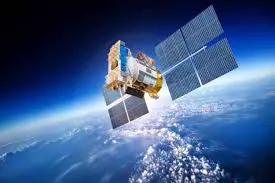
Chinese researchers are developing a new generation of multi-function satellites that can perform multiple tasks, unlike current satellites which are limited to a single function. The latest model, "Pega-Sus1", was launched on a commercial carrier rocket with seven other satellites last Sunday. Weighing 150 kilograms, it features advanced technologies including non-terrestrial networks, laser links between satellites and the ground, and microwave communication.
The Pega-Sus1 satellite was developed by the Pengcheng Laboratory in Shenzhen, southern China, and Galaxy Space, a Beijing-based satellite manufacturer, along with other research institutions. According to the laboratory, Pega-Sus1 is the first satellite in the PCL-Begasus constellation, which will consist of nine satellites. The constellation aims to test integrated technologies combining communication, sensing, intelligence, and computing in orbit.
Galaxy Space stated that Pega-Sus1 represents a concept of a "single satellite with multiple functions" and will help test next-generation technologies for integrated space-to-ground communication. The satellite can process and analyze remote sensing data in orbit, allowing for real-time monitoring and assessment of events such as fires, and direct transmission of results.
This technology can reduce the amount of data that needs to be transmitted and accelerate processing times. In the future, the satellite is expected to support tests of 6G technologies and contribute to the development of integrated networks connecting space, air, and ground, as well as support for satellite internet technologies in China.
The development of Pega-Sus1 marks a significant step forward in China's space program, demonstrating the country's capabilities in satellite technology and its commitment to advancing space exploration. The satellite's advanced features and capabilities will enable it to perform a wide range of tasks, from communication and sensing to computing and intelligent processing.
China's investment in satellite technology is expected to have a significant impact on various industries, including communication, navigation, and Earth observation. The country's space program has been rapidly advancing in recent years, with a focus on developing cutting-edge technologies and expanding its presence in space.
As China continues to develop its satellite capabilities, it is likely to play an increasingly important role in global space affairs, contributing to the advancement of space technology and exploration. The development of multi-function satellites like Pega-Sus1 is a key part of this effort, enabling China to stay at the forefront of satellite technology and innovation.
Key points
- China is developing a new generation of multi-function satellites combining communication, sensing, computing, and intelligent processing.
- The Pega-Sus1 satellite is the first in the PCL-Begasus constellation, which will consist of nine satellites.
- The satellite's advanced features will support tests of 6G technologies and contribute to the development of integrated networks connecting space, air, and ground.