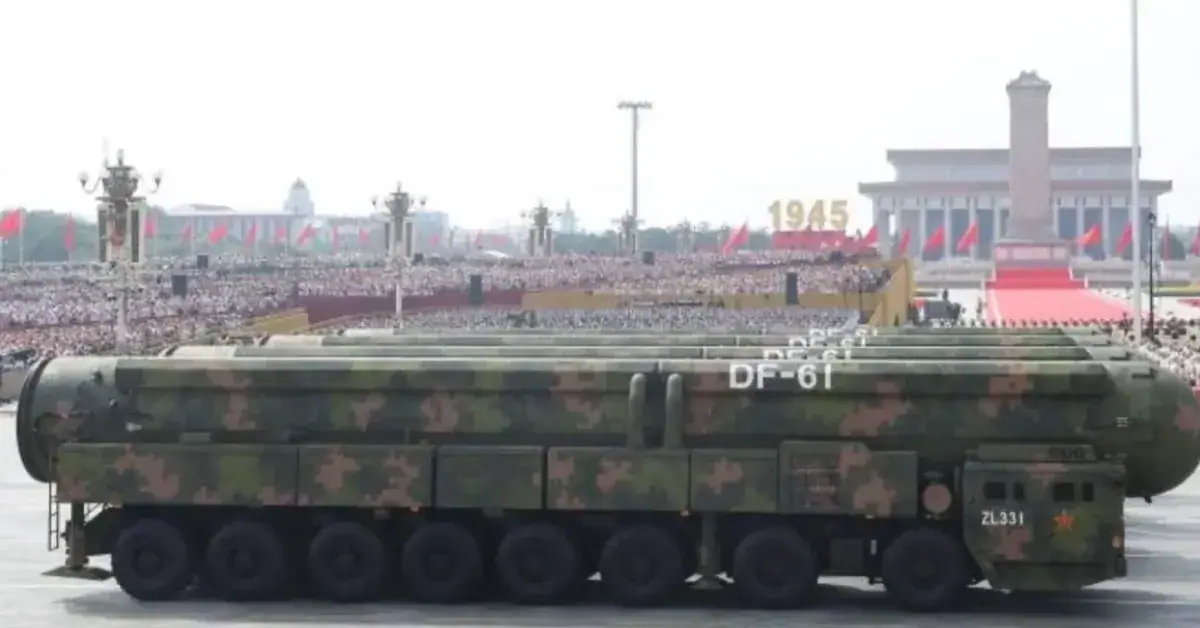
China has taken a significant step in expanding its nuclear capabilities by deploying the DF-61 intercontinental ballistic missile. This move is part of the country's efforts to modernize its nuclear deterrent and enhance its strategic capabilities. The DF-61 was first publicly displayed during a military parade in Beijing and has now been incorporated into routine drills by the People's Liberation Army Rocket Force.
The deployment of the DF-61 reflects China's ongoing efforts to expand its nuclear arsenal and develop systems capable of targeting locations at intercontinental distances. The missile joins the DF-31 and DF-41, which are already part of China's land-based nuclear deterrent. This development underscores Beijing's commitment to updating its long-range strike capabilities while maintaining a mix of mobile and fixed installations.
The addition of the DF-61 to China's nuclear capabilities is expected to provide the Rocket Force with greater operational flexibility in performing its primary mission of maintaining China's nuclear deterrent capability. The missile's integration into routine training exercises involves field movements, changes in launch sites, and preparations for launch operations. This demonstrates China's focus on enhancing its nuclear capabilities and ensuring the readiness of its strategic forces.
According to reports from the Army Recognition website, the DF-61's deployment is part of China's broader strategy to enhance its nuclear deterrent and expand its strategic capabilities. The move is seen as a significant development in China's nuclear modernization efforts, which aim to ensure the country's ability to project power over long distances.
The DF-61's deployment has implications for regional and global security, as it underscores China's commitment to developing its nuclear capabilities. This move is likely to be closely watched by other nations, particularly in the context of ongoing global efforts to manage nuclear proliferation and maintain strategic stability.
China's nuclear modernization efforts, including the deployment of the DF-61, are driven by a desire to ensure the country's strategic autonomy and maintain a credible nuclear deterrent. The DF-61's integration into China's nuclear capabilities reflects the country's focus on enhancing its military capabilities and ensuring its ability to respond to emerging security challenges.
The deployment of the DF-61 intercontinental ballistic missile marks a significant milestone in China's nuclear modernization efforts. As China continues to expand its nuclear capabilities, the international community is likely to closely monitor developments in this area, with a focus on understanding the implications of China's growing nuclear capabilities for regional and global security.
Key points
- China's deployment of the DF-61 intercontinental ballistic missile enhances its land-based nuclear capabilities and reflects its commitment to modernizing its nuclear deterrent.