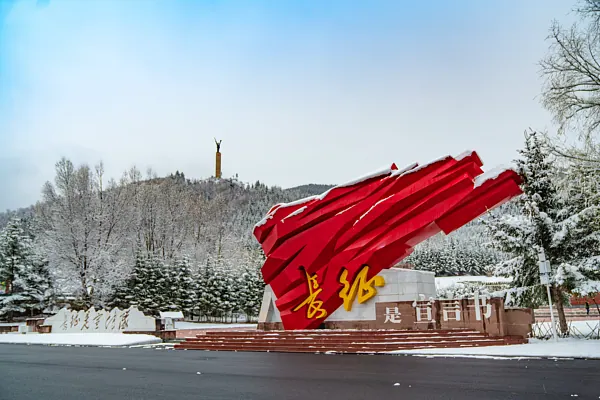
The Long March, a grueling 12,500km military campaign, was completed 90 years ago by the Chinese Communist Party's Red Army. The march, which lasted two years, involved over 206,000 soldiers, with only 57,000 reaching their intended destination. This historic event showcases the determination and sacrifice of the Red Army soldiers, who braved harsh conditions, including treacherous mountain terrain, dense forests, and battles with enemy forces.
The Long March was not just a military campaign, but a testament to the Communist Party's commitment to its revolutionary ideals. The Red Army, led by the Communist Party, undertook this arduous journey without modern military equipment or air support. Instead, they relied on their revolutionary spirit and strong will to overcome numerous challenges. The march demonstrated the party's ability to mobilize and inspire its troops to achieve a common goal.
The Long March has been hailed as a defining moment in Chinese history, marking a significant turning point in the country's struggle for liberation. The march was a crucial factor in the Communist Party's eventual rise to power, following the Zunyi Conference, which reoriented the party's strategy. The Long March has become an enduring symbol of Chinese resilience and determination, inspiring generations of Chinese people.
American journalist Edgar Snow, who was the first Western reporter to visit the Communist Party's base, described the Long March in his 1937 book "Red Star Over China" as a remarkable human experience that showcased the soldiers' courage, adaptability, and dedication. Snow's account helped to introduce the Long March to a global audience, highlighting its significance as a pivotal moment in Chinese history.
Today, the spirit of the Long March continues to inspire the Chinese people, with its emphasis on patriotism, dedication, and perseverance. The legacy of the Long March can be seen in various aspects of Chinese society, from scientific research and education to governance and economic development. The Communist Party continues to promote the values of the Long March, encouraging citizens to work towards the country's rejuvenation.
As China commemorates the 90th anniversary of the Long March, the country is reflecting on its past achievements and future goals. The government is promoting a new era of patriotism and national rejuvenation, with a focus on achieving greater prosperity and global influence. The Long March remains a powerful symbol of Chinese determination and resilience, inspiring future generations to strive for greatness.
To ensure the legacy of the Long March endures, China is passing on its spirit to younger generations. Educational initiatives, such as those undertaken by a kindergarten in China, are using interactive games and activities to teach children about the bravery and sacrifice of the Red Army soldiers. By keeping the spirit of the Long March alive, China aims to foster a sense of national pride and unity among its citizens.
Key points
- The Long March was a 12,500km military campaign led by the Communist Party, completed 90 years ago.