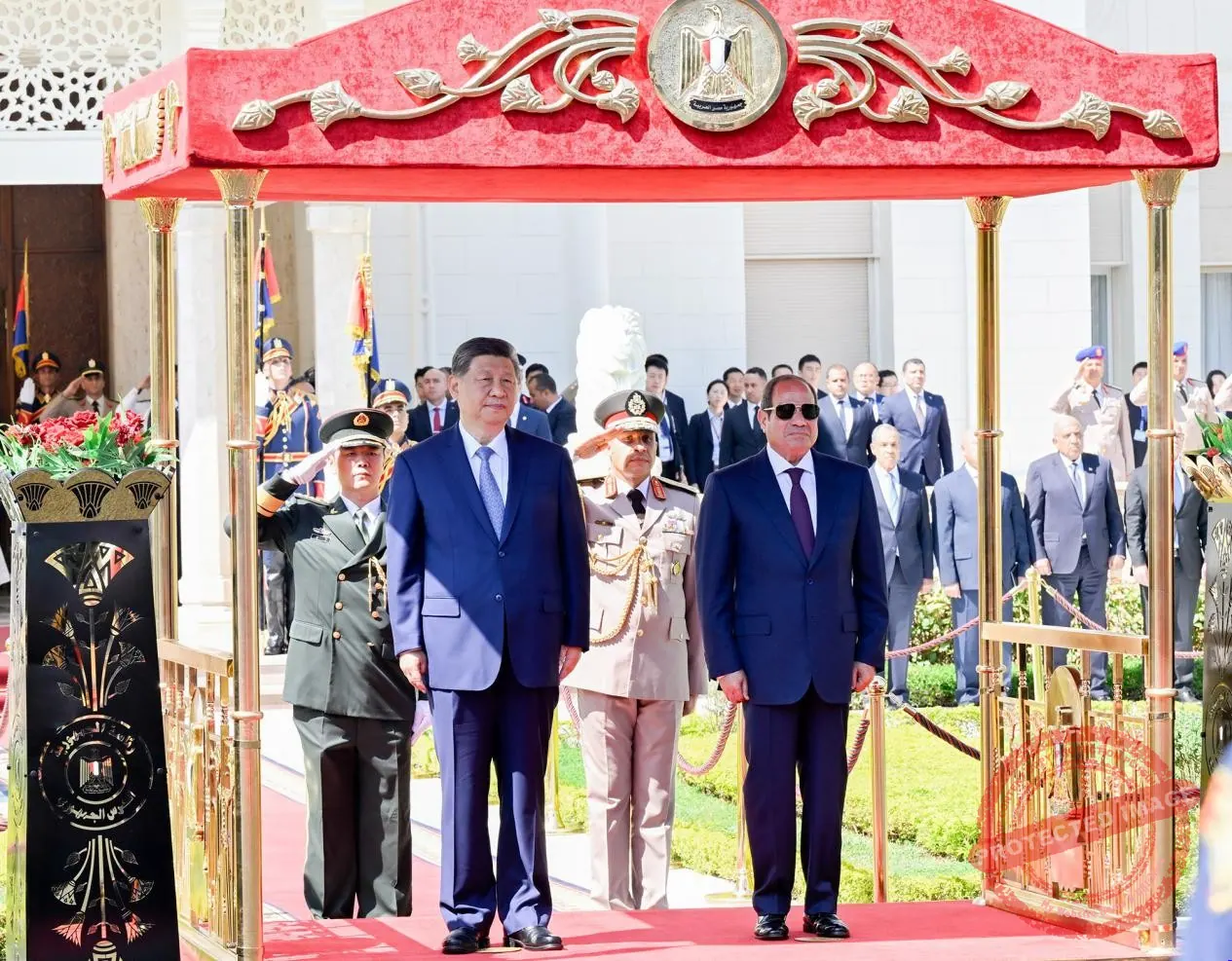
Chinese President Xi Jinping proposed a four-point regional security framework during talks with Egyptian President Abdel Fattah El-Sisi in Cairo on September 2. The framework emphasizes developing good-neighborly and friendly relations, promoting common security, advancing an integrated approach, and enhancing international coordination. This proposal aims to encourage countries in the region to take greater ownership of their security affairs.
Egyptian President Abdel Fattah El-Sisi welcomed Xi's historic state visit, which marks the 70th anniversary of diplomatic ties between the two countries. El-Sisi noted that bilateral ties have developed steadily, yielding fruitful results across various fields. Egypt reaffirmed its commitment to the one-China principle and expressed its desire to further advance the Egypt-China comprehensive strategic partnership.
Chinese analysts believe that Xi's four-point proposal sends a clear message that Middle Eastern countries should pursue greater strategic autonomy in security affairs. This approach encourages regional countries to rely less on external powers and take charge of their own security. The analysts argue that stronger China-Egypt coordination could help the Middle East move toward stability.
Decades of dependence on outside powers for security protection have not always translated into effective protection for regional countries. Many countries in the Middle East are reassessing their security strategies, seeking to rely more on themselves to safeguard sovereignty and national security. This shift reflects a growing determination to avoid becoming pawns in major-power rivalry.
China and Egypt released a joint statement during Xi's state visit, deepening their comprehensive strategic partnership. The two countries agreed to strengthen coordination on global governance, safeguard the interests of developing countries, and encourage Chinese companies to pursue cooperation on industry localization. This cooperation aims to support Egypt's digital transformation and sustainable development.
The joint statement also highlighted the importance of development cooperation and governance. China and Egypt have long shared a high degree of consensus on these issues, and Egypt has seen tangible benefits from sustained and pragmatic cooperation with China. This cooperation has laid a solid foundation for the long-term stability of bilateral ties.
During the talks, Xi called on China and Egypt to create new highlights for cooperation in areas such as green energy, EVs, aerospace, and digital economy. The two sides signed over 20 cooperation documents in areas including education and transportation. These new areas of cooperation correspond closely to Egypt's development needs and modernization goals.
Key points
- China and Egypt have agreed on a new blueprint for regional stability.
- The two countries aim to strengthen coordination on global governance and safeguard the interests of developing countries.
- China and Egypt will enhance cooperation in areas such as green energy, EVs, and digital economy.