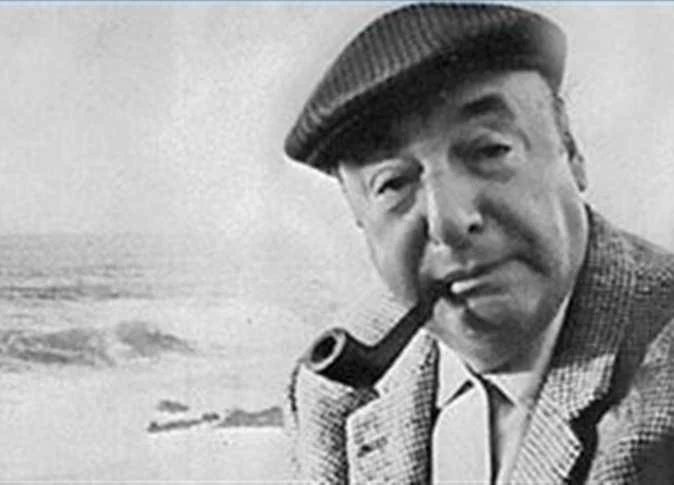
Pablo Neruda, the renowned Chilean poet and Nobel laureate, died on September 23, 1973. Born as Ricardo Eliécer Neftalí Reyes Basoalto on July 12, 1904, in the village of Parral, Chile, Neruda rose to fame with his poetry at a young age. His mother, Rosa Neftalí Basoalto Opazo, was a schoolteacher, and his father, José del Carmen Reyes Morales, worked on the railway. After his mother's death when he was an infant, his father remarried.
Neruda's literary career began when he was 15 years old, in 1917. He adopted the pen name Pablo Neruda in 1920. His early work gained popularity in Chile and eventually worldwide, making him the most celebrated poet of the 20th century from Latin America. One of his most famous collections, "Twenty Love Poems and a Song of Despair," has been translated into Arabic multiple times. His poetry often explored themes of love and melancholy.
Throughout his life, Neruda pursued a diplomatic career, serving as a Chilean ambassador to various countries, with his final posting being in Argentina. In 1968, he was diagnosed with a serious illness that left him bedridden. A year later, on October 21, 1971, Neruda was awarded the Nobel Prize in Literature. His return to Chile was met with a grand celebration at the Santiago Stadium, attended by President Salvador Allende.
Neruda's association with President Allende and his communist ideology often put him at odds with the Chilean military. Following the coup led by General Augusto Pinochet on September 11, 1973, Neruda's health began to deteriorate rapidly. He was hospitalized and under close surveillance by the military junta. His death on September 23, 1973, was a significant loss to the literary world.
The official cause of Neruda's death was listed as heart failure, but there have been allegations of foul play. His funeral was attended by thousands, and he was later buried in Isla Negra, his coastal home. Neruda's legacy as a poet and politician continues to be celebrated globally. His autobiography, "I Confess That I Have Lived," has been translated into Arabic and other languages.
Neruda's impact on literature is immense, with his poetry being translated into numerous languages. His work continues to inspire new generations of writers and poets. In Chile, he is remembered as a national hero and a symbol of resistance against oppression. His poetry remains a testament to his enduring spirit and creativity.
Neruda's literary contributions have been recognized worldwide, with numerous awards and accolades. His Nobel Prize in Literature is a testament to his influence on modern poetry. As a diplomat and politician, he played a significant role in promoting Chilean culture and interests abroad. His legacy continues to be celebrated in Chile and around the world.
Key points
- Pablo Neruda died on September 23, 1973, in Chile.
- Neruda was awarded the Nobel Prize in Literature in 1971.
- He was a prominent figure in Chilean politics and culture.