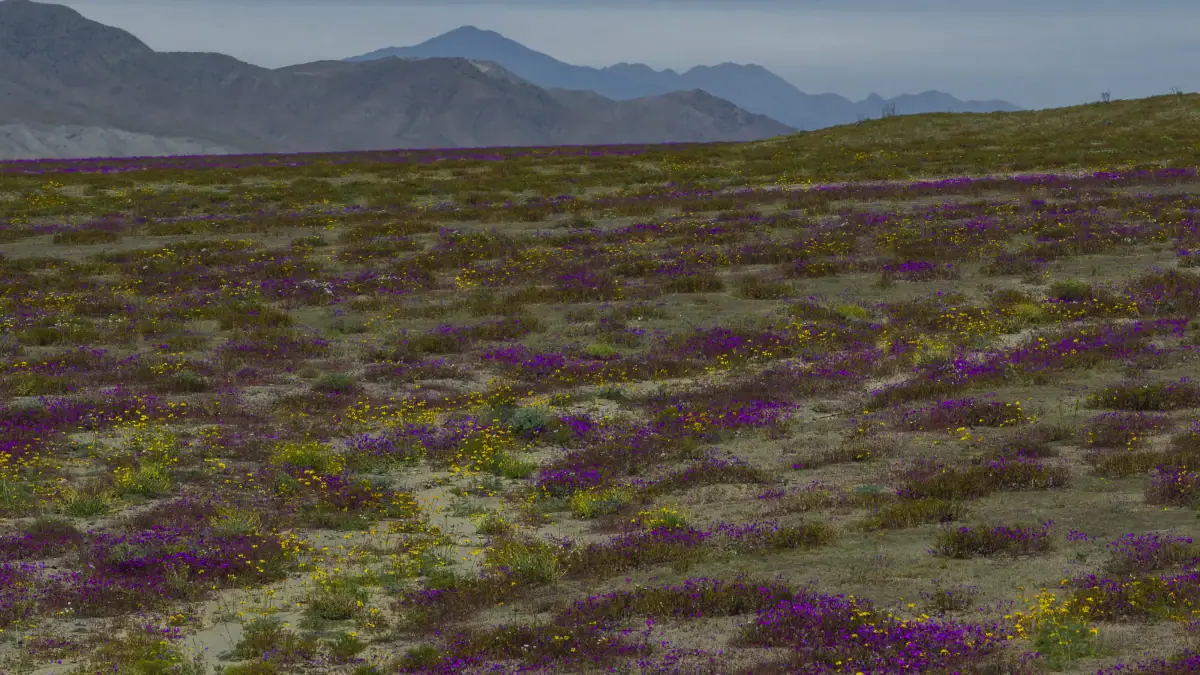
The Atacama Desert in Chile, known as the driest non-polar desert in the world, has experienced a rare and vibrant floral bloom. The phenomenon, which occurs every few years, was triggered by heavy rains brought by the El Niño super cycle. The floods in July and August caused widespread damage, forcing hundreds of people to evacuate, but also led to the largest and most colorful floral display in 30 years.
The rainwater penetrated deep into the parched ground, allowing millions of seeds, bulbs, and tubers to sprout above the surface. Many of these seeds had lain dormant for decades under the sand. The resulting bloom is a patchwork of pinks, yellows, lilacs, and purples stretching across the desert floor. The display is so vibrant that it can be seen from space.
The floral bloom, known locally as the Desierto Florido, is a short-lived phenomenon that lasts only a few weeks before the flowers dry out and release their seeds. The seeds remain in the soil until the next rainfall brings the desert back to life. This event occurs when unusually heavy rainfall awakens seeds that have remained dormant beneath the desert soil for years, sometimes decades.
Scientists studying the phenomenon have identified over 200 species in flower, with patches of desert in bloom where flowers have never previously been recorded. Moisés Grimberg, the administrator of Llanos de Challe National Park, says that the rain has turned the desert into a "natural seed bank, a dormant archive that becomes a living one with the rains." The park has seen a surge in tourism, with 15,000 visitors over the last few weeks alone.
The bloom has also attracted biologists from INIA, Chile's national seed bank, who are collecting specimens to analyze in their laboratory. Ana Sandoval, a biologist, says that the event is "very exciting" and that it's as if the desert is awakening. The seed bank wants to preserve the genetic material and unique adaptations each plant has developed to survive the harsh desert conditions.
The Atacama Desert is expected to see around 300,000 overnight trips during the two months the desert is in bloom. The phenomenon is becoming more frequent as changes in the climate bring unseasonal rains. Among the star attractions are the nectar-filled, crimson flowers of the garra de león, an endemic flower that grows along just a few miles of this stretch of coastline in the Atacama Desert.
The floral bloom gives rise to a thriving, transient ecosystem, with insects hatching and attracting lizards and bats, as well as larger mammals such as the guanaco. The event is a rare and beautiful spectacle that highlights the unique and fragile nature of the Atacama Desert ecosystem. As the flowers dry out and release their seeds, the desert will return to its usual arid state, waiting for the next rainfall to bring it back to life.
Key points
- The Atacama Desert has experienced its largest and most colorful floral bloom in 30 years, triggered by heavy rains brought by the El Niño super cycle.