A recent project by Doctors Without Borders/Médecins Sans Frontières (MSF) in Gaza has highlighted the devastating impact of the Israeli military offensive on the mental health of children. Through group psychosocial sessions, children like Dina, Rahaf, and Motassem shared their drawings and stories of life before and after the conflict. These drawings and stories reveal the trauma and fear that children in Gaza have experienced.
According to the World Health Organization, the number of people in Gaza requiring urgent mental health and psychosocial support has more than doubled since before the conflict, from around 485,000 to more than one million people. MSF has provided mental health care, including individual consultations, psychosocial and psychoeducational group activities for adults, and recreational activities for children and adolescents.
For children who were old enough to remember life before the conflict, almost nothing remains of the world they knew. Their neighborhoods have been destroyed, and the basic things that should define childhood, such as feeling safe, playing with friends, and going to school, have been stolen from them. Instead, they are now responsible for helping their families survive.
Rahaf, an 11-year-old girl, drew her neighborhood before and after the conflict, highlighting the drastic changes she has witnessed. Her "before" drawing shows clean streets, children playing, and a school full of students, while her "after" drawing depicts tents and homes being targeted by drones, bleeding people, and children waiting for food.
The effects of prolonged violence are visible in the everyday behavior of Gazan children, with increasing anxiety, fear, screaming, aggressive behavior, nail-biting, and involuntary urination reported by MSF counsellors. Children have also begun to recreate what they see around them through play and drawings, imitating aid distributions, describing attacks, or playing among the rubble of destroyed buildings.
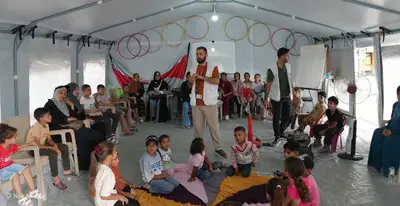
MSF's Zaytoun clinic in Gaza City provides psychosocial support to children through music, games, stories, and drawing, giving them a space to express themselves. Counsellors help children reconnect with who they were before the war and understand their emotions, trying to remind them of their humanity and that they are children.
Between late 2023 and September 2026, MSF teams provided more than 132,000 individual mental health consultations and supported more than 246,000 people through group activities. The organization's efforts aim to address the mental health needs of children and adults affected by the conflict in Gaza.
Key points
- The number of people in Gaza requiring urgent mental health and psychosocial support has more than doubled since before the conflict.
- MSF has provided over 132,000 individual mental health consultations and supported over 246,000 people through group activities.
- The conflict has had a devastating impact on the mental health of children in Gaza, with many experiencing trauma, fear, and anxiety.