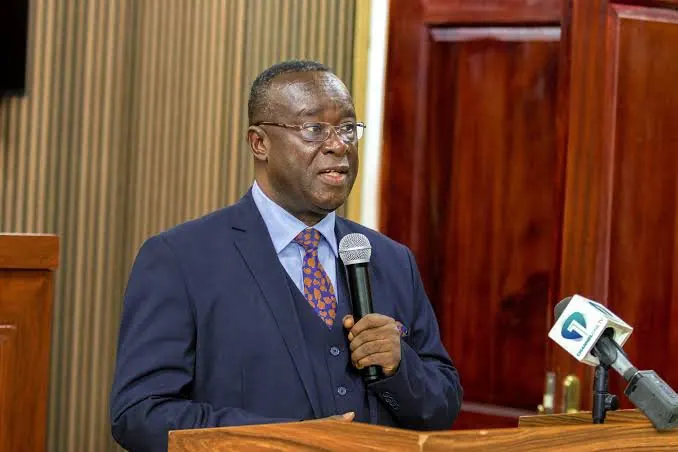
The Chief Justice of Ghana, Justice Paul Baffoe-Bonnie, has emphasized the importance of judges and magistrates maintaining their humanity while discharging their judicial duties. Speaking at the 45th Annual Conference of the Association of Magistrates and Judges of Ghana (AMJ) in Accra, he noted that although the judicial office demands restraint and discipline, it should not require judges to cease being human. This call is aimed at promoting a balanced approach to judicial service.
Justice Baffoe-Bonnie cited his own experience, where he recently faced criticism for allowing his humanity to take precedence over official restraint. He mentioned attending public events to honor close friends and relatives, as well as undertaking official visits and engagements in his capacity as Chairman of the Council for Legal Education and Training. These actions sparked criticism, highlighting the challenges judges face in balancing their official and personal roles.
The Chief Justice's address to the AMJ conference underscores the complexities of judicial service. He acknowledged that the judicial robe demands a measure of distance, but emphasized that this should not lead to judges becoming isolated from the community they serve. By encouraging judges to remain human, Justice Baffoe-Bonnie aims to foster a more empathetic and understanding approach to justice.
The 45th Annual Conference of the AMJ provided a platform for judges and magistrates to engage in discussions on various aspects of judicial service. The event, held in Accra, brought together stakeholders to share experiences and insights on promoting effective justice delivery. Justice Baffoe-Bonnie's address was a highlight of the conference, as he shared his perspectives on the role of judges in society.
The Chief Justice's comments on balancing professionalism with humanity have sparked a national conversation on the role of judges in Ghana. Many have welcomed his call for judges to remain approachable and empathetic, while also upholding the principles of justice. This debate is expected to continue, with stakeholders exploring ways to promote a more human-centered approach to judicial service.
Justice Baffoe-Bonnie's leadership has been marked by efforts to promote transparency and accountability in the judiciary. His willingness to engage with the public and acknowledge criticisms has earned him recognition as a champion of judicial reform. As Ghana continues to navigate complex social and economic challenges, the role of judges in promoting justice and fairness has become increasingly important.
The interplay between judicial professionalism and humanity will likely remain a topic of discussion in Ghana's justice system. As judges and magistrates strive to balance their official duties with their personal roles, the guidance provided by Justice Baffoe-Bonnie is expected to shape the conversation. The impact of his address on the AMJ conference will be closely watched, as stakeholders assess its implications for the future of judicial service in Ghana.
Key points
- The Chief Justice of Ghana, Justice Paul Baffoe-Bonnie, has urged judges and magistrates to balance their professionalism with humanity.