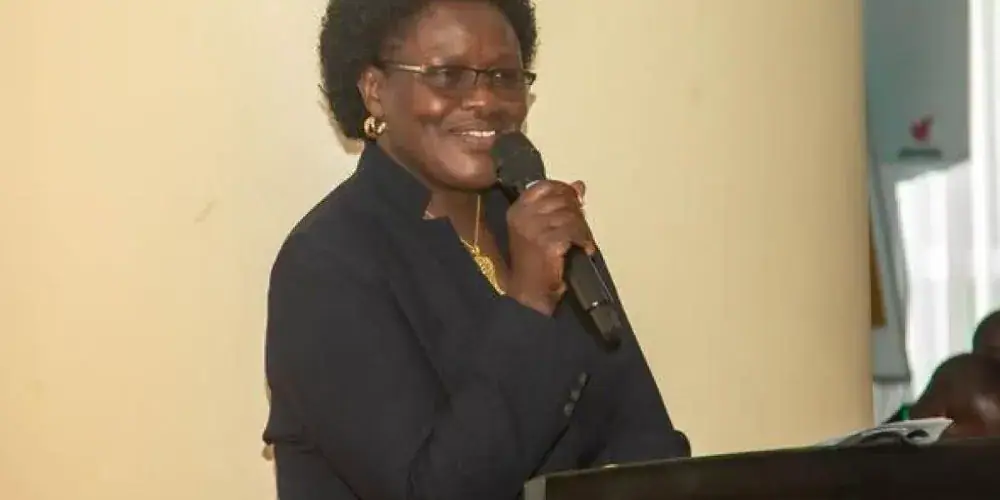
State Minister for Education Phyllis Chemutai has called on parents to continue making reasonable and voluntary contributions to government schools. She warned that withdrawing community support could worsen teacher shortages and disrupt learning. The government faces financial constraints, making it difficult to recruit and remunerate enough teachers to meet staffing needs in public schools.
Chemutai's remarks come amid growing complaints in the Sebei sub-region, where some schools have lost teachers previously recruited and paid through Parent-Teacher Association (PTA) contributions. This follows an anti-corruption campaign led by Minister of Local Government Balaam Barugahara Ateenyi. The campaign has generated controversy over parental contributions, with some school administrators and parents arguing that restrictions on collections have affected schools' ability to provide basic services.
Chemutai says she has received complaints from communities, particularly in rural areas, where learners are abandoning classes due to inadequate teaching staff. She acknowledges that some schools relied on teachers employed using PTA funds, but the disruption of those arrangements has left institutions struggling to maintain effective teaching. Chemutai urged parents to cooperate with schools and support each other, as the government cannot afford everything.
However, Chemutai cautioned school administrators against using PTA contributions to impose excessive charges on parents. She urged headteachers and school management committees to consult parents before introducing contributions and ensure that the amounts requested are affordable. The debate over PTA contributions has grown beyond Sebei, with parents, district leaders, and legislators questioning the implications of the anti-corruption campaign for government-aided schools.
The controversy has drawn resistance from parents and education leaders in other parts of the country. In July, parents at Mbale High School resolved to maintain a voluntary contribution of 80,000 shillings per learner. In Agago District, local leaders sought government approval to continue collecting agreed parental contributions, saying public schools depend on the money to recruit additional teachers and meet operational costs.
The Education (Pre-Primary, Primary and Post-Primary) Act, 2008, prohibits schools implementing Universal Primary Education and Universal Secondary Education from charging fees for education. However, the law provides for voluntary contributions from parents and well-wishers towards emergencies and urgent school requirements. In Sebei, the effects of the dispute are increasingly being felt by learners, with students struggling to receive adequate lessons.
Learners and local leaders have expressed concerns about the impact of the restrictions on PTA contributions. Students at Kapchorwa Senior Secondary School say they are struggling to receive adequate lessons, and some are roaming around town during learning hours. Local leaders warn that inadequate supervision could expose learners to drug abuse, sexual exploitation, and other harmful social behaviors, calling for urgent intervention by education authorities, parents, and school administrators.
Key points
- Phyllis Chemutai urges parents to continue making voluntary contributions to government schools.
- The anti-corruption campaign has generated controversy over parental contributions.
- The dispute has exposed a longstanding funding challenge in Uganda's public education system.
Reporting sources
- Chemutai Urges Parents To Maintain Voluntary PTA Contributions · 88.2 Sanyu FM