As Saudi Arabia marks its National Day on September 23, attention turns to its longstanding relationship with Nigeria. The relationship, anchored in faith and pilgrimage for decades, is now expanding into new areas. The annual celebration commemorates the 1932 unification of the Kingdom of Saudi Arabia under King Abdulaziz Al Saud.
The scale of the two countries provides context for the potential of their relationship. Nigeria had an estimated population of 237.5 million in 2025, according to World Bank data, while Saudi Arabia's population stood at about 37 million. Nigeria's economy was valued at about $290.8 billion in 2025, compared with Saudi Arabia's economy at about $1.28 trillion.
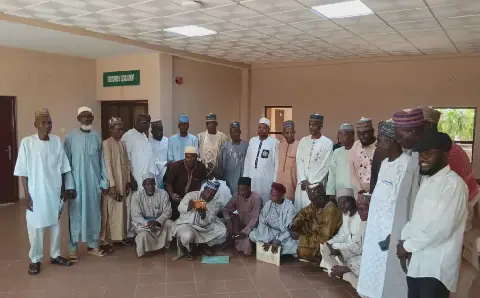
For decades, the Hajj has remained the most visible expression of their relationship. The National Hajj Commission of Nigeria (NAHCON) said about 39,000 Nigerian pilgrims under the government quota were airlifted to Saudi Arabia for the 2026 Hajj. Nigeria had a total allocation of 50,000 pilgrims, including 9,750 slots allocated to licensed tour operators, officials and support personnel.
The annual movement of thousands of pilgrims has created enduring links between the two countries, making cooperation on travel, accommodation, welfare and consular support an important public concern. From the plains of Arafat, where thousands of Nigerian pilgrims pray every year, to classrooms in Riyadh where Nigerian students pursue studies on Saudi scholarships, the relationship has long been driven by people-to-people connections.
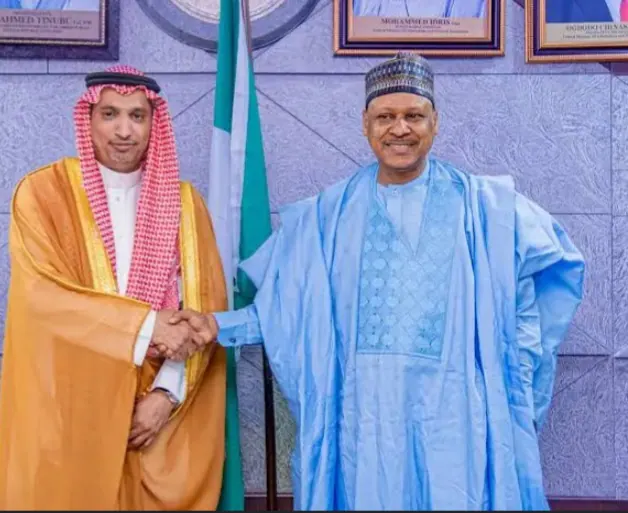
Yet, while faith remains a powerful bond, the relationship is gradually taking on a wider economic and strategic dimension. In the past year, there has been renewed emphasis on trade, investment, energy, education and security cooperation. This was evident at the Nigeria-Saudi Diaspora Investment and Tourism Exhibition Summit in Abuja in August 2026.
Data from Saudi Arabia's official DataSaudi platform show that Saudi exports to Nigeria reached 2.3 billion Saudi riyals in 2025. The main exports included plastics and related products worth 1.1 billion riyals, mineral fuels, oils and waxes worth 518.3 million riyals, and ships, boats and floating structures worth 459.4 million riyals.
Education provides another important avenue for strengthening the relationship. In April 2026, Saudi Arabia offered fully funded scholarships to 50 Nigerian students in petroleum and mineral studies as part of a bilateral education and capacity-building initiative. Building on this, Speaker of the House of Representatives, Abbas Tajudeen, called for a structured parliament-to-parliament framework to expand such opportunities to medicine, engineering and digital technology.
Key points
- Nigeria and Saudi Arabia are expanding ties beyond Hajj to investment, education, health, energy and security
- The relationship has long been driven by people-to-people connections, but is gradually taking on a wider economic and strategic dimension
- Education provides another important avenue for strengthening the relationship, with Saudi Arabia offering scholarships to Nigerian students