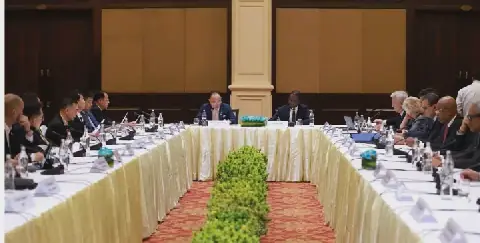
A recent conference in N'Djamena, Chad, highlighted the challenges of formalizing the country's informal economy, which accounts for over 80% of Chad's real economy. The informal sector provides a livelihood for thousands of Chadian households, but those who rely on it struggle to access financing, public contracts, and social protection. The conference, organized as part of JIET Connect, brought together participants to discuss the issue.
The conference, held on November 14, 2026, focused on the theme "The informal economy, a response to youth unemployment in Chad?" Participants argued that regulating the informal sector is crucial, but also acknowledged the difficulties of formalization. Amine Idriss advocated for the use of digital tools to facilitate the identification and bankarization of economic operators, as well as greater access to public contracts for young entrepreneurs and women.
The use of digital technologies was seen as a potential solution to facilitate the transition to formalization. Narcisse Mvandim, a specialist in digital transformation, highlighted the possibilities offered by digital technologies to identify, organize, and support small entrepreneurs. He called for inspiration from experiences in other African countries. The Ethiopian economic model was cited as an example of successful formalization.
However, formalization faces concrete obstacles, including fiscal and administrative requirements. An entrepreneur shared her experience of difficulties encountered during the regularization of her activity, including demands for tax payments and penalties despite a three-month exemption for new businesses. This testimony raised questions about how to encourage entrepreneurs to formalize when the initial steps are perceived as a financial burden.
Several participants advocated for a gradual approach to formalization, taking into account the real capacities of small enterprises. Incentives would be necessary to make formalization more attractive than compulsory. Edgar Djerassem, a banker, emphasized that the question is no longer just about regulating the informal sector, but also about enabling it to grow and develop.
The informal economy is a significant source of income and activity in Chad, but its potential is limited by lack of support, access to financing, and weak protection mechanisms. Participants at the conference called for a balanced approach that would encourage formalization without stifling the sector's dynamism. The debate highlighted the need for a nuanced understanding of the challenges and opportunities presented by the informal economy.
Ultimately, the challenge for Chad is to find a way to formalize the informal economy without jeopardizing its economic equilibrium. The conference highlighted the need for a comprehensive approach that addresses the sector's specific needs and constraints. By working together, stakeholders can develop solutions that support the growth and development of Chad's informal economy.
Key points
- The informal economy accounts for over 80% of Chad's real economy
- Formalization faces obstacles, including fiscal and administrative requirements
- Digital technologies can facilitate the identification and bankarization of economic operators