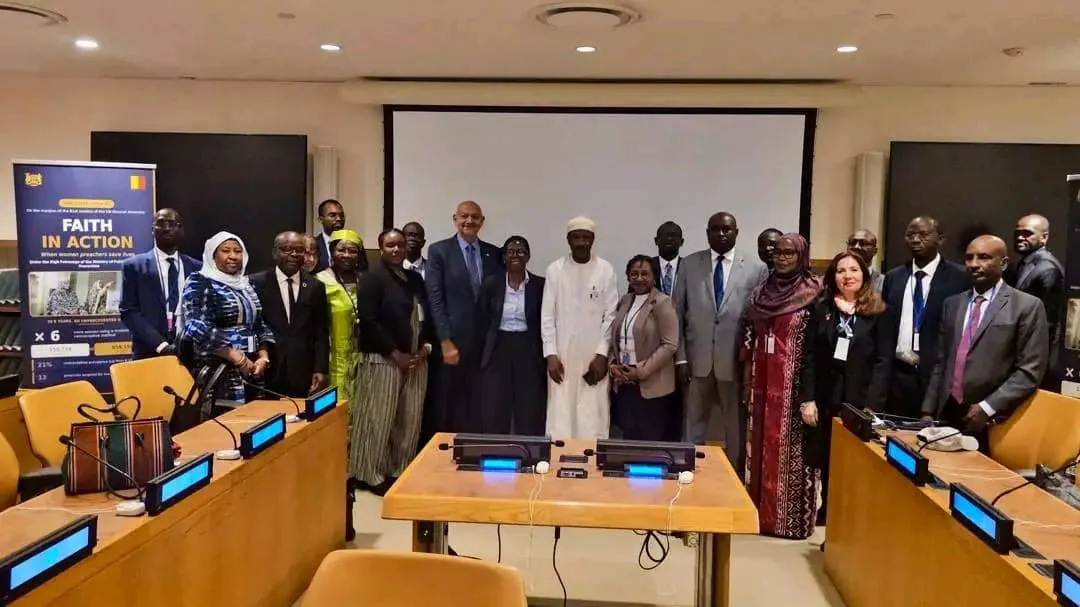
Chad presented its experience in engaging religious and community leaders to promote reproductive health at an event organized by the Ministry of Public Health and Prevention on the sidelines of the 81st UN General Assembly in New York. The event, held on September 23, 2026, focused on the role of dialogue, trust, and partnership with local communities in improving access to modern contraceptives and reducing preventable maternal, newborn, and child mortality.
According to data presented by Chad, the number of women using modern contraceptives increased from 150,734 to 959,158 over eight years, with the percentage of users rising from 8.1% to 21%. The country's Minister of Public Health and Prevention, Dr. Abd al-Majid Abd al-Rahim, participated in the discussion alongside officials and experts from the UN Population Fund and organizations FP2030 and CIFF.
Dr. Abd al-Rahim emphasized that Chad's experience with religious leaders resulted from a national dialogue on maternal, newborn, and child mortality, initiated in 2022. He highlighted the importance of engaging communities and leveraging their religious, cultural, and social values to support positive change.
The event showcased Chad's innovative approach to addressing reproductive health through collaboration with religious and community leaders. This approach has contributed to a significant increase in the use of modern contraceptives, particularly among women.
Minister Abd al-Rahim called for the expansion of this initiative nationwide, taking into account the diverse religious, cultural, and social contexts of different regions. He stressed the need for a tailored approach that respects local values and promotes sustainable progress.
The discussion at the UN event underscored the critical role of partnerships and community engagement in achieving reproductive health goals. Participants emphasized the importance of continued support and collaboration to sustain and build upon Chad's progress.
Chad's experience serves as an example of how engaging religious and community leaders can contribute to improved reproductive health outcomes. The country's progress highlights the potential for similar initiatives in other contexts, with careful consideration of local circumstances.
Key points
- Chad's engagement of religious and community leaders has led to a significant increase in the use of modern contraceptives, from 8.1% to 21% over eight years.
- The country's experience demonstrates the importance of dialogue, trust, and partnership with local communities in improving reproductive health outcomes.
- Chad aims to expand its initiative nationwide, taking into account regional differences in culture, religion, and social context.