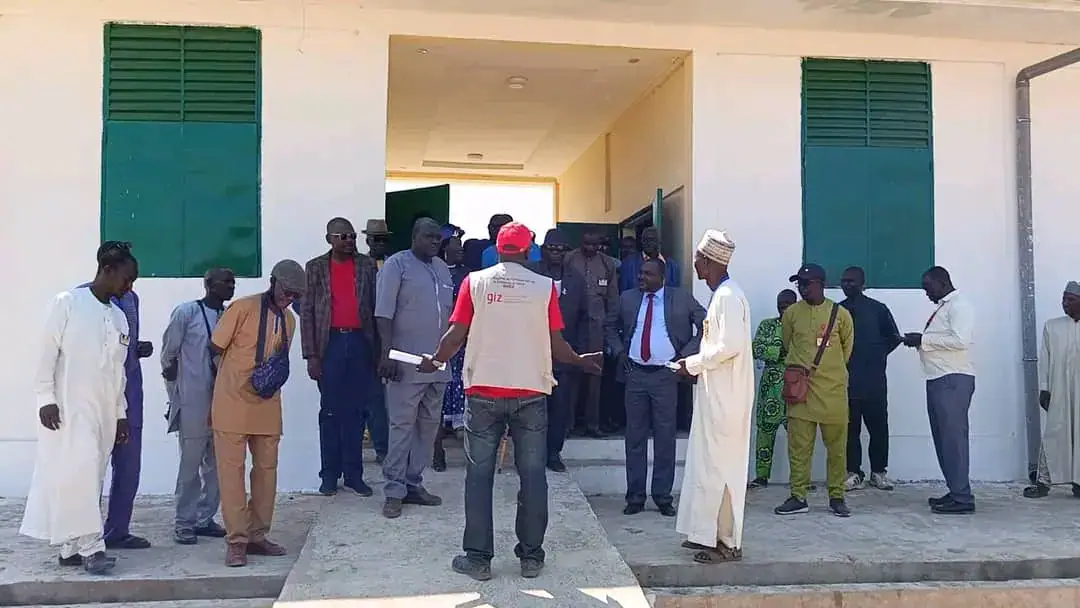
The communities of Misséré and surrounding villages in Chad's Tandjilé province have been equipped with a peace house and two cross motorcycles. The handover, which took place on November 25, aims to strengthen community dialogue, conflict prevention, and technical service interventions in the area. This initiative is part of the Resilience Enhancement Project in the Sahel, which seeks to provide communities with a dialogue and consultation space while facilitating technical service interventions.
The peace house, described as a privileged framework for dialogue, consultation, and dispute resolution, will host various activities promoting dialogue, social cohesion, and living together. According to Tao Jérôme, head of the GIZ antenna in Pala, the infrastructure will be used for activities focused on natural resource governance, conflict prevention and management, social cohesion, and food and nutritional security. The GIZ is supported by the World Food Programme (WFP), UNICEF, and decentralized state technical services.
The two motorcycles, which will be used exclusively for professional activities by concerned technical services, are expected to enhance the interventions of these services. A usage charter, defining the rights and duties of beneficiaries, will govern their management. Tao Jérôme emphasized that personal use or individual appropriation of the motorcycles is strictly prohibited. The charter aims to ensure responsible management and maintenance of the equipment.
Keineng Bertrand, secretary general of the Provincial Council, presided over the handover ceremony and praised the commitment of partners, including GIZ, WFP, and UNICEF. He encouraged beneficiaries to ensure responsible management of the equipment and to prioritize community dialogue mechanisms to resolve disputes. Bertrand likened the peace house to a "palaver tree," where populations can resolve neighborhood conflicts before seeking assistance from law enforcement or judicial services.
The peace house and motorcycles are expected to benefit the population of Misséré and a dozen surrounding villages. Keineng Bertrand expressed gratitude to GIZ, WFP, and UNICEF for their contribution to local development and peace consolidation. He also emphasized the importance of rational and responsible use of the infrastructure and equipment to ensure their sustainability.
To guarantee the longevity of these assets, Keineng Bertrand urged the management committee to mobilize its own resources to cover operating expenses, including motorcycle fuel. He reaffirmed the Provincial Council's commitment to accompanying and monitoring the functioning of the peace house to ensure its durability. The partners and local authorities aim to consolidate community conflict prevention mechanisms, enhance population resilience, and promote sustainable living together in the Tandjilé province.
The Resilience Enhancement Project in the Sahel seeks to strengthen community dialogue and conflict prevention mechanisms. Through this initiative, the GIZ, WFP, and UNICEF aim to promote social cohesion and living together in the Tandjilé province. The peace house and motorcycles are expected to play a crucial role in achieving these objectives, enhancing the capacity of communities to manage conflicts and promote sustainable development.
Key points
- The peace house and motorcycles were handed over to the communities of Misséré and surrounding villages on November 25.
- The initiative aims to strengthen community dialogue, conflict prevention, and technical service interventions in the area.
- The equipment is expected to benefit the population of Misséré and a dozen surrounding villages.