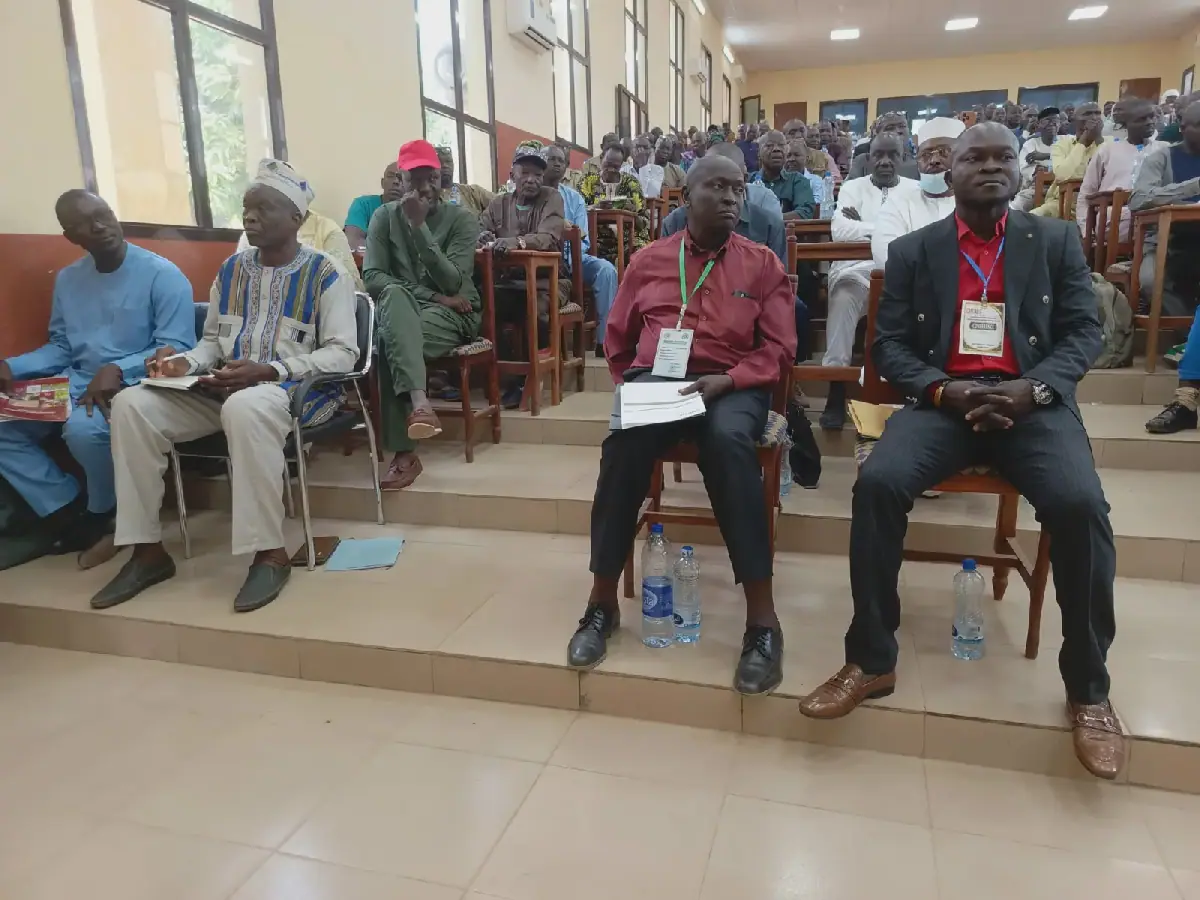
Caritas Suisse, through its SODEFIKA project, recently organized a business dialogue in Moundou, Chad, aiming to strengthen commercial relationships between sesame producers and economic operators. The event brought together cooperatives, economic operators, and producers from various regions, including Logone occidental, Logone oriental, Mandoul, and Moyen-Chari. This initiative seeks to promote a more structured and sustainable market. The meeting's goal is to facilitate direct engagement between producers and buyers.
Laoula Dillah, speaking on behalf of sesame economic operators, highlighted the strategic importance of sesame for Chad's national economy. He noted that sesame production exceeds 110,000 tons annually, covering over 300,000 hectares. With over 103,000 tons exported yearly, valued at more than 60 billion FCFA, Chad ranks among the world's leading sesame exporters. The southern region, particularly Moundou, plays a significant role in this dynamic. Logone occidental produces over 25,000 tons, while Logone oriental produces nearly 20,000 tons.
Despite the sector's potential, Laoula Dillah identified several challenges hindering its development, including climate change effects, inadequate exploitation means, limited access to financial services, and difficulties in accessing formal markets. He also mentioned the increasing quality, quantity, and logistical requirements of international markets. Dillah emphasized that this meeting should lead to concrete commercial commitments between producers and buyers, rather than just simple exchanges.
Djonabaye Israël, coordinator of the Swiss Cooperation's economic portfolio development, reaffirmed his institution's commitment to supporting Chad's agricultural sectors through the SODEFIKA project. He stressed the approach of developing market systems, which aims to strengthen relationships between economic actors to ensure the sustainability of activities beyond project interventions. Israël noted that the project has contributed to structuring producers into 111 cooperatives with over 36,000 members.
The project's goal is to reduce intermediaries, limit transaction costs, and improve producers' incomes through direct dialogue between cooperatives and economic operators. This dialogue aims to establish a common roadmap defining the commitments of different parties and their commercial collaboration modalities. Yaya Mamadou Belou, director of the civil cabinet of the government's delegation to Logone occidental province, officially opened the event, praising the mobilization of southern province actors.
Belou highlighted the growing role of sesame in diversifying Chad's economy and improving rural households' living conditions. He emphasized that Moundou, due to its geographical position and collection, storage, and sorting infrastructure, is an essential commercial platform for the sesame sector. The representative of the government's delegation also underscored the importance of contractual agriculture as a mechanism to secure relationships between producers and buyers.
The business dialogue in Moundou is expected to lead to concrete recommendations and sustainable commercial strategies for the current and future sesame campaigns. Participants will identify obstacles to collaboration and formulate strategies to address them. The event marks a significant step towards strengthening the sesame sector in Chad, promoting a more structured market, and improving the livelihoods of rural communities.
Key points
- The SODEFIKA project's efforts to link producers and buyers in Chad's sesame sector aim to promote a more structured and sustainable market.
- Chad's sesame production exceeds 110,000 tons annually, with over 103,000 tons exported yearly, valued at more than 60 billion FCFA.
- The project's goal is to reduce intermediaries, limit transaction costs, and improve producers' incomes through direct dialogue between cooperatives and economic operators.