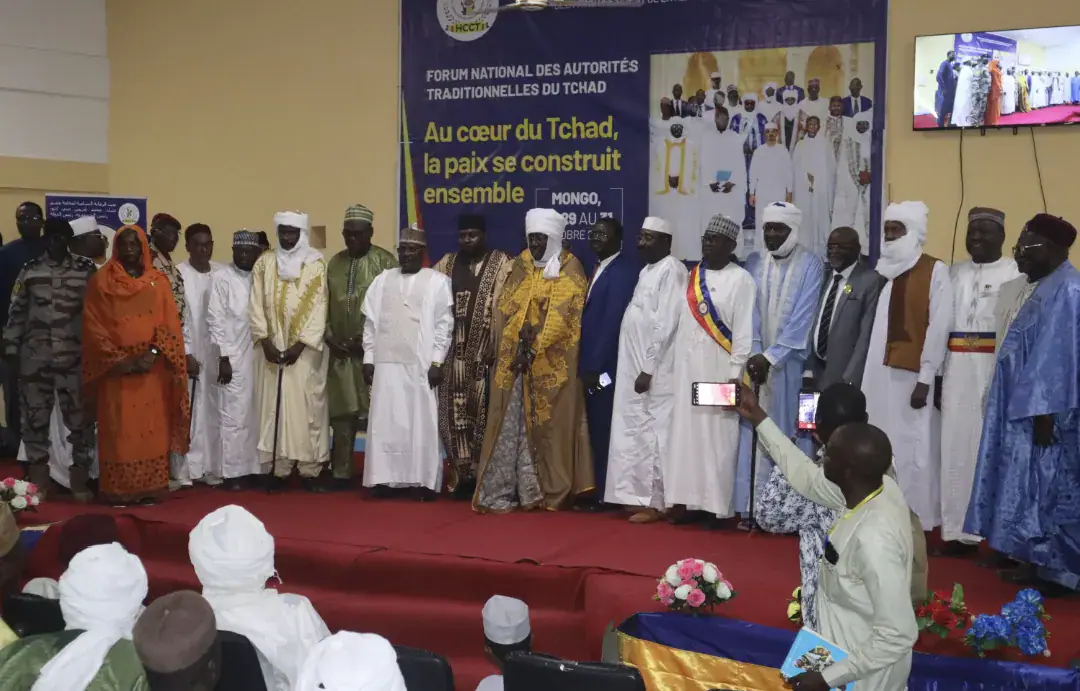
The National Traditional Chieftaincy Forum in Chad concluded on October 31 in Mongo, the capital of Guera province. The three-day event brought together traditional chiefs from 23 provinces, along with representatives from public institutions, farmers, herders, women, and youth. The forum focused on four main themes: republican values, conflict prevention, traditional mediation, and social cohesion. Discussions aimed to address the root causes of conflicts and find ways to prevent and manage them.
Conflicts often arise from minor issues, such as misunderstandings, hurtful words, or disputes over land or resources. If left unaddressed, these issues can escalate into full-blown conflicts. The forum participants reviewed the causes of conflicts and formulated recommendations to prevent and manage them. They emphasized the importance of respecting established rules and promoting national cohesion. The recommendations will be presented to the government for implementation.
The forum participants made several key recommendations to the government. These include strengthening the institutional framework and public policies for conflict prevention and management, improving relations between administrative, security, judicial, and traditional authorities, and promoting republican values. They also suggested reinforcing civic and moral education in schools. The recommendations aim to prevent conflicts and promote peaceful resolution.
Mahamat Moussa Bezo, vice-president of the National Organizing Committee, called on participants to be exemplary and vigilant in addressing recurring conflicts. He highlighted three types of conflicts: those between farmers and herders over land, water, and grazing areas; disputes over chieftaincy and succession; and conflicts that can be prevented through early warning systems. Bezo emphasized the importance of launching early alerts to prevent conflicts.
Tamitah Djidingar, president of the High Council of Traditional Chieftaincies, urged participants to implement the recommendations and commitments made during the forum. He encouraged them to promote peace and social cohesion in their communities. Djidingar emphasized that peace is built through daily actions, words, and decisions. He called on traditional chiefs to create spaces for listening, justice, mediation, and reconciliation.
The forum was marked by a tragic incident on the second day, when a conflict over a well in the Hadjer-Lamis province resulted in at least 7 deaths and several injuries. Participants observed a minute of silence in memory of the victims. In response to the incident, the Ministry of Public Security banned the circulation of two-wheeled vehicles outside urban areas in four provinces, including Hadjer-Lamis.
The National Traditional Chieftaincy Forum concluded with a commitment from participants to work towards promoting peace and social cohesion in Chad. The recommendations made during the forum will be presented to the government for implementation. The event demonstrated the importance of traditional chieftaincies in promoting peaceful resolution of conflicts and social cohesion.
Key points
- The forum recommended strengthening the institutional framework and public policies for conflict prevention and management.
- The participants emphasized the importance of promoting republican values and reinforcing civic and moral education in schools.
- The forum highlighted the need for early warning systems to prevent conflicts, particularly those between farmers and herders.