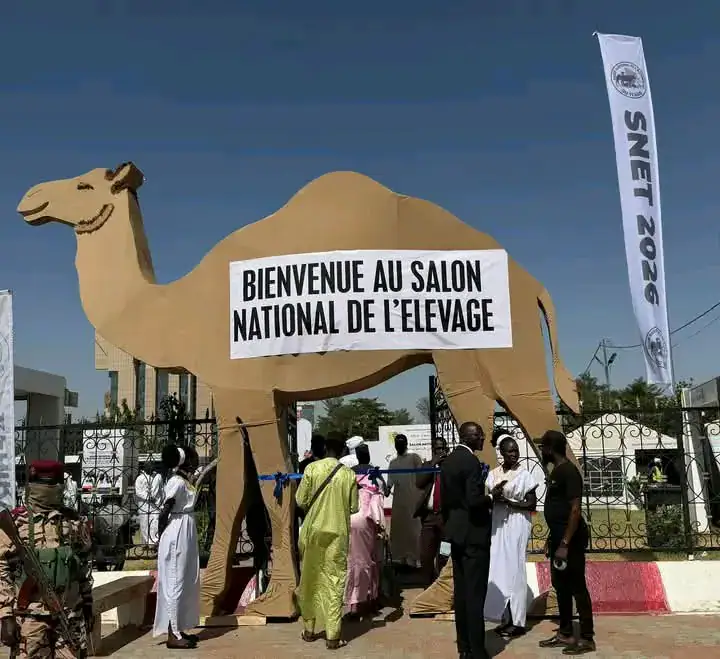
The National Livestock Salon, organized by Chad's Ministry of Livestock and Animal Production, kicked off with a theme of "Promoting Chadian livestock, building the future of livestock." The event features exhibitions, scientific and technical sessions, and competitions. Organizers promise to showcase the sector's potential and new perspectives. As a major Sahelian country, livestock plays a crucial role in Chad's economy and food security. However, concerns linger about the event's ability to address pressing issues affecting the sector.
Long-standing challenges facing Chad's livestock sector include transboundary diseases such as peste des petits ruminants and contagious bovine pleuropneumonia, which limit productivity. In the north, recurring droughts reduce pasture and water resources. Mourya Abdelkader, a veterinarian and head of the animal health service at NGO AGF, notes that these issues persist. He emphasizes the precarious and archaic state of pasture and animal health security, stating that past responses have been insufficient or ineffective.
A recent ministerial tour covered nine provinces, focusing on vaccination campaigns against diseases affecting camels, cattle, and small ruminants. Local breeders consistently highlighted key concerns, including inadequate veterinary pharmacies and qualified personnel, lack of vaccination centers, and insufficient transhumance corridors and pastoral water sources. Adoum Moussa, a veterinarian and director of the Community Vaccinal Development Center, notes that these converging concerns reveal a broader issue – a nationwide lack of basic infrastructure.
Hubert Mbaikoubou, an agronomist and head of community extension services at NGO Agri Tchad, shares his experience with local mediation. As pastures become scarce, breeders move to new areas, often encountering farmers. Access to natural resources is a recurring source of tension. Mbaikoubou argues that attributing these conflicts solely to climate change oversimplifies the issue, citing the need for better management of transhumance corridors and pastoral water sources.
The National Livestock Salon aims to promote Chad's livestock sector, but experts argue that addressing long-term challenges requires more than a single event. With the sector facing significant hurdles, stakeholders are questioning whether the salon can lead to meaningful change. As the event continues, attendees are likely to scrutinize the government's commitment to addressing these deep-seated issues.
Chad's livestock sector is critical to the country's economy and food security, with millions of households relying on it for their livelihood. The sector's challenges, however, are multifaceted and complex, requiring a comprehensive approach. As the National Livestock Salon unfolds, stakeholders will be watching for concrete solutions and a renewed commitment to addressing the sector's long-standing challenges.
The event's impact will depend on the government's willingness to engage with stakeholders and address the concerns raised by breeders, veterinarians, and other experts. With the right approach, the National Livestock Salon could be a crucial step towards promoting Chad's livestock sector and improving the lives of those who depend on it.
Key points
- Chad's National Livestock Salon aims to promote the country's livestock sector, but faces skepticism about its ability to address long-standing challenges.
- The sector faces significant hurdles, including transboundary diseases, drought, and inadequate infrastructure.
- Experts argue that addressing these challenges requires a comprehensive approach and a renewed commitment from the government.