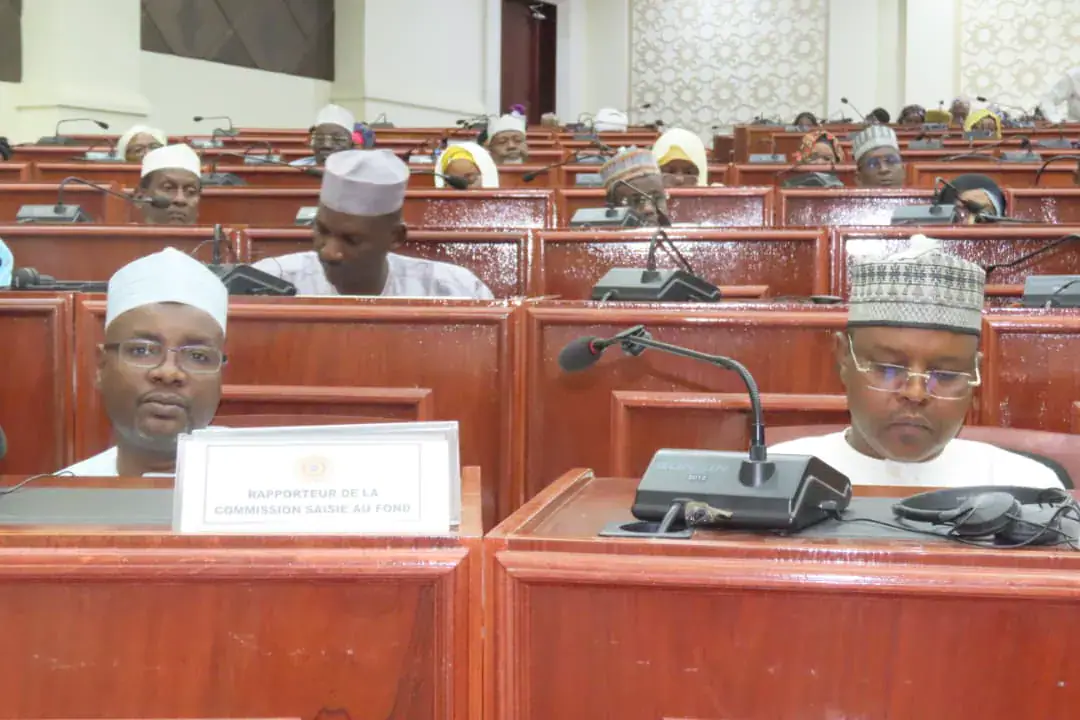
Chad's National Assembly adopted the oil code bill on Monday, November 16, 2026, with 133 votes in favor, 4 against, and 2 abstentions. The plenary session, presided over by Ali Kolotou Tchaïmi, was attended by Minister of Mines, Oil, and Geology, Fatimé Haram Acyl, who defended the bill aimed at modernizing the country's petroleum sector. The bill is part of President Mahamat Idriss Déby Itno's vision to make oil a lever for sovereignty, development, and prosperity.
The oil code bill aims to improve transparency in oil contracts, production, and sales, as well as environmental protection and working conditions in the sector. During the session, lawmakers raised concerns about the transparency of oil contracts, control of production and sales, environmental protection, and working conditions. Minister Fatimé Haram Acyl addressed these concerns, assuring that oil contracts would be submitted to parliamentary scrutiny and made public.
To ensure transparency and accountability, the minister announced strengthened control mechanisms, including detailed reports and audits to prevent under-declaration of production and sales. The bill also includes provisions related to gas flaring, operator responsibility, and the establishment of funds for site rehabilitation after exploitation. These measures aim to modernize the sector and align it with international best practices.
The minister also discussed working conditions in the sector, citing advanced negotiations on a collective convention, while acknowledging persistent difficulties faced by workers employed by subcontracting companies. The bill's adoption marks a significant step towards modernizing Chad's petroleum sector, which is a strategic component of the country's economy.
Minister Fatimé Haram Acyl described the code as modern, balanced, and oriented towards the nation's supreme interest. She remained open to proposals from lawmakers, some of which could be incorporated into implementing texts. The adoption of the oil code bill is expected to enhance the country's sovereignty and development.
The bill's provisions are expected to improve environmental protection, transparency, and accountability in the petroleum sector. The establishment of funds for site rehabilitation and the strengthening of control mechanisms are key aspects of the bill. The sector's modernization is anticipated to have a positive impact on Chad's economy and development.
The adoption of the oil code bill marks a significant milestone in Chad's efforts to modernize its petroleum sector. The bill's implementation is expected to be closely monitored by lawmakers and stakeholders. Key points of the bill include improved transparency in oil contracts, strengthened environmental protection, and enhanced working conditions.
Key points
- The bill aims to modernize Chad's petroleum sector and improve transparency in oil contracts and production.
- The bill includes provisions related to environmental protection, working conditions, and site rehabilitation.
- The adoption of the bill marks a significant step towards enhancing Chad's sovereignty and development.