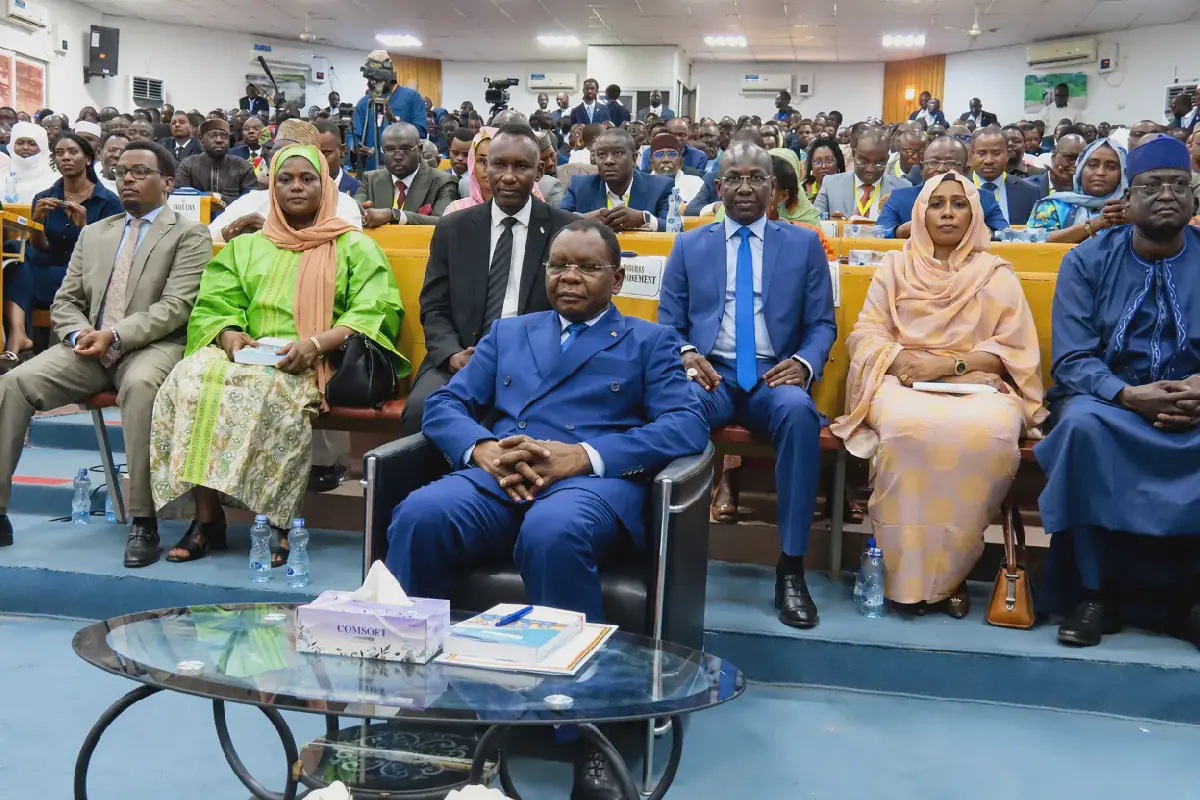
The École nationale d’administration (ENA) of Chad officially launched the fifth edition of its international colloquium on October 29, 2026. The event, themed "Endogenous Development of African States: Challenges, Obstacles, and Perspectives," was opened by the Prime Minister, Allah-Maye Halina, on behalf of President Mahamat Idriss Déby Itno. The ceremony took place at the Idriss Déby Itno amphitheater of the ENA. The colloquium brings together researchers, academics, senior administrative officials, experts, and partners from diverse backgrounds.
The chosen theme aligns with previous editions of the ENA, which have addressed public administration performance, security governance, public services, and state sovereignty. This year's focus on endogenous development aims to examine the capacity of African states to transform their resources, knowledge, and institutions into sustainable progress for their populations. The Director-General of the ENA, Dr. Mahamat Borgou Hassan, expressed pride in hosting this scientific meeting and acknowledged the President's trust in the institution.
Dr. Mahamat Borgou Hassan emphasized that endogenous development is not just an intellectual concept but "a call to lucidity." He stressed that no state can develop without first understanding its strengths, weaknesses, resources, and potential. The Secretary-General Adjoint of the government, Dr. Bourkou Dédé Alhadj, representing the Minister Secretary-General of the government, praised the diversity of competencies gathered in N'Djamena. He noted that Africa has considerable assets, including a rich subsoil, significant cultural heritage, a dynamic youth, and valuable human competencies.
Dr. Bourkou Dédé Alhadj explained that the challenge is not only to recognize what countries possess but also to determine how to valorize these resources, strengthen national capacities, and master the choices that orient the future. Prime Minister Allah-Maye Halina transmitted the President's greetings and encouragements to the organizers, experts, and participants. He highlighted that the President's high patronage testifies to the importance attached to the training of administrative elites and strategic reflection on the continent's future.
The Prime Minister emphasized that Africa cannot sustainably build its future by remaining dependent on a development model conceived elsewhere and often poorly adapted to its economic, social, cultural, and political realities. However, he clarified that this stance does not imply a rejection of international cooperation or autarkic withdrawal. The Prime Minister stated that endogenous development requires each state to base its transformation strategy on its own potentialities, natural and human resources, know-how, sociocultural values, and scientific and technological capacities.
The Prime Minister added that international cooperation should now be based on balanced partnerships that respect national priorities and are genuinely oriented towards strengthening African productive capacities. He invited participants to use this colloquium as a platform to affirm Africa's economic and intellectual sovereignty. The Prime Minister urged experts and intellectuals to transform Africa's potentialities into genuine factors of progress.
The colloquium continues with discussions and presentations from experts and participants. The event aims to provide a forum for intellectuals and policymakers to share perspectives and ideas on how African states can achieve endogenous development. Key outcomes from the discussions are expected to inform policy and strategic decisions in the region.
Key points
- The ENA's colloquium focuses on endogenous development in African states.
- The event is attended by high-level officials, researchers, and experts from diverse backgrounds.
- The Prime Minister emphasized the need for Africa to construct its future based on its own potentialities and resources.