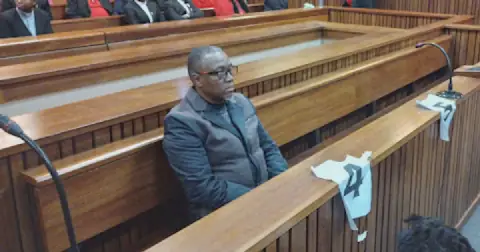
The case opposing six municipal councilors from the Chadian Convention for Peace and Development (CTPD) to the Moundou Commune regarding the establishment of the current communal executive was examined on November 20, 2026, by the administrative chamber of the Moundou Court of First Instance. The councilors, represented by lawyer Guillaume Allaramadji Rirongarti, contest the legality of the process that led to the installation of the current executive, led by Mayor Béassemda Emmanuel.
The dispute centers on the legality of the minutes of the extraordinary session on June 16, 2026, which established the new communal executive. The councilors argue that the former mayor, Djékaoussem Elon Bondo, remains legally in office, as no regular administrative or legal act officially ended his term before the installation of his successor. They claim that the process was irregular and that the new executive's installation should be annulled.
The councilors cite several irregularities, including the lack of a prefectural order convoking the extraordinary session, the absence of the state representative at the session, and the conditions under which the new executive was designated. They also argue that the vote for the new executive was not conducted by secret ballot and that the quorum was not properly established. The councilors are seeking the annulment of the minutes of the extraordinary session and the condemnation of the Moundou Commune to pay costs.
The current mayor, Béassemda Emmanuel, justifies the change in leadership by citing difficulties under the previous management, including allegations of embezzlement and corruption, a lack of collaboration, chaotic management, and a high level of debt. However, the councilors argue that these accusations do not justify the non-respect of legal provisions governing the end of a mayor's term.
The case has sparked reactions in the local political landscape, with some supporters of the current executive accusing the CTPD president, Laoukein Kourayo Médard, of siding with the former executive to destabilize the current team. The CTPD denies these accusations, describing them as attempts to influence the judicial process.
The decision of the Moundou Court of First Instance, expected on November 27, 2026, will provide a legal clarification on the regularity of the installation of the current communal executive. The court's ruling will have significant implications for the Moundou Commune and the Chadian political landscape.
Three key points emerge from this case: the legality of the process that led to the installation of the current communal executive, the validity of the extraordinary session that established the new executive, and the implications of the court's decision for the Moundou Commune and the Chadian political landscape.
Key points
- The Chadian court will decide on November 27 whether the installation of Moundou's current communal executive was legal.
- The dispute centers on the legality of the process that led to the installation of the current executive, led by Mayor Béassemda Emmanuel.
- The court's decision will have significant implications for the Moundou Commune and the Chadian political landscape.