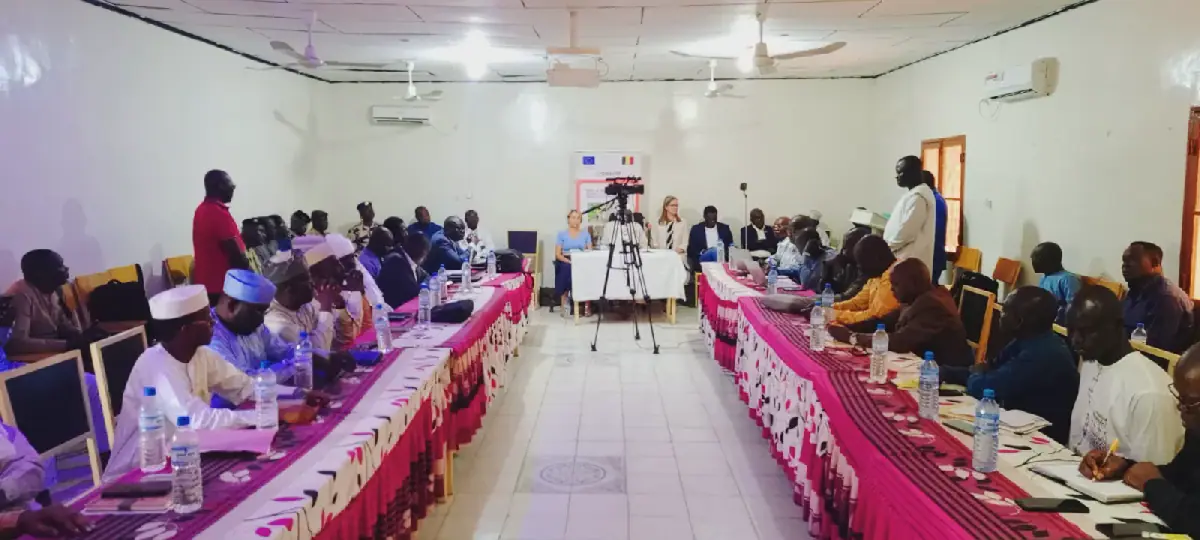
The steering committee of the LAPIA project, which focuses on supporting social cohesion and peaceful coexistence in southern Chad, held a meeting in Koumra from November 25 to 26. The gathering brought together representatives from three beneficiary provinces: Logone oriental, Mandoul, and Moyen-Chari. The attendees included administrative authorities, heads of provincial deconcentrated services, traditional and religious leaders, youth and women's associations, and members of the consortium.
The meeting's host, Koumra, was chosen deliberately to bring the committee closer to the communities and their daily realities, including conflicts between farmers and herders, peaceful land management, and preservation of harmony within customary institutions. Djikoloum Ndouba, speaking on behalf of the committee's president, highlighted the importance of this stage in implementing the project, which technically and financially supports 35 local organizations engaged in promoting peace within their communities.
The project adopts an approach that empowers local actors to build peace, as they are best positioned to understand the paths to their own reconciliation. Mireille Widmer, program manager at COGINTA, praised the efforts of the consortium, comprising ARED, RESAP.MC, CARITAS Goré, and CRASH, in strengthening social cohesion and preventing conflicts in often sensitive contexts. The project's progress was evaluated, with a focus on consolidating results and ensuring the sustainability of achievements.
The European Union's delegation to Chad, represented by Agnès Kovacs, emphasized that the project is entering its final year of implementation. Kovacs stressed the need to consolidate the results obtained and guarantee the perpetuation of achievements so that the actions undertaken can continue to produce effects beyond the project's duration. The project's impact on promoting peaceful coexistence and social cohesion was also highlighted.
Ahmat Abdallah Fadoul, the government's delegate to the Mandoul province, welcomed the LAPIA project's initiative, which addresses a crucial aspect of stability and community development. Fadoul emphasized that social cohesion and peaceful coexistence are essential conditions for preserving peace and strengthening community living. He encouraged local organizations to continue their efforts in sensitization, mediation, and conflict prevention.
The project's stakeholders were urged to prioritize dialogue, consultation, and peaceful dispute resolution. Fadoul also reaffirmed the provincial authorities' commitment to supporting initiatives that consolidate peace, stability, and social cohesion in Mandoul and other concerned provinces. The meeting aimed to review progress, assess advancements, and strengthen intervention strategies for local organizations.
The LAPIA project's steering committee seeks to ensure the long-term impact of its efforts by making social cohesion a vital component of community living and peace in southern Chad's provinces. The project's achievements and challenges were discussed, with a focus on ensuring the sustainability of its results and promoting peaceful coexistence among local communities.
Key points
- The LAPIA project supports 35 local organizations in promoting peace and social cohesion in southern Chad.
- The project's steering committee evaluated progress and discussed strategies for consolidating results and ensuring sustainability.
- The initiative aims to promote peaceful coexistence and social cohesion as essential conditions for preserving peace and stability in the region.