The Chadian government has unveiled its 2027 budget, projecting state resources to reach 3,065 billion FCFA, marking a 35% increase from 2026. This significant rise is largely driven by a 52% increase in oil revenues, expected to reach 1,184 billion FCFA. The budget, approved by the Council of Ministers on November 5, 2026, also forecasts expenditures of 3,002 billion FCFA and anticipates 7.3% economic growth.
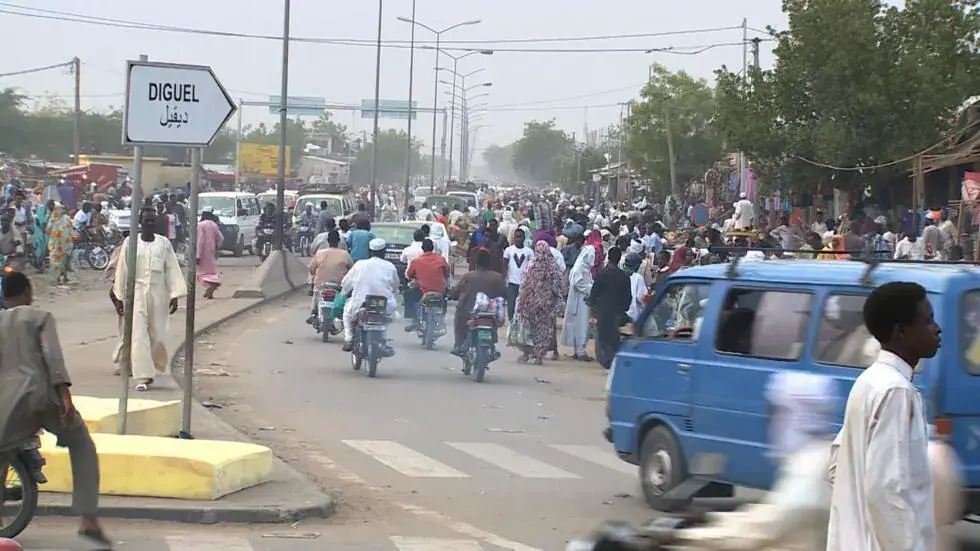
Despite these optimistic projections, a recent Afrobarometer report paints a starkly different picture of life in Chad. Released on November 3, 2026, the report reveals that 86% of respondents experience moderate or severe material deprivation, with many struggling to access basic necessities like food, clean water, and healthcare. This places Chad at the top of a list of 38 surveyed countries, ahead of Gabon, where 81% of respondents face similar challenges.
The Afrobarometer report highlights the frequency of shortages in essential goods and services. Seventy-nine percent of respondents reported that their families or they themselves lacked cash income at some point in the previous year. Sixty-five percent faced shortages of medication and medical care, 58% went without sufficient food, and 57% lacked access to clean water. These deprivations have led nearly half of respondents to rely on family assistance as a vital safety net.
The juxtaposition of Chad's soaring budget with widespread poverty raises questions about the government's ability to translate economic growth into tangible improvements in citizens' lives. The substantial increase in state resources, coupled with high poverty rates, underscores the need for a more equitable distribution of wealth. As the government prepares to implement its 2027 budget, it faces mounting pressure to address the pressing needs of its population.
A key challenge for the Chadian government will be to ensure that the increased budget yields tangible benefits for its citizens. With a significant portion of the budget allocated to oil revenues, there is a risk that the benefits of economic growth may not trickle down to the most vulnerable populations. To address this, the government may need to implement targeted policies and programs aimed at reducing poverty and inequality.
The 2027 budget also highlights the need for diversification of Chad's economy, which remains heavily reliant on oil revenues. While the increase in oil revenues is expected to drive economic growth, it also poses risks associated with volatility in global energy markets. To mitigate these risks, the government may need to explore alternative revenue streams and invest in sectors that can drive sustainable economic growth.
As Chad moves forward with its 2027 budget, the government faces a critical test of its ability to balance economic growth with social needs. With a large and growing budget, the government has the resources to make a meaningful impact on the lives of its citizens. However, it will require careful planning, effective implementation, and a commitment to transparency and accountability to ensure that the benefits of economic growth are shared by all.
Key points
- Chad's 2027 budget projects 3,065 billion FCFA in state resources, a 35% increase from 2026.
- 86% of Chadians face moderate or severe material deprivation, according to a recent Afrobarometer report.
- The government faces pressure to address poverty and inequality as it implements its 2027 budget.