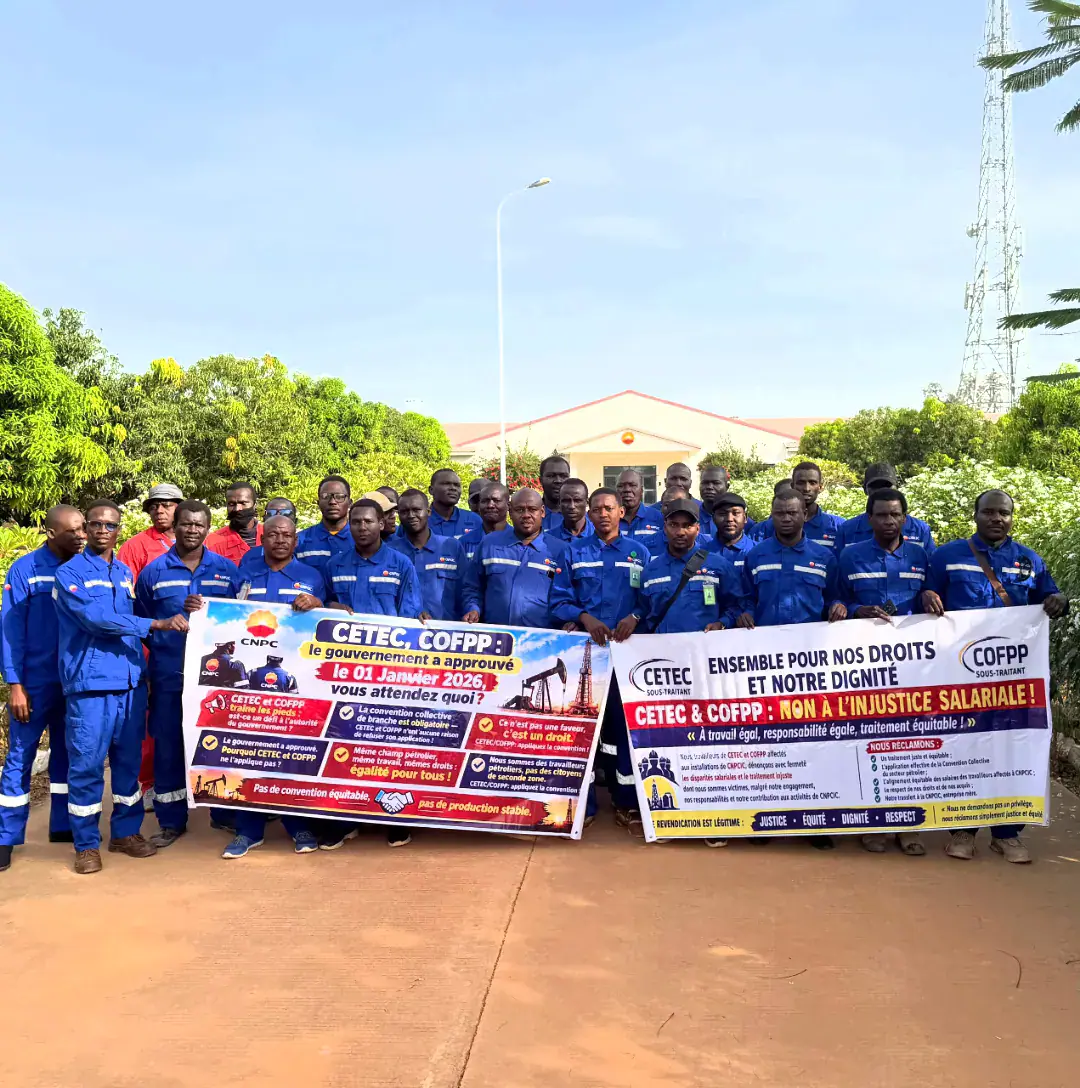
A strike has begun at oil sites Ronier, Baobab, and Daniela in Chad, involving over 150 workers from subcontractors CETEC and COFPP. They are demanding inclusion in the Collective-Type Branch Convention of the oil sector, made mandatory by a joint decree in November 2024. The workers seek improved working conditions and benefits.
The striking workers are primarily demanding requalification of their contracts from temporary to indefinite duration, as well as full implementation of the Collective-Type Branch Convention. They also want regularization of social security contributions and an end to cash payments without receipts. Furthermore, they denounce precarious working conditions, including lack of medical care and discriminatory salaries.
According to the workers' delegates, the Collective-Type Branch Convention was approved and made mandatory for all oil companies and subcontractors operating in Chad. The convention aims to improve working conditions in the sector. However, the workers claim that their employers have refused to apply the convention, citing a 15% salary increase proposal as insufficient.
The workers' delegates stated that their employers had officially confirmed that they could not apply the convention without approval from CNPCIC, the main oil company. The workers are demanding full and unconditional implementation of the convention, which was elaborated by Chadian authorities. They argue that they are not declared with the national social security fund and lack health coverage and other benefits.
The strike is a response to what the workers describe as precarious conditions, including lack of medical care, discriminatory salaries, and absence of benefits such as school allowances for their children. They contrast their situation with that of direct employees of CNPCIC, who enjoy better working conditions and benefits.
The workers' union representatives emphasize that their demands are centered on improving working conditions and securing their rights as workers in the oil sector. They stress that their strike is not aimed at causing disruptions but at achieving fair treatment and implementation of existing agreements.
The situation highlights ongoing challenges in Chad's oil sector, where workers often face difficult conditions and limited benefits. The strike by CETEC and COFPP workers underscores the need for improved labor standards and enforcement of existing regulations to protect workers' rights.
Key points
- Workers demand requalification of contracts and full implementation of the Collective-Type Branch Convention.
- Over 150 workers from CETEC and COFPP are involved in the strike at oil sites Ronier, Baobab, and Daniela.
- The strike is driven by demands for better working conditions, medical care, and benefits.