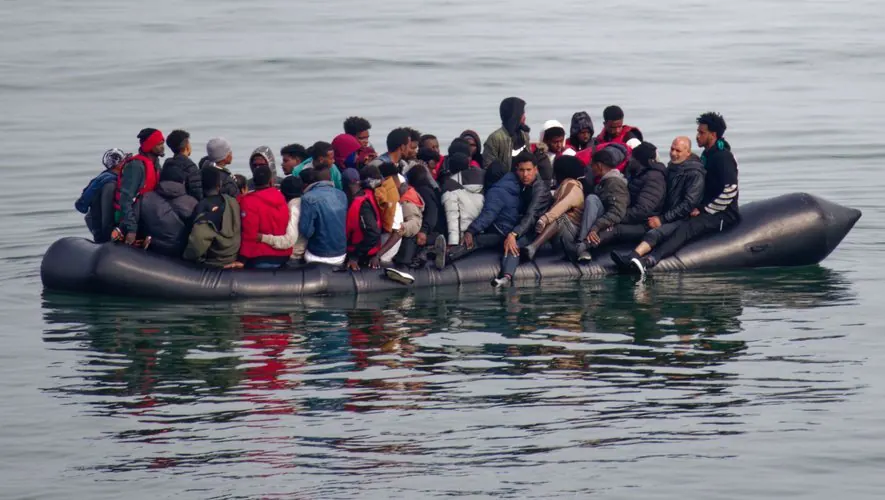
According to data reported by Independent Arabia, Chadian nationals make up 9% of migrants recorded in Libya. This comes as a new migration route connecting Sudan and Chad to Greece via eastern Libya gains traction. The route starts from the Sudanese and Chadian borders to Koufra in southeastern Libya, then to Ajdabiya and Tobrouk, from where boats head to the Greek islands of Crete and Gavdos.
Data from the International Organization for Migration (IOM) confirms the significant presence of Chadian nationals among migrants in Libya. In the first quarter of 2026, 9% of observed migrants were from Chad, behind Sudanese (36%), Nigeriens (20%), and Egyptians (19%). The development of this route is partly driven by the consequences of the war in Sudan, with many Sudanese fleeing to Libya.
The UN High Commissioner for Refugees (UNHCR) reports that 82% of Sudanese arriving in Libya pass through Koufra, while 12% take a southeastern route connected to Chad. This latter route sees between 100 and 150 people crossing daily. The shift in migration routes is also reflected in the increasing number of attempts to cross to Greece.
Over 25,000 attempts to cross to Greece were recorded in 2025, compared to 5,161 arrivals in 2024 and only 815 in 2023. In the first half of 2026, 8,552 people reached Crete and Gavdos, according to Greek coast guard data. This trend is corroborated by other international sources, including Alarm Phone, which estimated around 9,000 arrivals in Crete from Libya in the first half of 2026.
The new migration configuration highlights the Chad-Koufra-eastern Libya axis as a key corridor feeding into a rapidly expanding Mediterranean migration route to Europe. This shift is significant, as it indicates a change in the preferred routes used by migrants to reach Europe.
The IOM and UNHCR data underscore the importance of understanding migration patterns to address the challenges faced by migrants. The war in Sudan has contributed to the growth of this route, with many Sudanese and other nationals seeking to escape conflict and find better living conditions in Europe.
The increasing number of migrants attempting to cross to Greece via eastern Libya raises concerns about the safety and well-being of those undertaking the journey. International organizations and governments will need to work together to address the root causes of migration and ensure that migrants receive the support they need.
Key points
- Chadian nationals account for 9% of migrants in Libya, part of a growing route to Europe via eastern Libya.
- The war in Sudan has contributed to the growth of this migration route, with many Sudanese fleeing to Libya.
- Over 25,000 attempts to cross to Greece were recorded in 2025, compared to 5,161 arrivals in 2024 and only 815 in 2023.