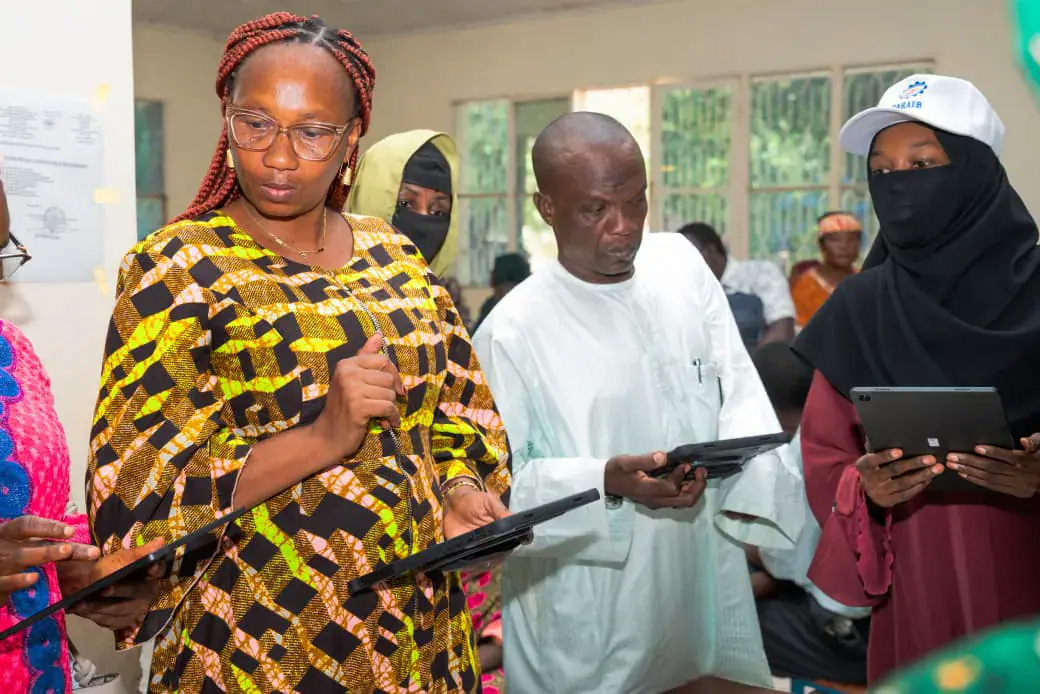
The initiative, launched on October 23, is part of the Project to Improve Basic Education Learning Outcomes (PARAEB). On October 29, 2026, project officials and education ministry representatives met at Felix-Eboue High School to monitor its implementation. The goal is to leverage technology to enhance learning in primary schools.
According to Ousmane Haroun Guet, national coordinator of PARAEB, the 39,000 tablets will be accompanied by an equal number of external batteries and other accessories. These will be distributed to government-employed teachers, level 2 community teachers under contract with APICED, and state-employed contract teachers. School principals, inspectors, and provincial delegates will also receive tablets.
The tablets are equipped with official curricula, teacher guides, preparation sheets, and pedagogical materials covering all six primary school levels. They also provide access to classroom observation and support tools, including "Teach" and "Coach". Guet emphasized that the objective is to reduce disparities between schools, enabling teachers in remote areas to access the same resources as their colleagues in N'Djamena.
Nicolas Vaïbra, secretary general of the education ministry, welcomed the launch of the first phase in the capital. The distribution will be extended to the country's 23 provinces as part of the digitalization of public administration. The tablets are designed to support teachers and improve learning outcomes, particularly in remote and underserved areas.
Djenom Solange, a teacher at Diguel's communal school A and a beneficiary of the program, praised the digital support. However, she noted that her profile and teaching experience also played a role in her selection. The success of the initiative depends on effectively integrating these tools into classroom activities.
The PARAEB project aims to improve learning outcomes and educational quality in Chad. By providing teachers with digital tools, the initiative seeks to enhance teaching methods and student engagement. The project's impact will be closely monitored, with officials assessing its effectiveness in improving educational outcomes.
As the distribution of tablets continues, education officials will focus on ensuring that the devices are used effectively in classrooms. The initiative's success will depend on ongoing support and training for teachers, as well as regular assessments of its impact on learning outcomes.
Key points
- The project aims to reduce educational disparities between schools in different regions.
- The tablets are equipped with official curricula and pedagogical materials to support teachers.
- The initiative is part of Chad's efforts to digitalize public administration and improve education quality.