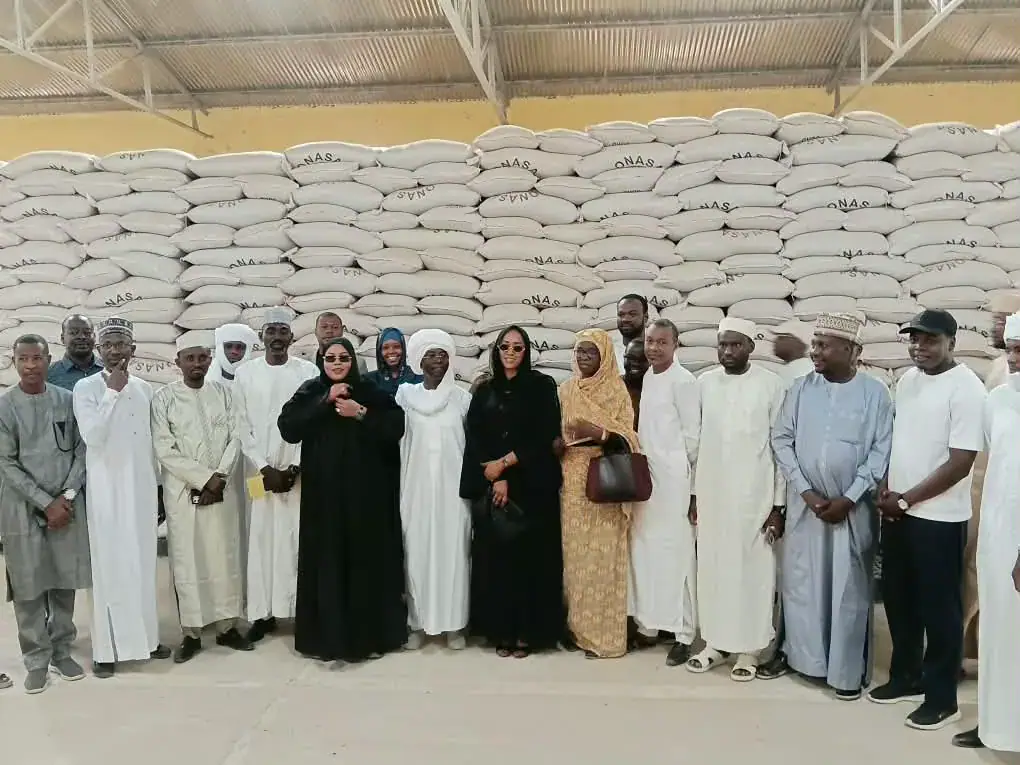
The government of Chad has initiated a food assistance operation to support vulnerable populations impacted by the 2026 agricultural campaign's poor performance. Minister of Social Action, Solidarity, and Humanitarian Affairs, Zara Mahamat Issa, attended the departure of the first food convoy at the National Food Security Office (ONASA) on November 14, 2026. The operation aims to address the deficit in rainfall that led to crop losses and compromised the livelihoods of many households.
President Mahamat Idriss Déby Itno had instructed the government to take urgent measures to assist exposed populations, following a recent visit to ONASA to assess available food stocks. The initiative aligns with the president's directives to prioritize solidarity with vulnerable households. Minister Zara Mahamat Issa emphasized that the operation reflects the government's commitment to supporting affected families, citing the devastating effects of insufficient rainfall, crop losses, and poverty.
A total of 5,900 tonnes of cereals, including rice, maize, and sorghum, will be transported to 14 provinces across Chad, from Ennedi to Mayo-Kebbi Est. This initial allocation is expected to assist approximately 59,000 vulnerable households. The operation is made possible through the support of the National Solidarity and Support Fund for Vulnerable Persons (FNSS), ONASA, and the Strategic Reserve.
The United Arab Emirates has also pledged 3,000 tonnes of food, which will be delivered separately, primarily to the Lac province. This contribution will bring the total number of beneficiary provinces to 15. Minister Zara Mahamat Issa expressed Chad's gratitude to the Emirati authorities for their solidarity.
The minister stressed the importance of transparent and equitable distribution of food, warning against any form of diversion. She urged administrative authorities, provincial delegates, and distribution teams to exercise rigor in identifying beneficiaries and ensuring that aid reaches its intended recipients.
The effects of the rainfall deficit continue to impact the living conditions of many families, and the government is working to mitigate the consequences. The food assistance operation is a crucial step towards addressing the pressing needs of vulnerable populations.
Chad's response to the crisis demonstrates the government's commitment to protecting its citizens from the impacts of climate-related shocks. International cooperation, such as the UAE's food donation, also plays a vital role in supporting the country's efforts to address food insecurity.
Key points
- The Chadian government has deployed 5,900 tonnes of food to aid 59,000 vulnerable households affected by poor harvests.
- The operation is supported by the National Solidarity and Support Fund for Vulnerable Persons (FNSS), ONASA, and the Strategic Reserve.
- The United Arab Emirates has pledged an additional 3,000 tonnes of food to support the effort.