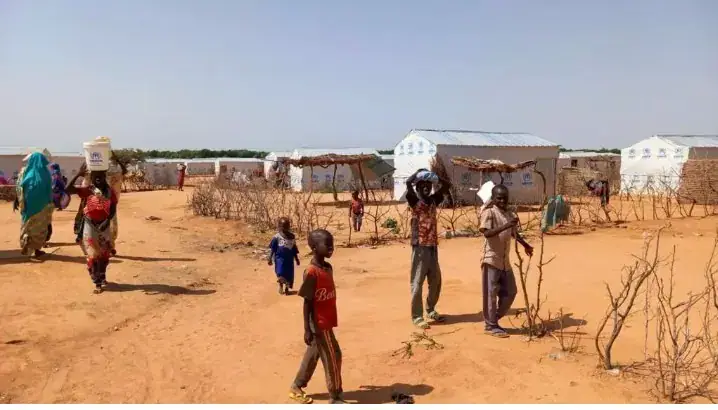
The governments of Chad and the Central African Republic (CAR), along with the United Nations High Commissioner for Refugees (UNHCR), have signed a practical agreement for the voluntary repatriation of Central African refugees living in Chad. According to the UNHCR, nearly 147,000 refugees from CAR currently reside in Chad, having arrived in successive waves since the early 2000s to escape violence in their home country. Most of these refugees have settled in four provinces in southern Chad.
The UNHCR reports that approximately 61,000 of these refugees have expressed a desire to return to CAR, based on the organization's surveys. The repatriation process is expected to commence with the first convoys by the end of the year, initially focusing on the Logone oriental region. The UNHCR's head of office in Goré, Laura Lilliana Lozano Rozo, outlined the phased approach to repatriation.
Before departing, refugee candidates will undergo medical examinations and vaccinations for their livestock a week prior to their return journey. They will then travel by truck in convoys of around 200 people to a transit center on the CAR side, from where they will proceed to their localities, mainly around Paoua and Markounda.
Upon their return, these individuals will receive three months' worth of food supplies from the World Food Programme (WFP) and a return assistance package, as detailed by the UNHCR. Those who choose to remain in Chad will see humanitarian aid transition to agricultural projects and integration initiatives in Chadian villages.
The influx of Central African refugees into Chad began after the 2003 coup and subsequent violence in northwest CAR, followed by additional waves during the 2013-2014 crisis. The UNHCR and its partners are working to ensure a safe and organized return for those who wish to go back to CAR.
The signing of this agreement marks a significant step towards addressing the long-standing refugee situation. With support from the international community, the UNHCR aims to facilitate a smooth transition for those returning to CAR, while also ensuring that those who remain in Chad can integrate and rebuild their lives.
As the repatriation process unfolds, it is expected to have a positive impact on both Chad and CAR, enabling the refugees to return home and rebuild their lives, while also fostering regional stability and cooperation. The UNHCR will continue to play a crucial role in coordinating the repatriation efforts and providing support to those affected.
Key points
- The agreement aims to repatriate 61,000 Central African refugees currently living in Chad.
- The repatriation process is set to begin with convoys expected by the end of the year.
- Returned refugees will receive three months of food supplies and a return assistance package.