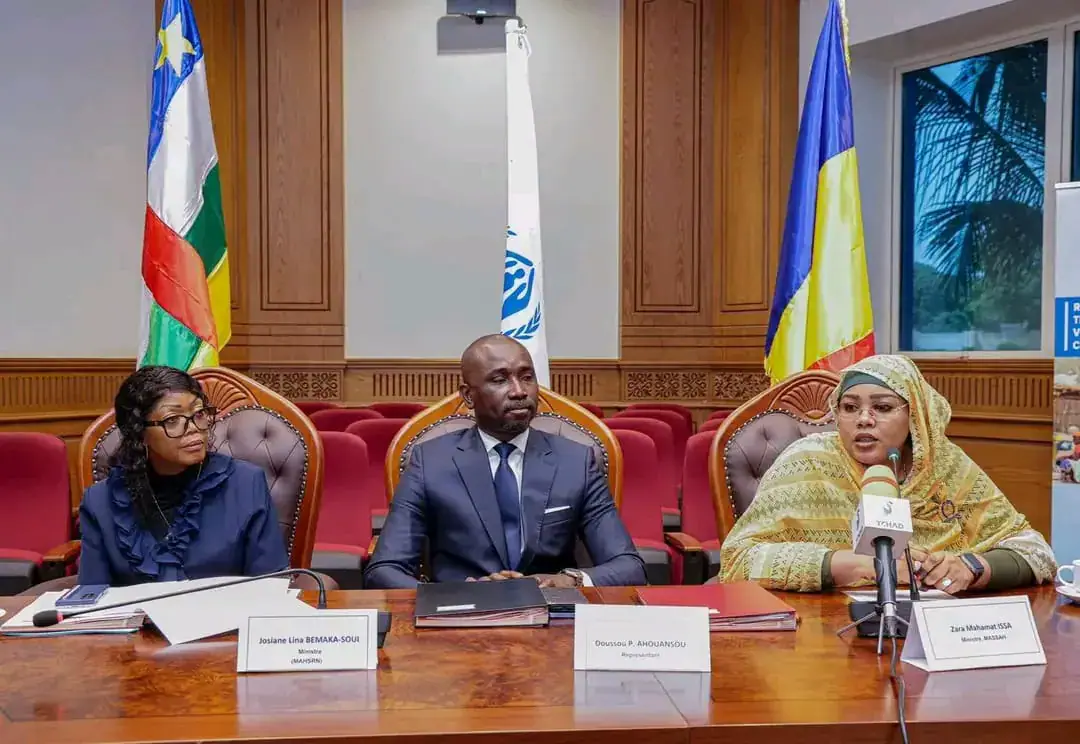
The governments of Chad and the Central African Republic, along with the United Nations High Commissioner for Refugees (UNHCR), have agreed on a framework for the voluntary repatriation of Central African refugees in Chad. The agreement was reached during a tripartite commission meeting held in N'Djamena on October 4, 2026. The meeting was chaired by Chadian Minister of Social Action, Solidarity, and Humanitarian Affairs, Zara Mahamat Issa.
The commission adopted the practical modalities and schedule for the voluntary repatriation, prioritizing the free choice, safety, and dignity of the refugees. The agreement outlines the terms of reference for the tripartite commission, practical modalities for repatriation, and a implementation schedule. The UNHCR representatives in Chad and the Central African Republic participated in the meeting, along with experts involved in the preparatory technical discussions.
The meeting aimed to consolidate the results of previous technical discussions and reach agreements on key aspects of the repatriation process. The adopted instruments provide a framework for a coordinated and progressive operation, respecting the principles of voluntarism, safety, and human dignity. The goal is to ensure that refugees can make informed decisions about their return and benefit from conditions necessary for their reintegration in their country of origin.
Chadian Minister Zara Mahamat Issa emphasized the need for partners to align with the priorities and orientations of both governments. She stressed the importance of close coordination among stakeholders to ensure the process respects the rights, safety, and aspirations of the populations concerned. Her Central African counterpart, Lina Josiane Bemaka-Soui, also participated in the meeting.
The agreement marks a significant step towards facilitating the voluntary return of Central African refugees in Chad. The repatriation process will be implemented in a context where success depends on both the preparation of departure and the conditions of reception and reintegration offered to returnees in the Central African Republic.
The tripartite commission's work will focus on ensuring a smooth and dignified repatriation process. The UNHCR will likely play a key role in supporting the repatriation efforts, providing assistance to refugees, and facilitating their reintegration in their country of origin.
With the framework in place, the focus now shifts to the practical implementation of the repatriation process. Ensuring the safety and dignity of refugees throughout the process will be crucial to its success. Key stakeholders will need to work together to provide necessary support to refugees and facilitate their reintegration in the Central African Republic.
Key points
- The agreement prioritizes the free choice, safety, and dignity of Central African refugees in Chad.
- The repatriation process will be implemented in close coordination among stakeholders.
- The success of the repatriation process depends on both the preparation of departure and the conditions of reception and reintegration in the Central African Republic.