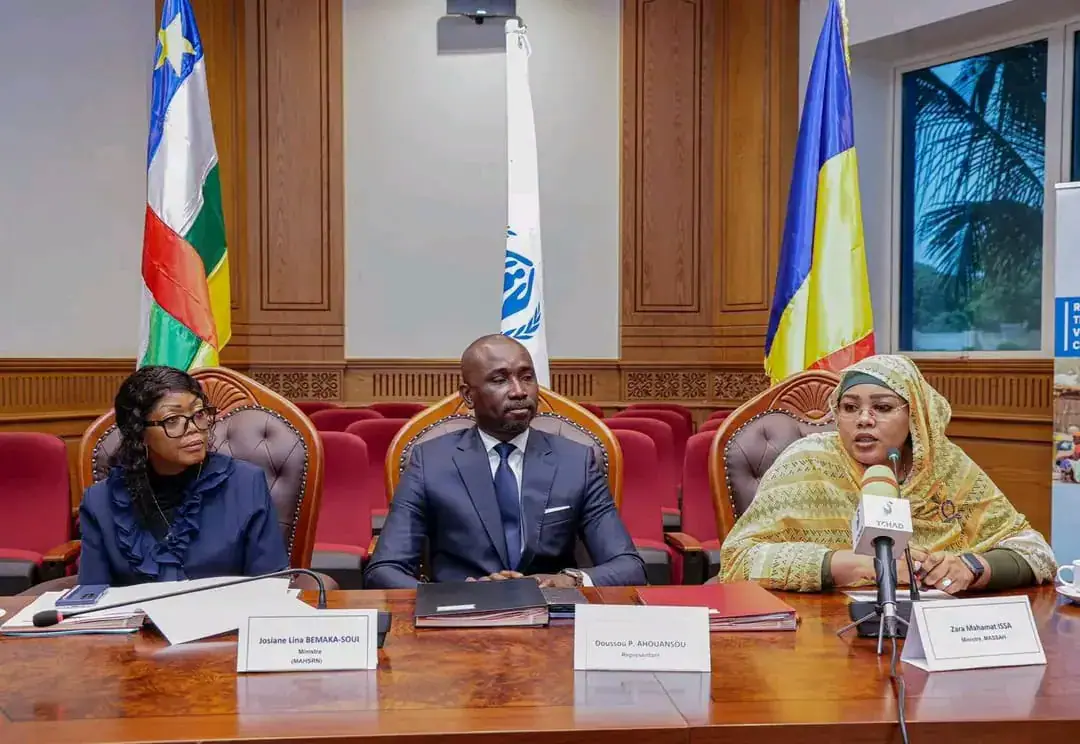
The voluntary return of Central African refugees living in Chad has reached a significant milestone. On October 4, 2026, the tripartite commission, comprising representatives from Chad, the Central African Republic (CAR), and the United Nations High Commissioner for Refugees (UNHCR), convened in N'Djamena to adopt the practical modalities for repatriation. The meeting was chaired by Chadian Minister of Social Action, Solidarity, and Humanitarian Affairs, Zara Mahamat Issa, who is also the president of the tripartite commission.
The tripartite commission's meeting aimed to consolidate the results of previous technical exchanges and agree on key arrangements for the refugees' return. The commission adopted several documents, including the terms of reference for the tripartite commission and its meetings, practical modalities for repatriation, a implementation timeline, and a final communiqué. These documents provide a framework for a coordinated and progressive operation that respects the principles of voluntariness, security, and human dignity.
The adopted instruments aim to ensure that concerned individuals can make informed decisions about their return and benefit from the necessary conditions for their reintegration in their country of origin. Chadian Minister Zara Mahamat Issa emphasized the need for partners to align with the priorities and orientations of both governments. She stressed the importance of close coordination among all stakeholders to ensure the process respects the rights, security, and aspirations of the populations concerned.
The Central African Minister of Humanitarian Action, Solidarity, and National Reconciliation, Lina Josiane Bemaka-Soui, also attended the meeting. Representatives from the UNHCR in Chad and the Central African Republic participated in the discussions, along with experts who took part in the preparatory technical meetings. The commission's adoption of the practical modalities paves the way for the refugees' safe and dignified return.
The repatriation process will be implemented in a context where its success will depend on both the preparation of the departure and the conditions of reception and reintegration offered to returnees in the Central African Republic. The Chadian government will oversee the organization of the refugees' departure, while the Central African Republic will be responsible for their reception and reintegration.
The tripartite commission's meeting marks a significant step towards facilitating the voluntary return of Central African refugees in Chad. The adopted practical modalities and implementation timeline will guide the repatriation process, ensuring that it is carried out in a coordinated and secure manner. The UNHCR will continue to play a crucial role in supporting the repatriation process.
With the adoption of the practical modalities, the operational framework for repatriation is now in place. The focus shifts to the concrete implementation of the process, which will require close collaboration among all stakeholders. The success of the repatriation process will depend on the effective coordination of efforts and the commitment of all parties involved.
Key points
- The tripartite commission adopted practical modalities for the repatriation of Central African refugees living in Chad.
- The repatriation process aims to ensure the safe and dignified return of refugees.
- The success of the repatriation process depends on the preparation of the departure and the conditions of reception and reintegration in the Central African Republic.