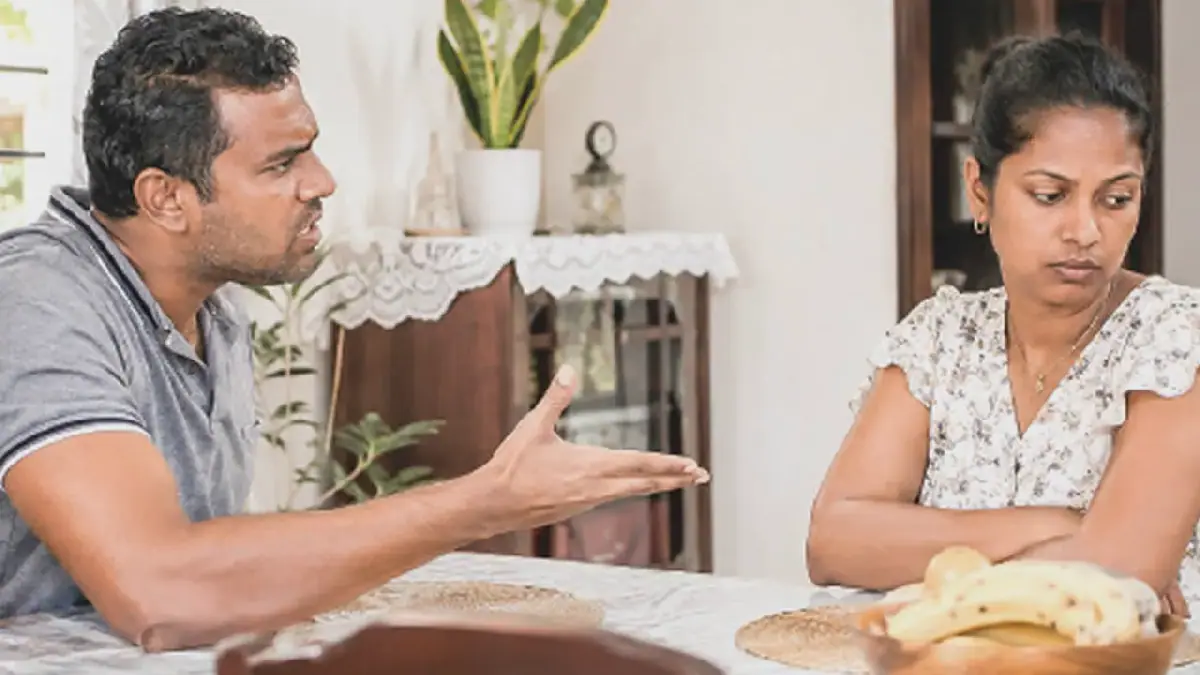
In Mauritius, certain expressions have become ingrained in everyday conversations, minimising domestic violence and shifting the blame onto the victim. Phrases like "Li zis zalou" and "She provoked him" may seem harmless but contribute to a culture that normalises abusive behaviour. According to sociologist Rajen Suntoo, language plays a central role in power dynamics within households, often preceding, accompanying and legitimising physical violence. These expressions perpetuate a culture of tolerance and can have severe consequences for victims.
The use of language can perpetuate inequalities within relationships, with phrases like "the man wears the pants" or "a woman must be gentle" reinforcing traditional gender roles. These expressions can make it seem natural for men to hold authority and for women to be submissive. This hierarchy can be disguised as a sign of love, with jealousy excused as a demonstration of affection. Demanding to know a partner's whereabouts or who they are talking to can be presented as a sign of care rather than control.
Certain phrases can also undermine a woman's ability to have her experiences recognised. When a woman reports an incident of abuse and is told "you're inventing" or "you're crazy", her perception of reality is questioned. This phenomenon, known as "gaslighting", can lead to self-doubt and make it more challenging for women to seek help. The victim's family and friends may also be targeted, with phrases like "your family is manipulating you" or "your friends don't understand you" weakening support networks.
Mégane Valère, spokesperson for the Passerelle association, highlights the importance of freedom of expression in distinguishing between a domestic conflict and a situation of domestic violence. In a conflict, both parties can express their opinions and react, but in a dynamic of control, fear of consequences dictates what one says or does. A change in tone or silence can be enough to recall a previously formulated threat. This fear manifests in everyday actions, such as renouncing discussions or monitoring words to avoid conflict.
The consequences of these phrases extend beyond the dispute in which they are uttered. Repeatedly being belittled, contradicted or guilt-tripped can lead a person to weigh their words carefully, refrain from expressing disagreement or remain silent to avoid humiliation. Christiane Valéry, a relational psychotherapist, emphasises the intimidating power of certain words, which can make a person feel trapped and imprisoned.
Understanding the cycle of domestic violence is crucial in addressing the issue. The cycle typically begins with tension, followed by aggression, justification and reconciliation. During the reconciliation phase, also known as the "honeymoon", the perpetrator may apologise and promise to change, but the control mechanisms often remain in place. Even during periods of calm, rules may still be enforced, such as demanding a spotless home or monitoring movements through geolocation apps.
The impact of these expressions and behaviours can be severe, with victims often feeling isolated and trapped. It is essential to recognise the warning signs and provide support to those affected. By understanding the role of language in perpetuating domestic violence, we can work towards creating a culture that promotes equality, respect and empathy. Key points include recognising the power dynamics at play, understanding the cycle of domestic violence and providing support to victims.
Key points
- Certain expressions can perpetuate domestic violence by minimising abuse and shifting the blame onto the victim.
- Language plays a central role in power dynamics within households, often preceding and legitimising physical violence.
- Understanding the cycle of domestic violence is crucial in addressing the issue and providing support to victims.
Reporting sources
- Ces mots qui excusent les violences faites aux femmes · Le Défi Plus