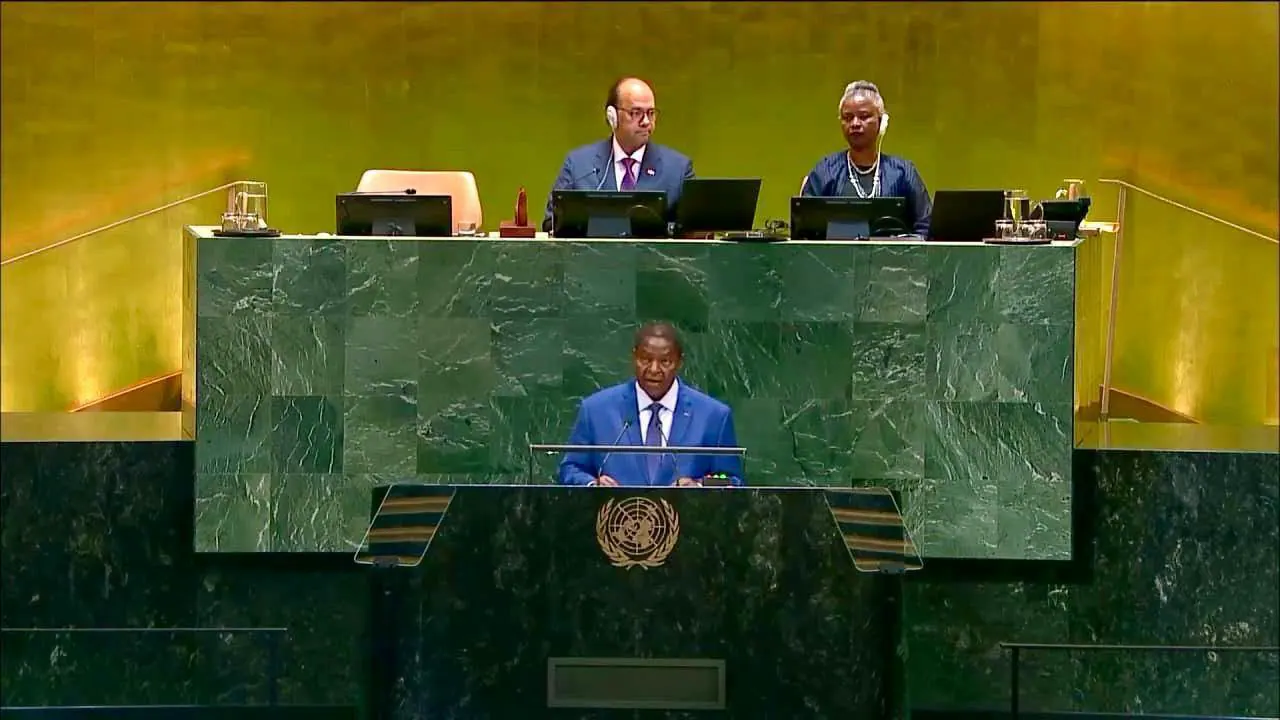
On September 23, Central African Republic President Faustin-Archange Touadéra addressed the 81st United Nations General Assembly in New York. He emphasized the need for a gradual transition of the UN mission in the country, based on the current security situation. Touadéra stated that Bangui aims to assume sole responsibility for its security in the long term. However, he warned that any potential withdrawal of the UN mission must be based on objective and shared criteria, rather than a timeline disconnected from ground realities.
The President cited the consequences of crises in neighboring countries, particularly in Sudan, to justify his position. Over 27,000 Sudanese refugees have settled around Birao in northeastern Central African Republic. Additionally, violence in June led to the displacement of over 11,000 Central Africans in Am-Dafock, also in the northeast. These displacements put significant pressure on water resources and basic services, fueling new tensions over access to land and water, especially between agricultural populations and herders.
Touadéra also defended the results of the peace process with armed groups in New York. Out of 14 groups that signed the Political Agreement for Peace and Reconciliation, 11 have already proceeded with their self-dissolution as part of the disarmament, demobilization, reintegration, and repatriation program. Two other groups are continuing their dissolution. The President believes this momentum shows that political dialogue, negotiated disarmament, and reconciliation can contribute to lasting peace.
However, Touadéra directly linked peace to the country's ability to develop. He cited the 2024-2028 National Development Plan, which focuses on security, governance, infrastructure, human capital, and economic production. The President emphasized that the plan aims to address the country's development needs and improve the living conditions of its citizens.
At the UN, Bangui also called for greater international solidarity, particularly in the face of regional crisis consequences, climate change, and development needs of fragile countries. The President highlighted the importance of international cooperation in addressing these challenges and ensuring sustainable development.
The Central African Republic has faced significant security challenges in recent years, including the presence of armed groups and the impact of regional crises. The UN mission in the country has played a crucial role in maintaining stability and supporting the peace process. However, Touadéra's call for a gradual transition reflects the government's desire to assume greater responsibility for its security.
The international community has been closely following the situation in the Central African Republic, with many countries and organizations providing support to the peace process and development efforts. The UN and other international partners will likely be watching closely as the country navigates its transition and continues to address its security and development challenges.
Key points
- CAR President calls for gradual transition of UN mission based on security situation
- 11 armed groups have dissolved as part of peace process
- President links peace to country's ability to develop and address regional challenges