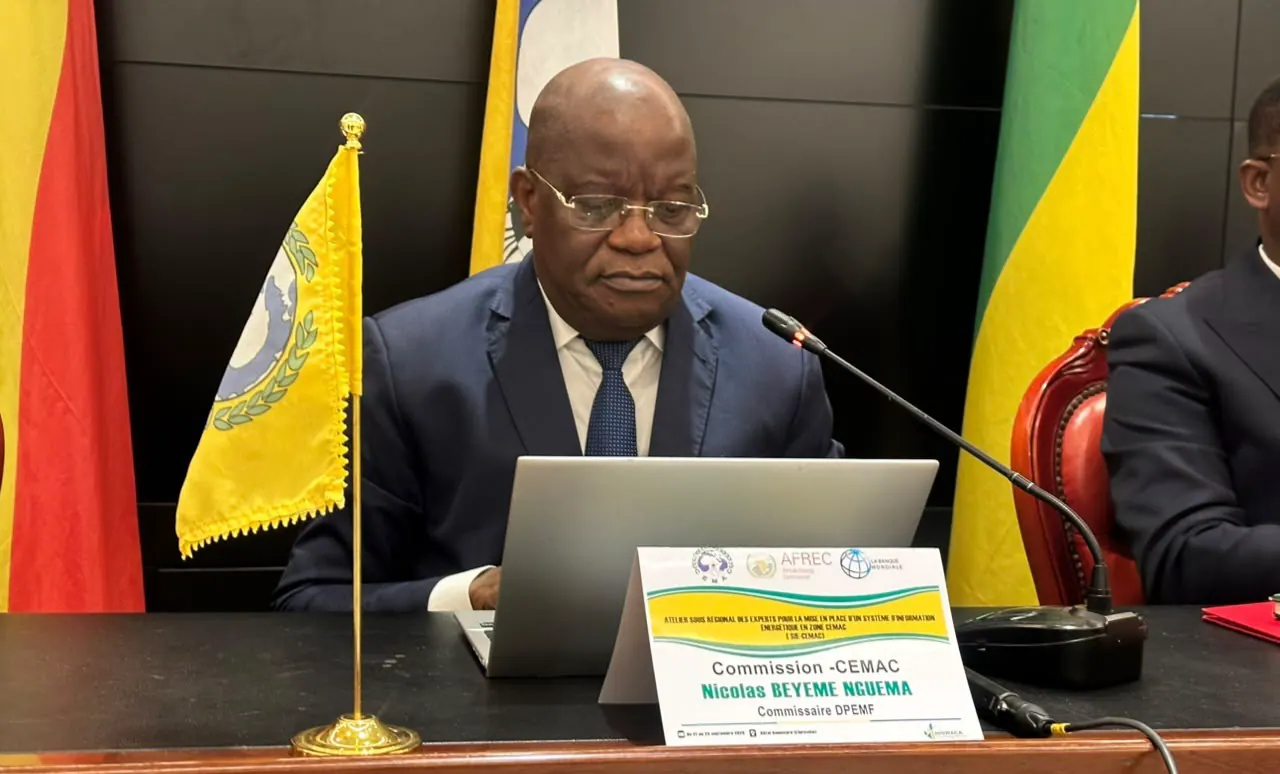
Experts from the Central African Economic and Monetary Community (CEMAC) have convened in Libreville, Gabon, to lay the foundations for a regional Energy Information System (EIS). The three-day workshop aimed to harmonize and improve energy data collection in the sub-region. Participants identified gaps in current national EIS, including a lack of standardized systems, weak field surveys, and limited data on energy efficiency and pricing.
According to CEMAC's Commissioner for Economic, Monetary, and Financial Policy, Nicolas Beyeme Nguema, the current state of EIS in member countries shows a need for better organization of data collection, processing, analysis, and dissemination. This would enable the availability of comparable and internationally-standardized data across countries. The experts also reviewed a draft regulation for the creation of a community EIS and discussed harmonization of methods and tools.
The workshop led to the development of a consolidated roadmap and specific recommendations for member states. These include securing transmission chains, mobilizing necessary funding for a five-year action plan, and ensuring national EIS cells are operational and produce regular data. The Commissioner emphasized that the effectiveness of these measures depends on the functionality of national cells and their access to sufficient resources.
The CEMAC Commission plans to maintain momentum in collaboration with member states, the African Renewable Energy Commission (AFREC), and technical partners. They will encourage national administrations to strengthen the institutional anchoring of their EIS cells and make energy data production a permanent state function.
Gabon's focal point, Armand-Colyn Abessolo Nkewele, confirmed that the workshop results will contribute to improving Gabon's EIS. Chad's Director-General of Electricity and Energy Planning, Béatrice Memndiguena, pledged to sensitize her country's actors to enhance data sharing for better energy planning.
The sub-regional workshop concluded with a ceremony attended by officials. The CEMAC Commission aims to ensure that the agreed-upon texts, tools, and recommendations are effectively implemented. This involves monitoring progress and providing support to member states in establishing robust EIS.
The new regional EIS is expected to enhance energy data management and inform policy decisions in CEMAC member states. By improving data collection and analysis, the system will help track progress toward energy development goals and facilitate regional cooperation in the energy sector.
Key points
- CEMAC experts agree on a roadmap for a regional Energy Information System to improve data collection and analysis.
- The system aims to provide comparable and internationally-standardized data across member countries.
- Implementation depends on operational national EIS cells and sufficient resources.