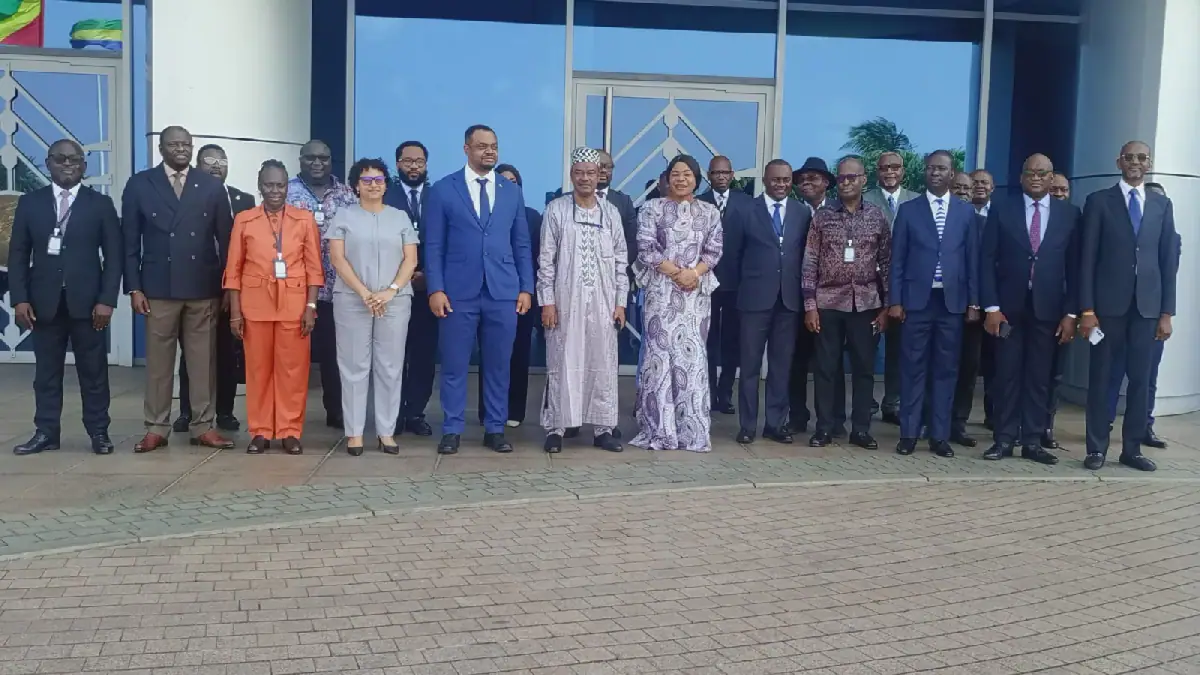
The Economic and Monetary Community of Central Africa (CEMAC) is holding a meeting in Malabo to discuss proposals aimed at improving governance and financing of its institutions. The meeting brings together institutional officials, experts, and representatives of the Technical Secretariat to analyze challenges in competence distribution, program execution, and resource availability. According to Mbasogo Kung Nguidang, president of the Steering Committee, the sessions will focus on examining issues from October 26-28.
The agenda of the meeting is centered around four main areas: governance, financial resources, human resources, and monitoring and evaluation. In the area of governance, proposals aim to clarify the responsibilities of each body and improve institutional coordination to facilitate the implementation of community programs. Mbasogo emphasized the need to consolidate technical agreements to formulate concrete measures and guide future decisions on reforms.
The meeting also highlights the importance of ensuring the effective transfer of the Community Integration Tax (TCI), which is crucial for the budgets and execution of activities of CEMAC institutions. The minister noted that uncertainty in financing requires collective responses. The issue of human resources was also addressed, with the distribution of positions subject to mandate to follow a predetermined calendar with deadlines set for December.
The mechanisms for monitoring and evaluation will be designed to measure the results of reforms and verify their impact on management. These actions are being carried out within the framework of the mandate given to the President of Equatorial Guinea, Obiang Nguema Mbasogo, by the Conference of Heads of State of CEMAC. This mandate, agreed upon during the extraordinary session on April 9, 2024, aims to promote the evaluation and improvement of the functioning of community institutions.
To prepare the proposals, CEMAC has relied on studies by the consortium AUDITEC-FOIRIER Consulting & KPMG. The October meeting also examined the experiences of the Institutional Reform Program developed between 2006 and 2010 and the limitations detected in the distribution of competencies and control mechanisms. The president of the Steering Committee requested that the conclusions reflect the agreements reached, possible reservations, and issues requiring a decision from the competent authorities.
The recommendations will be prioritized, taking into account their legal viability and financial implications. The results will serve as the basis for preparing the next session of the Steering Committee. The minister stressed the importance of respecting established deadlines and maintaining active and coordinated participation to incorporate the conclusions into the documents intended for the relevant bodies.
The meeting in Malabo is a crucial step towards improving the governance and financing of CEMAC institutions. The discussions and proposals will contribute to the evaluation and improvement of the functioning of community institutions, as mandated by the Conference of Heads of State of CEMAC. The outcome of the meeting will inform future decisions on reforms and institutional development.
Key points
- CEMAC meeting in Malabo focuses on governance, financing, and institutional reforms
- Proposals aim to improve coordination, clarify responsibilities, and ensure effective financing of CEMAC institutions
- The meeting's outcome will inform future decisions on reforms and institutional development
Reporting sources
- La CEMAC examina en Malabo propuestas para mejorar la gobernanza y la financiación de sus instituciones · AHORAEG Guinea Ecuatorial - Diario online líder de noticias