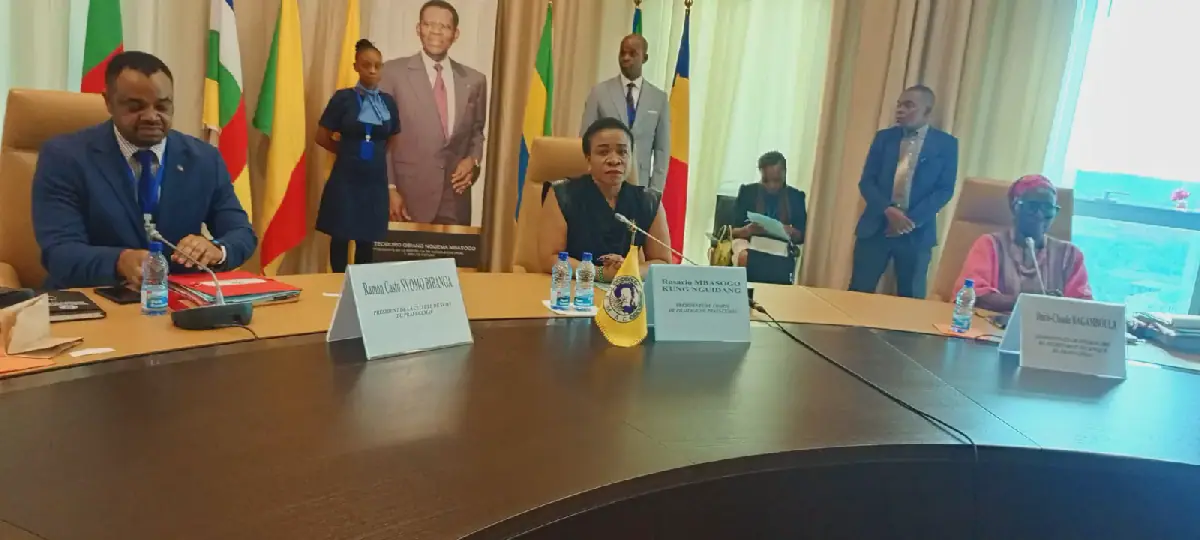
The Economic Community of Central African States (CEMAC) recently concluded a three-day meeting in Malabo, Equatorial Guinea, from October 26 to 28. The gathering, held under the high patronage of Equatorial Guinea's President, Obiang Nguema Mbasogo, brought together representatives from member states, community institution officials, and experts. They reviewed a preliminary report by AUDITEC-FOIRIER Consulting & KPMG, covering around 24 subregional bodies.
During the sessions, participants examined potential overlaps in competencies, institutional reorganizations, and procedures for appointing officials. They also discussed deficiencies in internal control mechanisms and audits, as well as challenges related to collecting and transferring the Community Integration Tax (TCI). Financial arrears and the need for greater transparency in managing community resources were also addressed.
The meeting's closing ceremony featured remarks from Rosario Mbasogo Kung Nguidang, Minister of the Presidency and Integration. She emphasized the importance of consolidating the diagnosis based on participant observations. Proposed reforms will undergo further analysis to determine their legal, institutional, and financial viability. However, the options discussed do not yet constitute definitive decisions.
The next steps in the process include a meeting of the Follow-up Cell on November 16-17. This meeting will review the consolidated report and reform proposals. The Steering Committee will continue the work on November 20. Additionally, meetings scheduled for December will focus on distributing mandate positions. The program aims to equip CEMAC with more effective institutions, strengthened governance mechanisms, and result-oriented management.
The CEMAC community comprises six member states, which stand to benefit from the institutional improvements. The program seeks to enhance the efficiency and effectiveness of CEMAC's institutions. This will be achieved through reinforced governance mechanisms and a management approach focused on results. The meeting in Malabo marks a significant step toward achieving these goals.
The report by AUDITEC-FOIRIER Consulting & KPMG covers a substantial number of subregional bodies. The comprehensive review aims to identify areas for improvement and provide a foundation for reform. By addressing the challenges and deficiencies identified, CEMAC can strengthen its institutions and improve its overall functioning.
The CEMAC institution's efforts to improve its functioning and governance are ongoing. The meeting in Malabo and upcoming sessions will contribute to the development of more effective institutions. These institutions will be better equipped to support the economic and social development of the region, ultimately benefiting the six member states.
Key points
- CEMAC concludes a three-day meeting in Malabo to enhance institutional efficiency and governance.