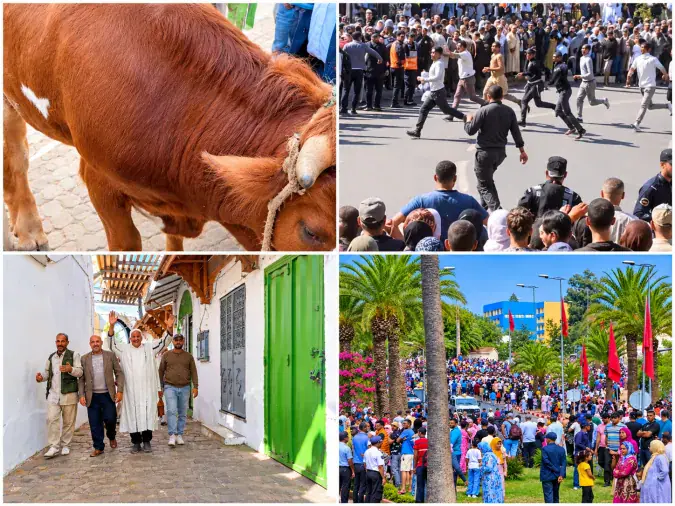
The town of Abijad, Morocco, came alive on Sunday with an extraordinary atmosphere as thousands of visitors from across the country flocked to witness the annual "Taterkiba" ritual, culminating the Sidi Bouabid Al-Sharki season. The festivities commenced at 10 am, originating from the "Rijal Al-Mi'ad" shrines, accompanied by traditional rhythms and robust security measures to ensure a smooth and safe experience for participants and spectators alike.
This centuries-old tradition, dating back to the era of Sidi Bouabid Al-Sharki in the 16th century, is a testament to the enduring legacy of the Al-Sharki zawiya, which played a pivotal role in Moroccan history, particularly in mediating conflicts between rival tribes and the ruling authorities. The event is marked by the presentation of a sacrificial animal, symbolizing loyalty and gratitude, which is then ritually slaughtered, allowing participants to enter a state of spiritual trance and catharsis.
The procession, which lasted two hours, culminated at the Sidi Bouabid Al-Sharki shrine, where the atmosphere grew increasingly charged as devotees and onlookers alike became immersed in the fervor of the moment. As the sacrificial animal approached the shrine, the crowd surged, and the air was filled with cries of ecstasy and wailing. The ritual reached its climax as the animal was brought down to the ground, amidst a sea of devotees, and subsequently slaughtered.
In the aftermath of the ritual, hundreds of pilgrims flocked to the shrine to pay their respects, with many expressing their devotion through tears and supplications. The shrine, a hub of spiritual activity, attracts visitors from diverse backgrounds and age groups, including families and young children, who come to seek blessings and solace. The event also draws individuals who have traveled from afar, often making significant personal sacrifices to participate in this sacred celebration.
The festival has significant economic implications for the town of Abijad, as it injects vitality into the local economy, stimulating trade and commerce, particularly in traditional products such as incense, henna, and candles. Moreover, the event provides temporary employment opportunities for many young people, who eagerly anticipate this annual occasion as a chance to earn a living and connect with their cultural heritage.
Observers and participants alike have emphasized the importance of preserving and promoting this cultural phenomenon, suggesting that it deserves greater media attention and coverage, both domestically and internationally. Some have argued that the event should be broadcast live on national television to amplify its impact and allow a broader audience to experience the richness and beauty of Moroccan cultural traditions.
As the festival continues to thrive, it serves as a poignant reminder of the power of cultural heritage to unite communities and transcend generations. The Sidi Bouabid Al-Sharki festival stands as a testament to Morocco's rich spiritual and cultural landscape, offering a unique window into the country's history, traditions, and values.
Key points
- The Sidi Bouabid Al-Sharki festival is an important cultural and spiritual event in Morocco that showcases the country's rich heritage and traditions.