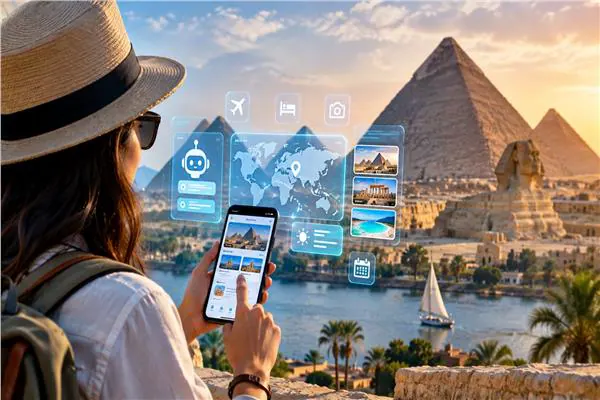
The world marks World Tourism Day 2026 on September 27, with El Salvador hosting the official celebrations. This year's theme, "Digital Agenda and Artificial Intelligence to Reshape the Tourism Sector," highlights the rapid transformation in the sector driven by technology and AI. The tourism industry is witnessing a significant shift in how trips are planned, destinations are chosen, and tourist experiences are managed. This year's celebrations focus on innovation, sustainable growth, and digital integration in the global tourism sector.
The role of AI in the tourism industry is becoming increasingly prominent. Travelers no longer rely solely on search engines or traditional booking sites when planning their trips. AI is now playing a significant role in decision-making, from suggesting the best places to stay and activities to do, to designing entire trip itineraries. This shift presents a new reality for tourist destinations, which can no longer just exist online but must have a clear digital presence and reliable content that digital systems and platforms can access and utilize when providing recommendations to travelers.
According to a message from UN Secretary-General António Guterres on World Tourism Day 2026, AI is changing how travelers choose their destinations, how the tourism industry operates, and how tourist experiences are designed. He emphasized that technology must serve humanity and that tourism workers, local communities, and emerging destinations must be involved in shaping the sector's digital future. The impact of AI extends beyond tourists to tourism companies, hotels, airports, and destination management, through data analysis, understanding demand patterns, predicting trends, and developing services tailored to visitors' needs.
The tourism industry is not just about travel; it has significant economic, social, and cultural impacts, providing job opportunities, supporting local communities, and facilitating cultural exchange and understanding between nations. Recent data from the World Travel & Tourism Council shows that the travel and tourism sector contributed $11.6 trillion to the global economy in 2025, representing 9.8% of the global economy, and supported around 366 million jobs worldwide. These numbers highlight the sector's crucial role in the global economy as a labor-intensive industry with far-reaching effects on various sectors.
World Tourism Day has been celebrated annually since 1980 on September 27, marking the anniversary of the adoption of the World Tourism Organization's founding statute. The date was chosen to coincide with the organization's establishment and to reflect the global tourism seasons. The day aims to raise awareness of tourism's economic, social, cultural, and political importance and its potential to contribute to sustainable development, create jobs, and promote dialogue between nations.
The significance of tourism extends beyond its economic impacts, as it can foster understanding and dialogue between cultures. The future of tourism is linked to broader concepts of sustainability, social justice, and local development, ensuring that sector growth does not come at the expense of local communities or natural and cultural resources. Egypt, with its diverse tourism, archaeological, and natural attractions, has an opportunity to rethink its tourism product presentation using digital tools and AI.
As the tourism industry continues to evolve, it is clear that competition is no longer just on the ground but also on screens, in data, and in the answers AI provides when travelers ask for recommendations. Egypt's ability to present accurate and appealing information about its destinations, showcase its experiences, and enhance its digital presence is crucial in competing for global tourists. The message on World Tourism Day 2026 is clear: the future of tourism is digital, and the sector must adapt to these changes to remain relevant and sustainable.
Key points
- The 2026 World Tourism Day celebrations focus on the role of AI and digitalization in reshaping the tourism sector.
- AI is transforming how travelers choose destinations and experience tourism, presenting new opportunities and challenges for the industry.
- The tourism sector contributed $11.6 trillion to the global economy in 2025 and supported 366 million jobs worldwide.