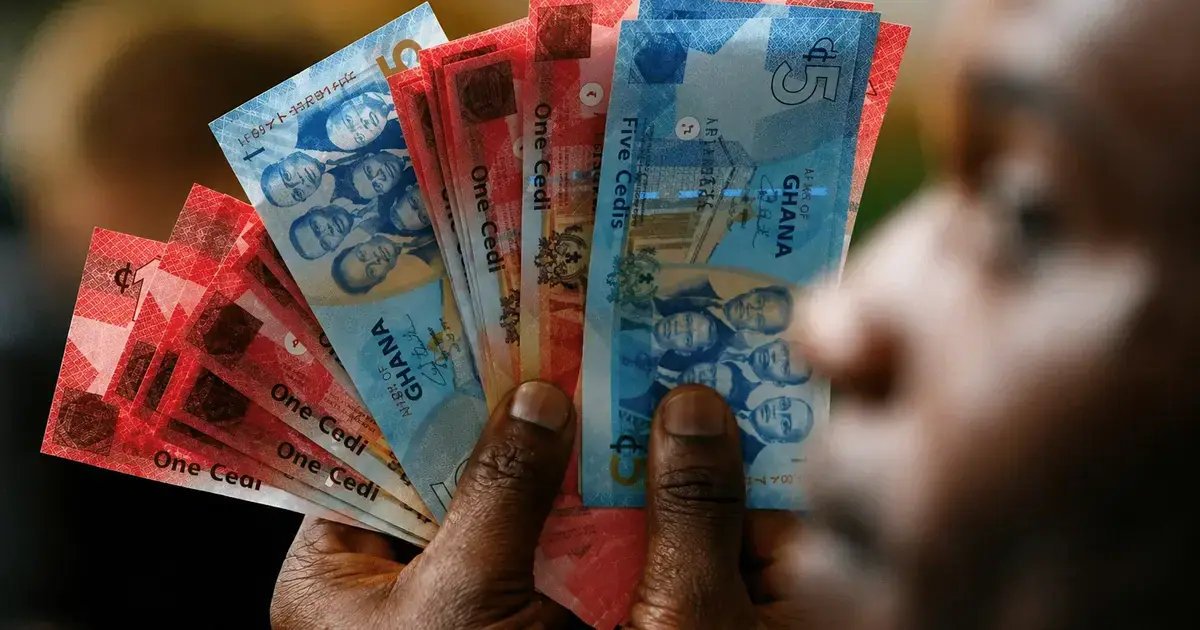
The Ghanaian cedi has maintained its position against the US dollar, with the Bank of Ghana's latest exchange rates showing a buying rate of GH¢11.6542 and a selling rate of GH¢11.6658. This stability comes as the British pound posted slight gains, while the euro recorded a marginal decline. The central bank's figures indicate that the dollar's buying and selling rates have remained steady, unchanged from the previous day's rates.
The British pound has seen a marginal increase against the cedi, with its buying rate rising to GH¢15.7005 and its selling rate increasing to GH¢15.7174. This represents a rise of GH¢0.0035 in the buying rate and GH¢0.0047 in the selling rate, compared to the previous day's rates of GH¢15.6970 and GH¢15.7127, respectively.
In contrast, the euro has declined against the cedi, with its buying rate falling to GH¢13.0870 and its selling rate dropping to GH¢13.1000. This represents a decrease of GH¢0.0069 in the buying rate and GH¢0.0059 in the selling rate, compared to the previous day's rates of GH¢13.0939 and GH¢13.1059, respectively.
The movements in the exchange rates show that the cedi has maintained its position against the dollar, while the pound gained marginally and the euro lost some value. The Bank of Ghana's published rates serve as a reference for foreign exchange transactions, although the rates offered by individual banks and forex bureaux may vary.
The stability of the cedi against the dollar is notable, as it suggests that the Ghanaian currency has maintained its value despite potential economic fluctuations. The marginal gains in the pound and decline in the euro may be attributed to various economic factors, including changes in global market trends and trade.
The Bank of Ghana's exchange rates are closely monitored by businesses, investors, and individuals involved in foreign transactions. The rates provide a benchmark for foreign exchange transactions and help to facilitate trade and investment. The central bank's management of the exchange rates is crucial in maintaining economic stability and promoting economic growth.
The latest exchange rates from the Bank of Ghana reflect the current market trends and economic conditions. As the Ghanaian economy continues to evolve, the exchange rates are likely to fluctuate in response to changes in global market conditions and domestic economic factors. The cedi's stability against the dollar, combined with the marginal gains in the pound and decline in the euro, highlights the dynamic nature of foreign exchange markets.
Key points
- The Ghanaian cedi has maintained its stability against the US dollar.
- The British pound has posted marginal gains against the cedi.
- The euro has declined against the cedi, with both its buying and selling rates decreasing.