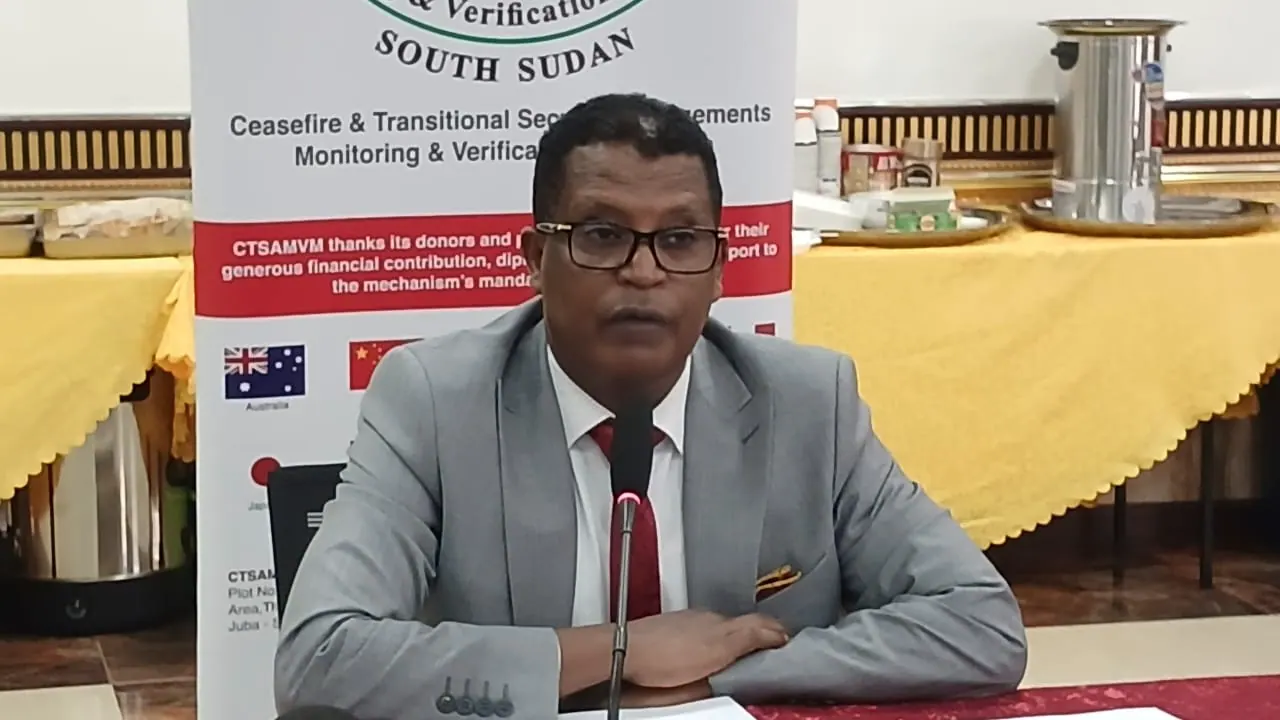
The security situation in South Sudan remains mixed, with some areas experiencing relative calm while others continue to witness violence. According to Maj. Gen. Dr. Hailu Endashaw Atomsa, chairperson of the Ceasefire and Transitional Security Arrangements Monitoring and Verification Mechanism (CTSAMVM), clashes between the Sudan People’s Liberation Movement/Army in Opposition (SPLM/A-IO) and the South Sudan People’s Defence Forces (SSPDF) have displaced civilians in Mugwo Payam, Central Equatoria State.
The CTSAMVM chairperson reported that continued fighting in Panyume, Morobo County, has restricted civilian movement and humanitarian access, contributing to severe food shortages. Additionally, ambushes targeting civilians and commercial vehicles along the Mundri–Juba Highway in Western Equatoria State have heightened insecurity and restricted movement. On September 27, more than 20 passengers were abducted and vehicles burned, although they were subsequently released.
Intercommunal violence in Lakes and Warrap states has caused civilian deaths and injuries, with heavy fighting reported in Rumbek Town on October 8 and 9, leaving about 60 people dead and 78 wounded, while at least 500 families were temporarily displaced. However, Hailu stated that the security situation in Rumbek had improved by mid-October following the deployment of SSPDF forces.
Beyond the fighting and attacks on roads, the CTSAMVM chairperson expressed concern over the detention of humanitarian personnel and restrictions on non-governmental organization activities in Wau South, Western Bahr el Ghazal State. He called on all signatories to the 2018 peace agreement to reaffirm their commitment to the permanent ceasefire and fully comply with Chapter II of the Revitalized Agreement on the Resolution of the Conflict in the Republic of South Sudan (R-ARCSS).
Hailu urged the parties to adhere to the agreed security arrangements and refrain from offensive, provocative, or retaliatory actions that could further escalate tensions. The CTSAMVM is monitoring incidents in Akobo, Jonglei State, and Riwoto, Eastern Equatoria State, which underscore the need for renewed commitment by all signatory parties to uphold the ceasefire, protect civilians, and prevent further escalation.
The renewed call for ceasefire compliance comes as South Sudan prepares for its first democratic elections, scheduled for December 22, 2026, amid growing concerns that insecurity across the country could jeopardize the electoral process. President Salva Kiir has directed defence leaders to help ensure a peaceful and secure environment for the polls, but clashes between armed groups and the SSPDF have continued in several parts of the country.
The African Union has warned that insecurity, disagreements among signatories to the peace agreement, and funding shortages pose challenges to holding credible and inclusive elections. Hailu urged the signatories to translate their commitments into concrete action and accelerate implementation of the security arrangements as South Sudan approaches the conclusion of its extended transitional period.
Key points
- The security situation in South Sudan remains mixed, with some areas experiencing relative calm while others continue to witness violence.
- Ceasefire monitors have urged signatories to the peace agreement to uphold the permanent ceasefire and strengthen civilian protection amid continued armed clashes and intercommunal violence.
- The renewed call for ceasefire compliance comes as South Sudan prepares for its first democratic elections, scheduled for December 22, 2026.