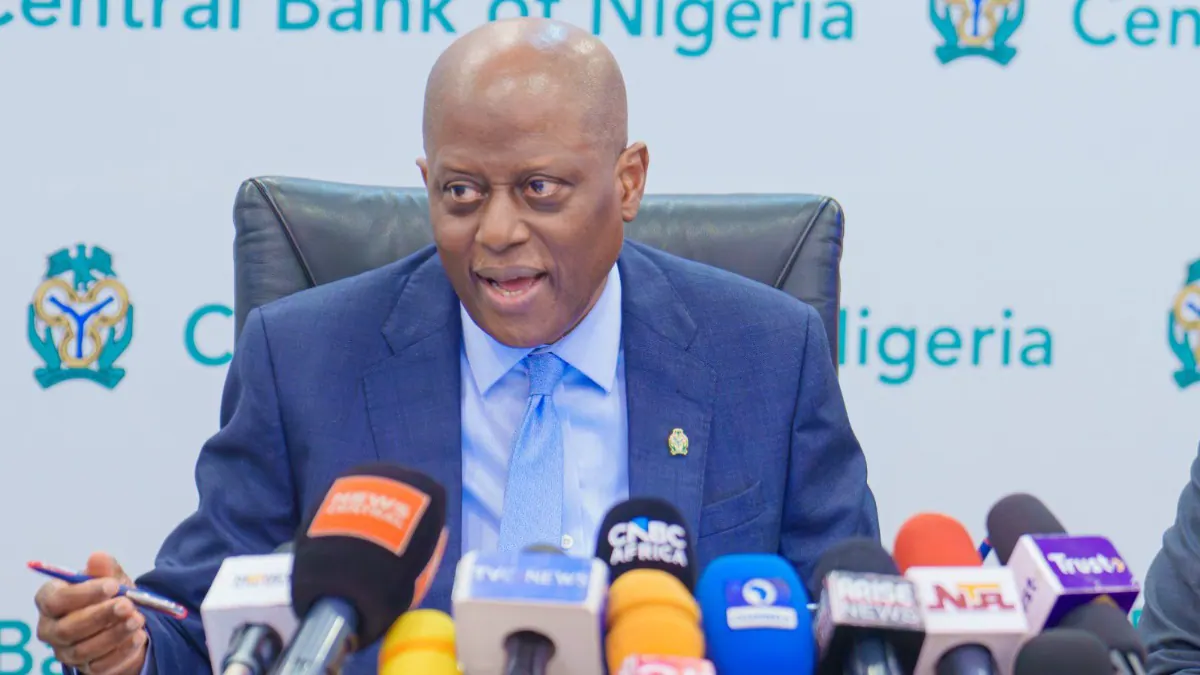
The Central Bank of Nigeria (CBN) has entered into a new agreement with the Federal Government to strengthen coordination between monetary and fiscal authorities. According to CBN Governor Olayemi Cardoso, the memorandum of understanding aims to establish a more formal structure for cooperation, reducing the risk of conflicting policies that could undermine economic stability. This development is significant as Nigeria works towards an inflation-targeting framework.
The agreement comes as the CBN works towards an inflation-targeting framework, under which monetary policy decisions are increasingly anchored around achieving a defined inflation objective. Cardoso noted that cooperation between the CBN and fiscal authorities was not new, citing existing representation of government officials on the central bank's board and the Monetary Policy Committee (MPC). However, the latest agreement formalises this relationship beyond the tenure of individual officials.
Cardoso warned that weak coordination between fiscal and monetary authorities could undermine economic policy, particularly when government spending and central bank actions pull in different directions. He cited the example of fiscal decisions on government spending, borrowing, and revenue affecting inflation and liquidity, potentially complicating monetary policy. The CBN governor emphasised that closer coordination would be crucial to the CBN's planned transition towards inflation targeting.
The arrangement will improve information sharing between the CBN and the Ministry of Finance, providing clearer expectations about how frequently officials engage and the issues requiring joint action. According to Cardoso, Finance Minister and Coordinating Minister of the Economy Taiwo Oyedele raised several issues for immediate consideration following the signing, while the CBN also identified its own priorities.
Cardoso described the agreement as an attempt to ensure cooperation survives changes in personnel and becomes embedded within both institutions. He argued that monetary policy alone would not be sufficient to deliver an effective inflation-targeting regime, pointing to international experiences where inadequate coordination between monetary and fiscal authorities created difficulties.
The CBN governor said the arrangement would now be tested by how effectively both sides translate the agreement into coordinated policy decisions rather than allowing it to remain merely a formal document. The agreement is designed to strengthen information sharing and ensure policy coordination continues beyond individual officeholders. This development has been seen as a positive step towards achieving economic stability in Nigeria.
The new agreement is expected to make Nigeria's transition to inflation targeting significantly easier. With this development, the CBN and the Federal Government are poised to work together more effectively to address economic challenges. The agreement's success will depend on the effective implementation of coordinated policy decisions.
Key points
- The CBN and Finance Ministry have signed an agreement to institutionalise fiscal and monetary policy coordination.
- The agreement aims to establish a more formal structure for cooperation between monetary and fiscal authorities.
- The arrangement is expected to make Nigeria's transition to inflation targeting significantly easier.