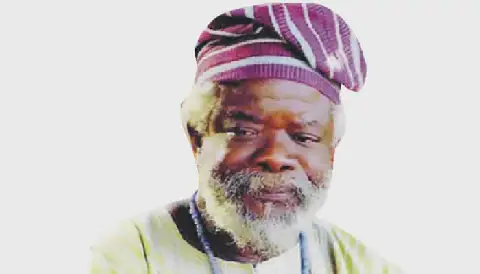
Senior Advocate of Nigeria, Abiodun Olatunji, has advised the Federal Government to tread cautiously in considering the revocation of the Benin-Asaba Expressway concession agreement. According to him, the absence of evidence of abandonment, repudiation, or unreasonable delay in the execution of repair works may not constitute sufficient grounds for unilateral revocation. Olatunji provided his legal opinion on the issues surrounding the concession, including the dispute between the Federal Ministry of Works and the Benin-Asaba Expressway Concession Company Limited.
The dispute between the Federal Ministry of Works and BAECC centers on the condition and reconstruction of the 125-kilometre highway. The Ministry has alleged breaches of certain provisions of the concession agreement by the concessionaire and has proposed a mutual termination of the arrangement. Minister of Works, David Umahi, expressed dissatisfaction with the state of the project following an inspection of the road alongside Edo State Governor Monday Okpebholo. Umahi outlined possible options for resolving the dispute.
Olatunji's review raises questions about the extent to which the concession agreement can be altered or terminated without strict adherence to the procedures stipulated in the contract. He stated that the Minister of Works does not possess a general or personal power to revoke the concession at will, noting that the contracting party is the Federal Government acting through the Ministry. The senior lawyer emphasized that the concession agreement defines the rights and obligations of the parties involved.
The Benin-Asaba Expressway Concession Company Limited has warned that introducing another contractor to work on portions of the concessioned Benin-Asaba Expressway without addressing the existing contractual framework could create overlapping responsibilities. Chief Operating Officer of BAECC, Emmanuel Onwodi, maintained that the company is the concessionaire responsible for the road asset under a 25-year concession agreement approved by the Federal Executive Council in January 2023 and signed in May 2023.
Onwodi argued that the concession arrangement did not shield BAECC from scrutiny, adding that the government retained the responsibility to ensure that the concessionaire met its contractual obligations. He stressed that accountability in a public-private partnership must be exercised within the framework of the agreement. According to Onwodi, Nigeria requires significant private-sector financing to close its infrastructure deficit, given the limitations of government revenue.
The outcome of the Benin-Asaba Expressway concession will be closely watched by banks, infrastructure funds, pension funds, foreign investors, and prospective concessionaires considering long-term investments in Nigeria. Onwodi acknowledged the difficulties motorists were experiencing, maintaining that substantial construction activity had taken place, with billions of naira in private resources committed to the project.
The concession agreement was structured as a Design, Finance, Build, Operate, and Transfer arrangement, making the project fundamentally different from a conventional government-funded road construction contract. The COO emphasized that the government's demand for performance and the concessionaire's contractual rights should operate simultaneously, ensuring that engineering standards and the impact of construction activities on motorists are addressed.
Key points
- The Federal Government is urged to exercise caution in revoking the Benin-Asaba Expressway concession agreement.
- The concession agreement defines the rights and obligations of the parties involved.
- The outcome of the concession will impact future infrastructure investments in Nigeria.