A violent confrontation unfolded on November 23, 2026, in Lubumbashi, Democratic Republic of the Congo, between the Catholic community and police forces. The clash occurred as the Catholic Church had called for a march to demand the execution of a court order to demolish constructions built on its Tshamalale concession. However, before the protesters could take to the streets, police barricades had already blocked the city's main arteries.
The city's streets were heavily guarded, with police barricades set up on major avenues, including Kasa-Vubu, Kapenda, and Mama Yemo. The police presence was not limited to the cathedral, with several other churches in the archdiocese of Lubumbashi also surrounded by police jeeps. General Blaise Kilimbalimba, the head of police in Haut-Katanga, justified the security measures, citing the ban on unauthorized public demonstrations and the need to maintain calm in the city.
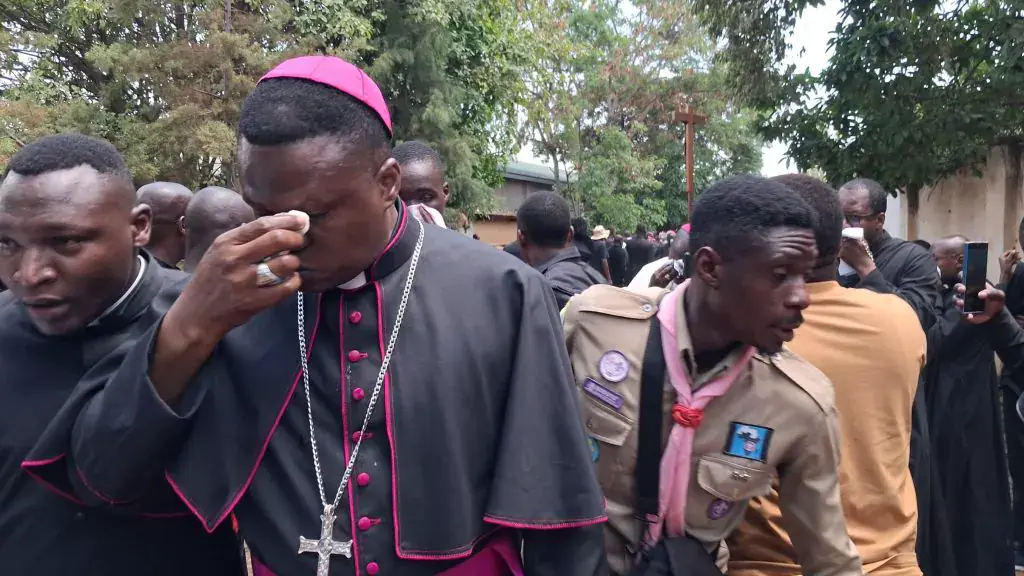
Despite the heavy police presence, some Catholic faithful attempted to proceed with the march, but were met with tear gas at the Grand Seminaire Saint-Paul. Bishops and Catholic faithful who wanted to continue the march to the city hall were dispersed by police using tear gas. However, the protesters remained steadfast, with some covering their faces with handkerchiefs to protect themselves from the gas and continuing to pray.
The confrontation was condemned by Bishop Désiré Lenge of Kilwa-Kasenga, who denounced the police actions as an infringement on fundamental freedoms. The bishop expressed concern about the situation, stating that it was unclear what "sin" the Catholic Church had committed. He emphasized that the march was peaceful and legitimate, and that it was a democratic right to hold such a demonstration.
The land dispute at the center of the conflict concerns the Tshamalale concession, which the archdiocese of Lubumbashi claims as its own. The church has expressed frustration that a court order to demolish constructions on the land has not been enforced. The Catholic Church is demanding that the authorities take action to execute the court order and protect its rights.
The situation in Lubumbashi has sparked concerns about the relationship between the Catholic Church and the government in the Democratic Republic of the Congo. The church has historically played a significant role in the country's social and political life, and the current tensions may have far-reaching implications.
The incident has raised questions about the limits of police power and the protection of human rights in the Democratic Republic of the Congo. An investigation into the events is likely to be demanded by human rights groups and the Catholic Church.
Key points
- The clash between the Catholic Church and police in Lubumbashi was sparked by a land dispute and allegations of police brutality.
- The police used tear gas to disperse protesters, including bishops and Catholic faithful, who were attempting to march to the city hall.
- The Catholic Church is demanding that the authorities enforce a court order to demolish constructions built on its Tshamalale concession.