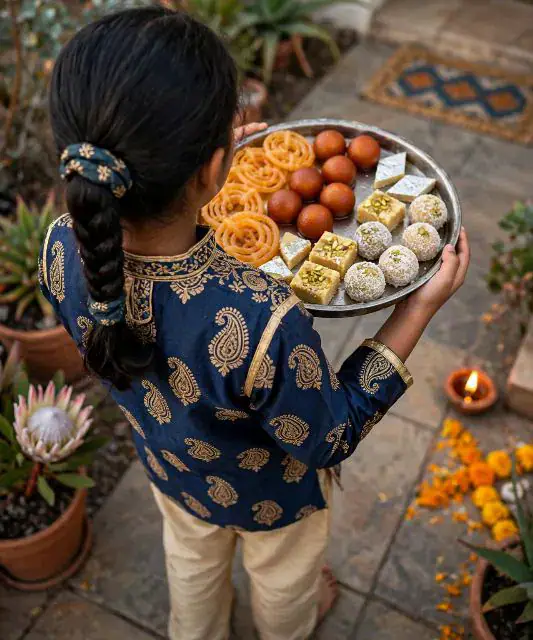
As Diwali celebrations come to a close in South African Hindu homes, families gather to light lamps and share sweetmeats, marking a moment of excitement and connection to their heritage. This sacred tradition, passed down through generations, is a testament to the resilience of Hindu communities in South Africa who have worked tirelessly to preserve their cultural practices despite historical challenges. The lighting of lamps symbolizes the triumph of light over darkness, knowledge over ignorance, and good over evil.
The history of Diwali in South Africa is closely tied to the efforts of Swami Shankaranand, who traveled extensively in 1908 to encourage Hindus to reconnect with their religious heritage. Through his teachings, he helped deepen the understanding of Hindu beliefs and traditions, including the significance of Diwali. His campaign for recognition led to important advances, including the education department's recognition of Diwali as a school holiday in 1910 and the granting of leave to Durban Municipality employees to celebrate the festival.
Today, Diwali is an integral part of South African Hindu life, with the South African Hindu Maha Sabha, established on May 31, 1912, uniting Hindus across languages and traditions. As the community comes together to celebrate, they are reminded of the importance of valuing their roots while also embracing relationships with people of other faiths. Understanding and respect for one's heritage can foster a sense of confidence to share it generously with others.
For many South African Hindus, Diwali is an opportunity to reflect on their actions and how they can incorporate its values into their daily lives. This involves recognizing the darkness that exists in the world, such as cruelty, injustice, and suffering, and taking responsibility for one's own contribution to it. By being mindful of their behavior and making conscious choices, individuals can strive to be kinder, more patient, and more compassionate.
The values of Diwali extend beyond the home and into the workplace, where fairness, integrity, and respect for others are essential. By acknowledging the contributions of colleagues, listening to quieter voices, and treating others with respect, individuals can create a more positive and inclusive work environment. These choices may be uncomfortable, but they are essential for creating a more just and equitable society.
As South African Hindus look to the future, they are reminded of the importance of sharing their heritage with others and learning about the traditions of those around them. By engaging in open and respectful conversations, individuals can build bridges between communities and foster greater understanding and empathy. This can involve simple acts of kindness, such as sharing a plate of sweetmeats or offering a listening ear to someone in need.
Ultimately, the true meaning of Diwali lies not in the festivities themselves, but in the choices individuals make every day to carry its light forward. By embracing the values of Diwali and incorporating them into their daily lives, South African Hindus can honor the efforts of their ancestors who worked tirelessly to preserve their cultural heritage. As Preba Iyavoo Naidoo notes, "When the last lamp burns out, the work of carrying its light continues."
Key points
- Diwali celebrations in South Africa have a rich history dating back to the early 20th century.
- The festival symbolizes the triumph of light over darkness, knowledge over ignorance, and good over evil.
- South African Hindus are encouraged to incorporate the values of Diwali into their daily lives, including kindness, compassion, and respect for others.