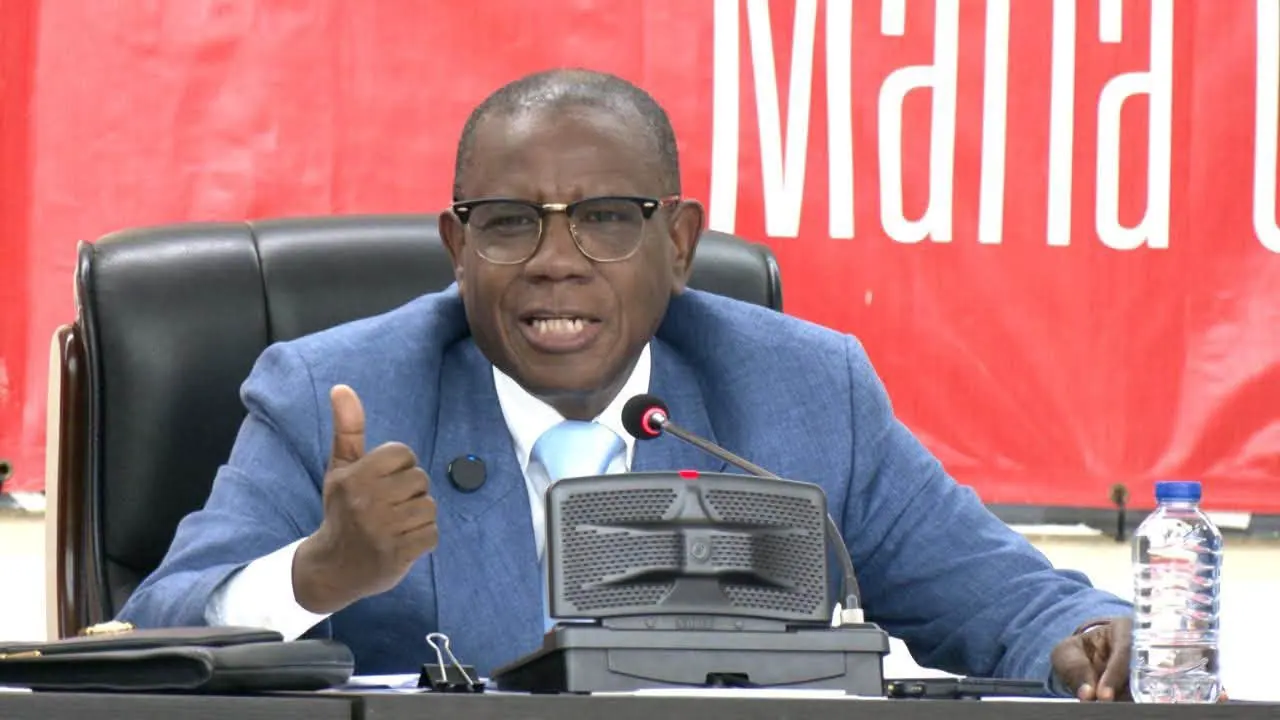
On September 23, in Luanda, jurist Carlos Feijó emphasized the need for Angola to enhance its institutional and legal capacity to prevent and respond to potential disputes related to international investments, particularly with China. This stance was presented during the conference "The Role of Law in Protecting China-Angola Investments," where Feijó analyzed the challenges arising from the Agreement on Promotion and Reciprocal Protection of Investments between the two countries, which came into effect in 2023.
According to Feijó, the agreement's entry into force requires greater preparation of public institutions and legal professionals to handle investment arbitration processes and disputes related to contracts, financing, and state regulatory measures. He highlighted priorities such as updating the Arbitration Law, clarifying the legal regime of public appropriation, and training Angolan lawyers specialized in arbitration and international investment.
Feijó stressed the importance of reviewing the public appropriation regime in Angola's Constitution and updating the Arbitration Law. He also emphasized the need for institutional capacity building for investment disputes and training Angolan lawyers. Furthermore, he advocated for creating a permanent institutional mechanism for the joint interpretation of the bilateral agreement between Angola and China, focusing on provisions like the most-favored-nation clause.
The jurist explained that the agreement, negotiated over 12 years, introduced changes to the investment protection regime and dispute resolution mechanisms. Notably, it allows for recourse to international investment arbitration mechanisms without requiring the prior exhaustion of domestic judicial avenues. Feijó identified potential sources of disputes, including expropriation or public appropriation, regulatory changes, and breaches of contractual obligations by the state or public entities.
Feijó drew attention to the concept of indirect expropriation, which may encompass public measures that substantially affect an investment's economic value or the investor's rights exercise, even if they do not formally transfer ownership. In this context, he recommended more careful structuring of investment and financing contracts, including mechanisms to protect parties in case of default.
The conference also addressed the different legal frameworks governing financing contracts between Angolan entities and Chinese financial institutions. Feijó's analysis revealed that the agreement introduced new elements, such as the possibility of international arbitration, which may reduce the risk of disputes but also requires careful consideration of contract terms and applicable laws.
Ultimately, Carlos Feijó's presentation underscored the importance of strengthening Angola's legal framework to navigate the complexities of international investments with China effectively. By enhancing its institutional and legal capacity, Angola can better prevent and respond to potential disputes, ensuring a more stable and secure investment environment.
Key points
- Strengthening Angola's legal capacity is crucial to handle investment disputes with China.
- Updating the Arbitration Law and clarifying the public appropriation regime are essential priorities.
- A permanent institutional mechanism for joint interpretation of the bilateral agreement can help prevent disputes.